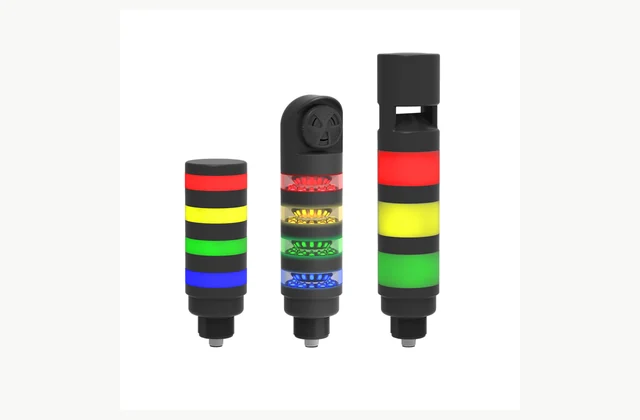
Choose a signal tower light from the machine states operators must recognize, viewing conditions and control interface. Define colors, patterns, mounting and any audible indication, then verify that the installed signals remain understandable across the intended work area.
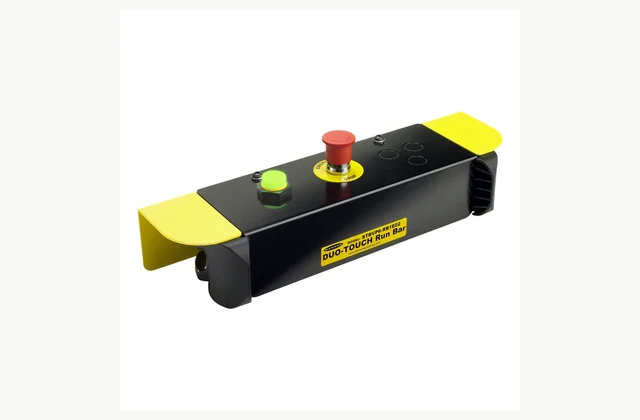
Specify a two-hand control station as part of a complete machine protective function. Review the actuation devices, compatible safety logic, stopping behavior and workstation geometry together, with a competent machinery safety specialist responsible for the application and validation.
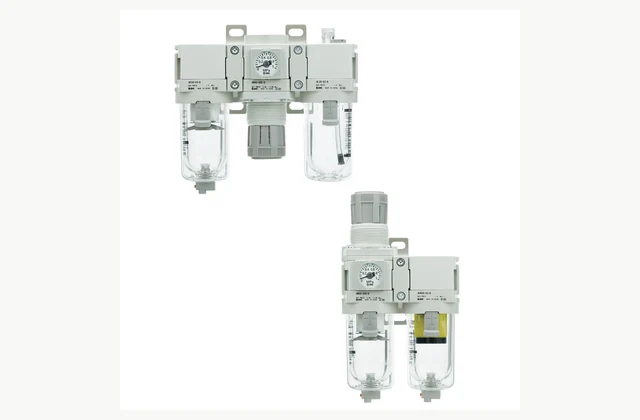
Specify an air preparation unit from the downstream machine's air-quality and pressure requirements at operating flow. Select filtration, regulation, isolation and any lubrication intentionally, with bowl protection, drainage and maintenance access suited to the actual factory environment.
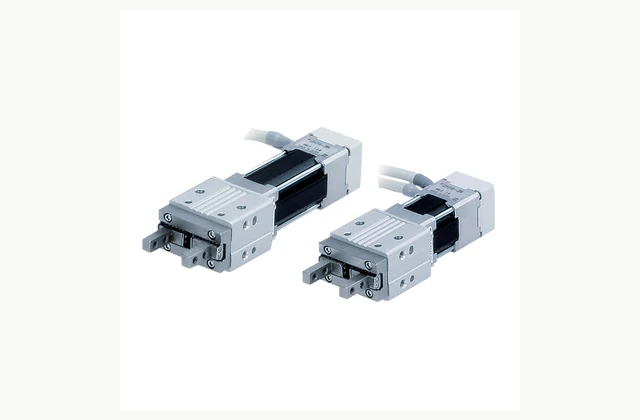
Choose an electric gripper from part geometry, finger length, required holding force and the programmed handling cycle. Evaluate workpiece detection and loss-of-power behavior with the actual robot or machine, including controller, cables and custom fingers in the quotation.
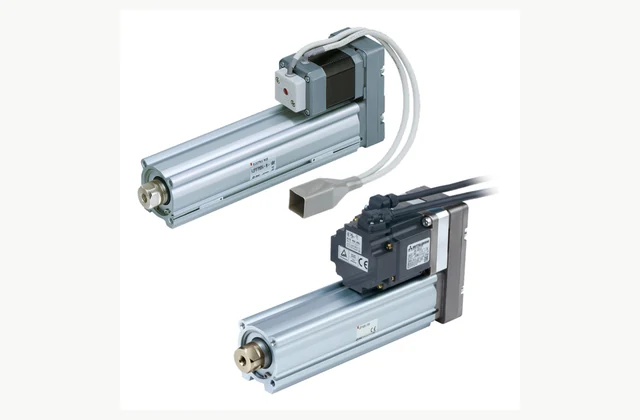
Select an electric linear actuator by the complete force, speed, stroke and duty profile. Match mounting, guidance, motor and controller to the machine, then verify thermal behavior, stopping and repeatable movement under the real load rather than comparing thrust alone.
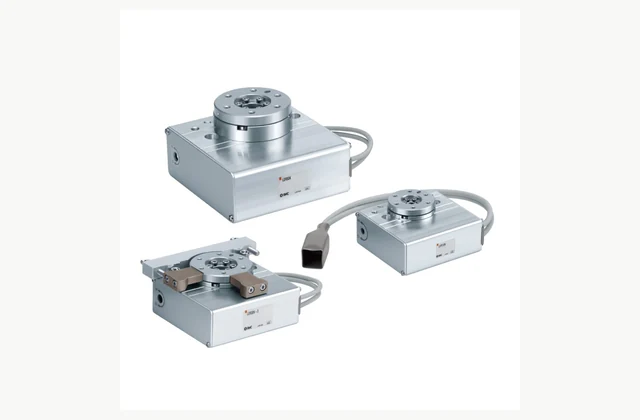
Specify an electric rotary indexing table from station angles, payload inertia and the process performed at each stop. Match the drive, bearings, settling behavior and machine handshake, then prove usable indexing time with the real fixture and workpieces.
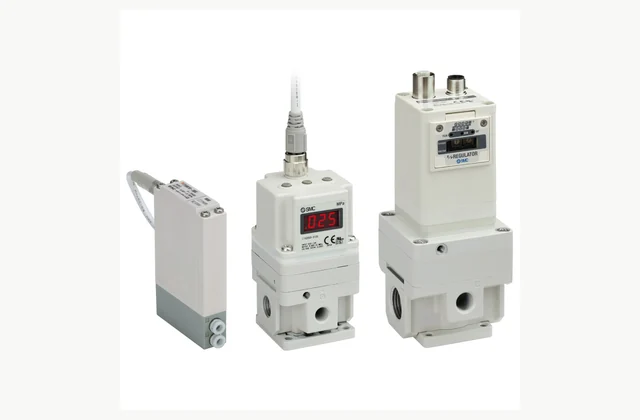
Choose an electropneumatic proportional valve or pressure regulator from the controlled variable, pressure/flow range and required response at the load. Match the command, feedback and supply conditions, then test the complete pneumatic control loop under changing demand.
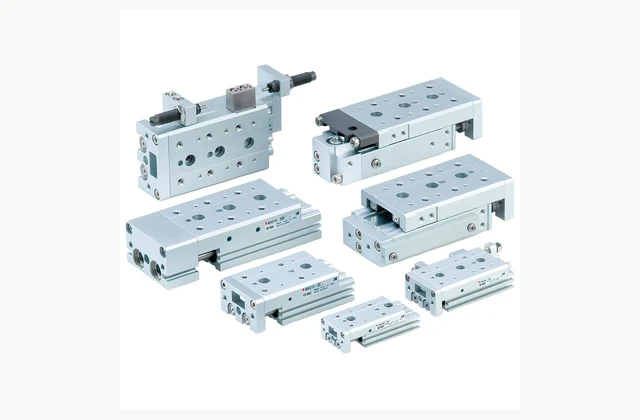
Choose a guided pneumatic slide for the load moments, required travel and repeatability of the assembly operation. Evaluate the integrated guide, stroke stops and end-of-stroke energy with the valve and air circuit, rather than selecting by bore alone.
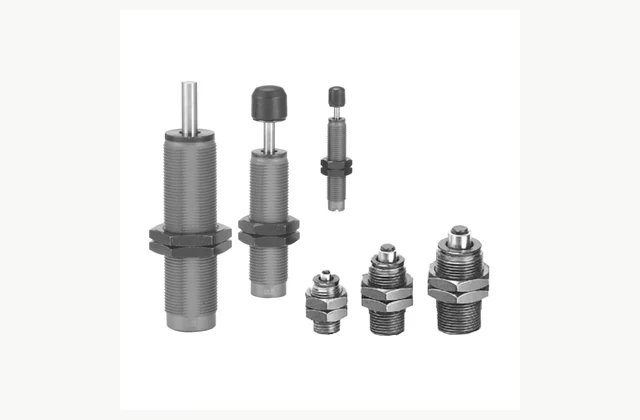
Size an industrial hydraulic shock absorber from impact energy, effective mass and repetition rate. Check stroke, mounting alignment and allowable reaction force, then verify deceleration in the real mechanism. This guide concerns machine end-stop damping rather than vehicle suspension dampers.
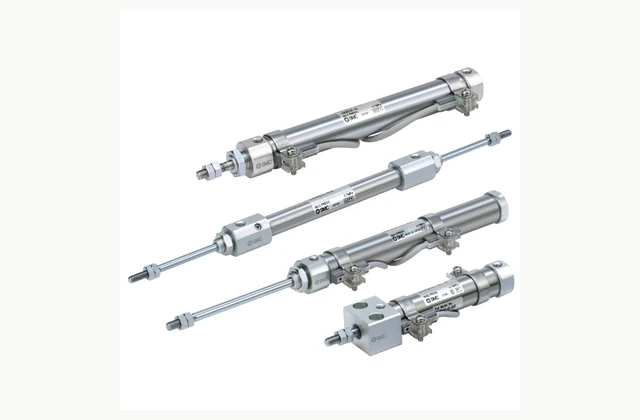
Choose a pneumatic cylinder by required force at available pressure, stroke, mounting and the full machine cycle. Assess rod loading, cushioning and position sensing with the real air circuit. Bore diameter alone does not establish usable force, speed or guidance.
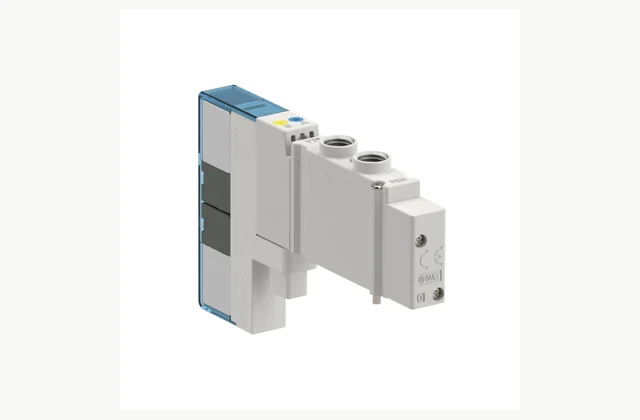
Select a pneumatic directional valve from the cylinder circuit, port function, pressure range and required flow. Confirm coil supply, pilot requirements and the de-energized state, then prove actuator behavior with the actual tubing and controls.
Specify a pneumatic feed separator around the queued workpiece, feed pressure and downstream pickup sequence. Coordinate the retaining and releasing fingers, guides and sensors so one part is presented predictably, including jams, empty queues and machine restart.
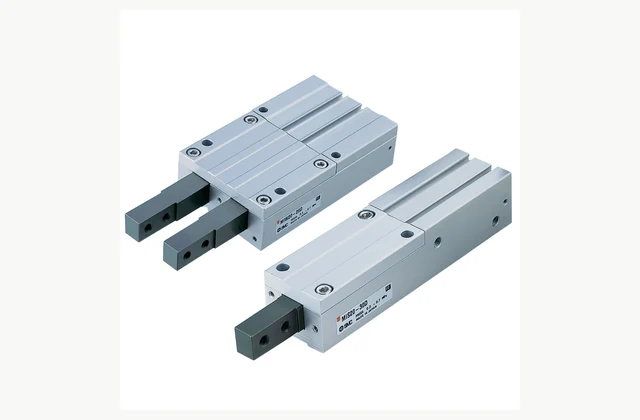
Choose a pneumatic gripper by workpiece geometry, contact method and the force available at the real finger length and air pressure. Include dynamic loads, part detection and release behavior with the robot or assembly machine, using custom fingers as engineered tooling.
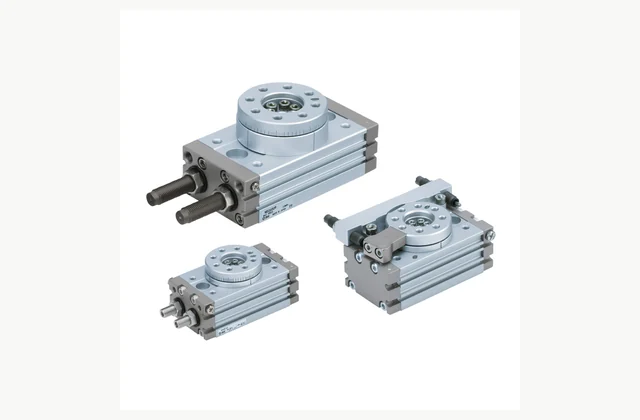
Specify a pneumatic rotary actuator by required angle, load inertia and torque throughout the movement. Match end stops, damping, mounting and the valve circuit, then verify settling and position confirmation with the real rotating fixture.
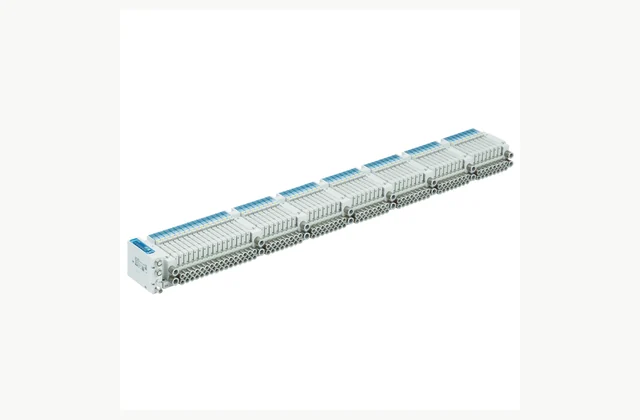
Plan a pneumatic valve manifold from the machine's complete valve list, pressure zones and control network. Match station functions, common exhaust and electrical capacity, then verify simultaneous actuator demand and fault diagnosis with the proposed valve island configuration.
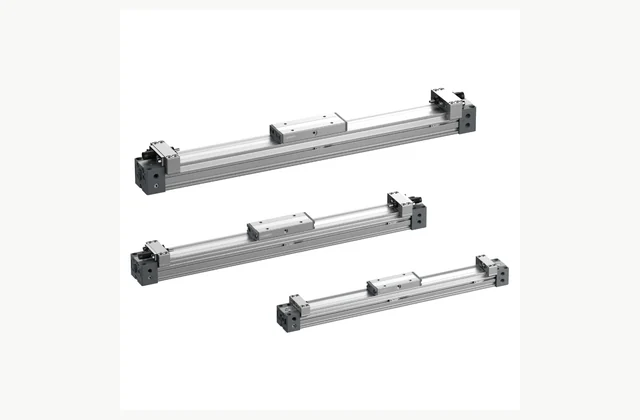
Choose a rodless pneumatic actuator for the required travel, installed length and moving-load geometry. Review guide moments, sealing and stopping energy with the actual air circuit. Long stroke in a compact envelope does not remove the need for rigid support and suitable load guidance.
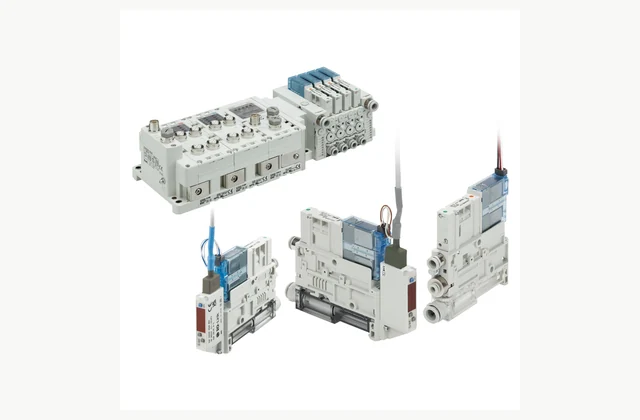
Select a vacuum ejector from workpiece leakage, pickup volume, required evacuation time and compressed-air demand. Match suction cups, switches and release control as one handling circuit, then test the real parts and failure response rather than comparing ultimate vacuum alone.
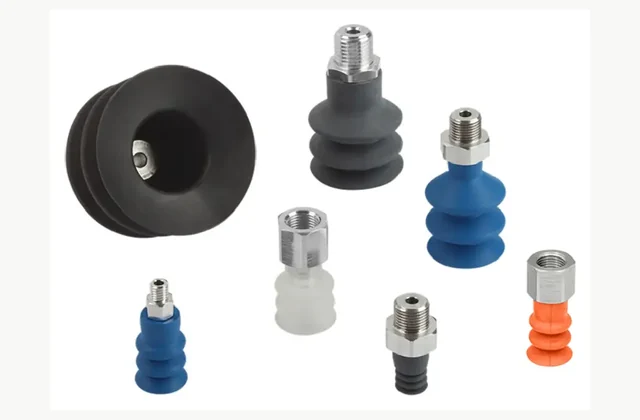
A vacuum suction cup assembly forms the workpiece contact of a gripping system. The cup, holder and compensator must be selected together; a vacuum generator alone does not establish reliable holding. Start with workpiece mass and centre of gravity and surface porosity and roughness, then agree the configuration and the evidence required for acceptance.
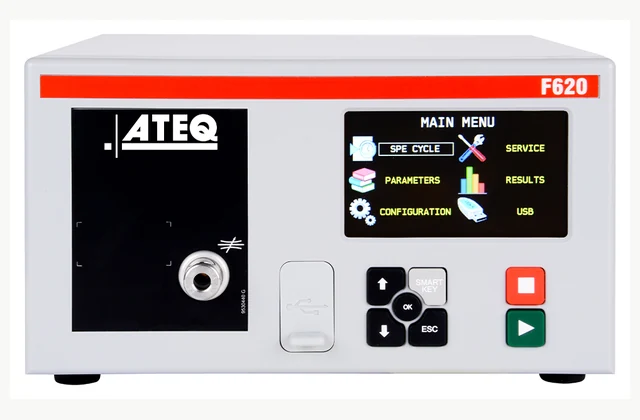
An automated leak testing station combines a measuring instrument with fixtures, sealing and part handling. The station verifies a specified leakage condition; it does not by itself prove every service-life failure mode. Start with part drawing and internal volume and test medium and pressure, then agree the configuration and the evidence required for acceptance.
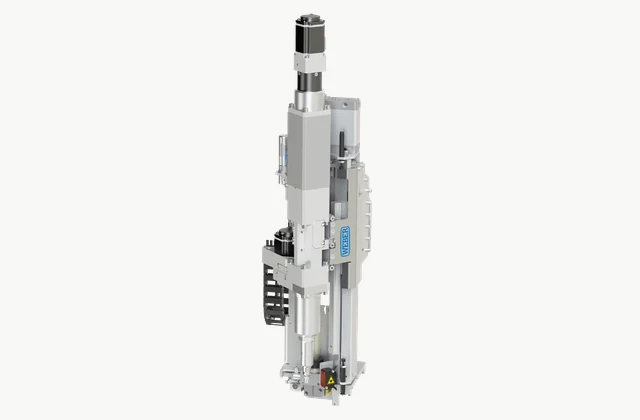
An automatic rivet insertion station feeds and positions a defined rivet into an assembly. Feeding, insertion and final joint formation may be separate operations and must be distinguished in the supply boundary. Start with rivet drawing and tolerances and rivet material and coating, then agree the configuration and the evidence required for acceptance.
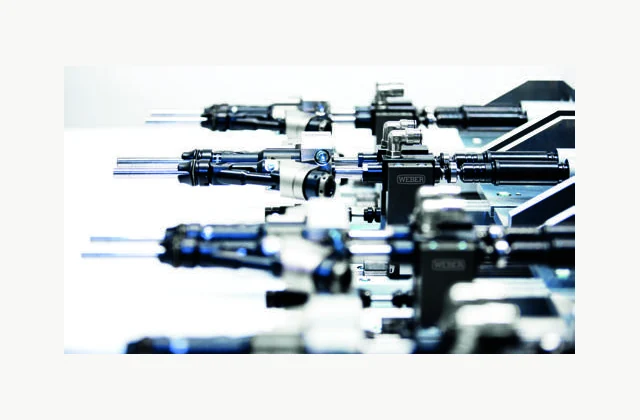
An automatic screwdriving system feeds screws and tightens them into a controlled joint. The useful result is a verified fastening process, including presentation and reaction management, rather than spindle motion alone. Start with screw drawing and coating and joint materials and pilot hole, then agree the configuration and the evidence required for acceptance.
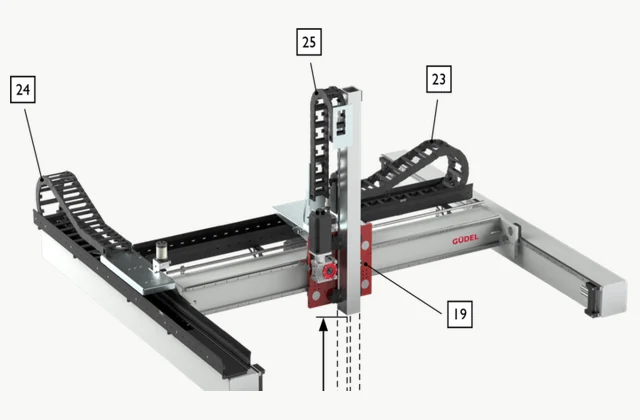
A Cartesian gantry robot moves a tool along linear axes over a defined work envelope. It suits structured transfers and large spans where support stiffness and installed alignment are central to repeatability. Start with payload with complete tooling and centre of gravity, then agree the configuration and the evidence required for acceptance.
A delta robot uses parallel arms for rapid picking within a constrained working volume. The package combines robot motion with product presentation, vision and a suitable end effector. Start with product and gripper payload and pick and place geometry, then agree the configuration and the evidence required for acceptance.
A flexible vision feeder presents loose components on a programmable moving surface so vision and a robot can select correctly oriented pieces. It differs from a dedicated track that mechanically forces every part into one orientation. Start with component drawings and samples and part variants and finish, then agree the configuration and the evidence required for acceptance.
Reference: Asyril Asycube 240 flexible feeder with hopper
Build a comparable request
Start with the work your equipment needs to do.
Share the application, required output, destination, utilities, quantities and planned timing. For OEM / ODM projects, include the branding, configuration or engineering changes, sample approval and acceptance requirements.
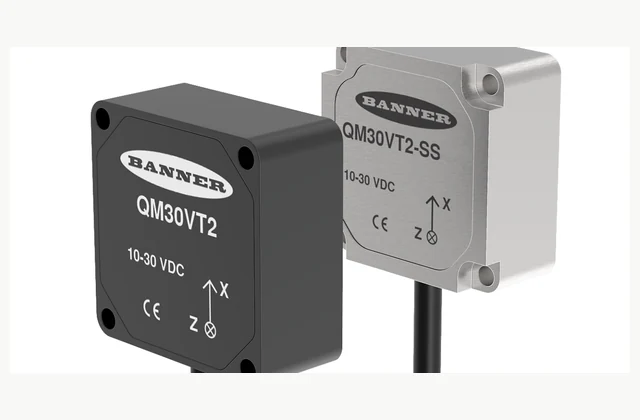
A comparable vibration condition sensor quotation starts with machine and failure mode, mounting point, operating speed range. Record the required result, site interfaces and acceptance evidence in one revision-controlled RFQ. IndustryApex engineers use these inputs to define the equipment, integration and OEM/ODM scope for your…
A comparable ultrasonic distance sensor quotation starts with target size and angle, distance and blind zone, air and vapor conditions. Record the required result, site interfaces and acceptance evidence in one revision-controlled RFQ. IndustryApex engineers use these inputs to define the equipment, integration and OEM/ODM…
A comparable rotary encoder quotation starts with speed and acceleration, position resolution, startup reference. Record the required result, site interfaces and acceptance evidence in one revision-controlled RFQ. IndustryApex engineers use these inputs to define the equipment, integration and OEM/ODM scope for your project.