
Size an industrial hydraulic shock absorber from impact energy, effective mass and repetition rate. Check stroke, mounting alignment and allowable reaction force, then verify deceleration in the real mechanism. This guide concerns machine end-stop damping rather than vehicle suspension dampers. Measure the approach condition and stopping behavior at the worst agreed load and speed, then run the intended repetition profile. Check bottoming, rebound, heat and reaction loads by the agreed methods. Repeat with expected load variation and document adjustment and positive-stop settings. Submit the intended configuration and any OEM/ODM changes for project-specific feasibility review.
Size an industrial hydraulic shock absorber from impact energy, effective mass and repetition rate. Check stroke, mounting alignment and allowable reaction force, then verify deceleration in the real mechanism. This guide concerns machine end-stop damping rather than vehicle suspension dampers.
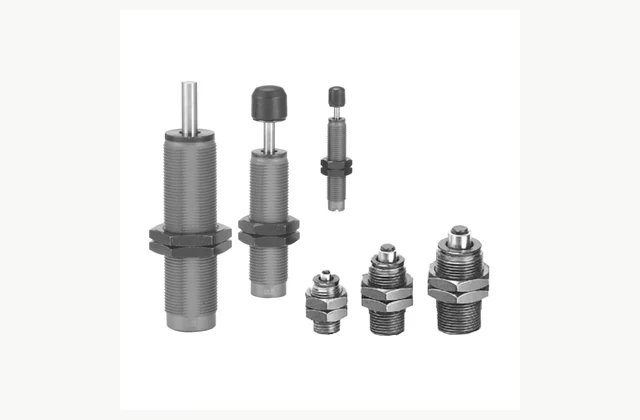
Shown as a configuration reference. Availability and the equipment offered for your project are confirmed separately.
Calculate the complete impact energy
Provide moving mass, approach speed, driving force and motion direction. Energy from a continuing pneumatic or gravity force must be included with kinetic energy. Selecting from mass alone can miss the main load, especially when a cylinder keeps pushing during the deceleration stroke.
Check energy per hour and temperature
Repeated impacts generate heat even if each individual impact is within a stated limit. Supply cycles per minute, dwell periods and ambient temperature. Compare the operating profile with the exact absorber's energy and thermal selection method, not only a one-impact rating.
Match usable stroke and stopping force
Available stroke must stop the load without bottoming the absorber. Review allowable peak reaction on the fixture and workpiece. A shorter device may fit the drawing yet produce unacceptable deceleration or force; the mounting structure must carry the engineered reaction safely.
Keep impact aligned with the plunger
Describe contact geometry, strike plate and any angular motion. Unintended side loading can damage the plunger or guide. Use the maker's permitted accessories and alignment criteria, and do not rely on a threaded body alone to correct a misaligned or sweeping contact path.
Separate damping from the final stop
Confirm whether an external positive stop is needed and how the final position is set. The absorber should operate within its specified travel. A shock absorber is not automatically a safety restraint or an accurately repeatable machine datum, even when its housing appears mechanically robust.
Plan inspection and replacement
Oil leakage, altered stopping behavior and damaged strike surfaces need an inspection response. Obtain the exact thread, length and adjustment identification for replacement. Where damping is adjustable, record settings and verification steps so a service change does not introduce an unexpected collision force.
Compare a complete hydraulic shock absorber scope
| Decision | Information to compare |
|---|---|
| Calculate the complete impact energy | Moving/effective mass, impact speed, drive force and motion direction |
| Check energy per hour and temperature | Cycle frequency, duty schedule, hourly energy and ambient temperature |
| Match usable stroke and stopping force | Available deceleration stroke, reaction-force limit and structural support |
| Keep impact aligned with the plunger | Impact alignment, strike plate, angular travel and permitted side load |
| Separate damping from the final stop | Positive-stop requirement, final datum and permitted absorber compression |
| Plan inspection and replacement | Inspection criteria, replacement dimensions, adjustment settings and spare units |
Plan installation and access
Verify alignment through the complete contact stroke and lock the absorber using the specified mounting arrangement. Support the strike area and maintain adjustment access. Guard the moving mechanism and isolate its stored energy before installing, testing or replacing an absorber.
Agree acceptance evidence before ordering
Measure the approach condition and stopping behavior at the worst agreed load and speed, then run the intended repetition profile. Check bottoming, rebound, heat and reaction loads by the agreed methods. Repeat with expected load variation and document adjustment and positive-stop settings.
Define OEM/ODM engineering boundaries
OEM brackets, strike interfaces and permitted adjustment variants can be assessed. ODM changes to seals, damping circuits or stroke require energy and durability validation. An official absorber reference does not establish supply authorization, availability or safe use as a load-holding device.
What should your hydraulic shock absorber RFQ include?
- Moving/effective mass, impact speed, drive force and motion direction
- Cycle frequency, duty schedule, hourly energy and ambient temperature
- Available deceleration stroke, reaction-force limit and structural support
- Impact alignment, strike plate, angular travel and permitted side load
- Positive-stop requirement, final datum and permitted absorber compression
- Inspection criteria, replacement dimensions, adjustment settings and spare units
- Destination, working environment, access and delivery constraints
- Installation responsibility, utilities and connection drawings
- Acceptance samples, documented test method, operator training and maintenance scope
- OEM/ODM changes requested: identification, tooling, interfaces or new design; engineering feasibility to be confirmed
Need OEM / ODM customization?
Submit branding, packaging, configuration or engineering requirements for this equipment. Include the target market, initial and annual quantities, required changes and acceptance criteria.
Customization feasibility, permitted branding, development responsibilities, minimum quantity, cost and lead time are reviewed for the proposed supplier and configuration before a quotation is confirmed.
Frequently asked questions
How do I calculate the complete impact energy?
Provide moving mass, approach speed, driving force and motion direction. Energy from a continuing pneumatic or gravity force must be included with kinetic energy. Selecting from mass alone can miss the main load, especially when a cylinder keeps pushing during the deceleration stroke.
How do I check energy per hour and temperature?
Repeated impacts generate heat even if each individual impact is within a stated limit. Supply cycles per minute, dwell periods and ambient temperature. Compare the operating profile with the exact absorber's energy and thermal selection method, not only a one-impact rating.
How do I match usable stroke and stopping force?
Available stroke must stop the load without bottoming the absorber. Review allowable peak reaction on the fixture and workpiece. A shorter device may fit the drawing yet produce unacceptable deceleration or force; the mounting structure must carry the engineered reaction safely.
How do I keep impact aligned with the plunger?
Describe contact geometry, strike plate and any angular motion. Unintended side loading can damage the plunger or guide. Use the maker's permitted accessories and alignment criteria, and do not rely on a threaded body alone to correct a misaligned or sweeping contact path.
How do I separate damping from the final stop?
Confirm whether an external positive stop is needed and how the final position is set. The absorber should operate within its specified travel. A shock absorber is not automatically a safety restraint or an accurately repeatable machine datum, even when its housing appears mechanically robust.
How do I plan inspection and replacement?
Oil leakage, altered stopping behavior and damaged strike surfaces need an inspection response. Obtain the exact thread, length and adjustment identification for replacement. Where damping is adjustable, record settings and verification steps so a service change does not introduce an unexpected collision force.
Reference information
- SMC RB official product reference
- SMC hydraulic shock absorber official family or technical reference
Reference data and images explain equipment configurations. IndustryApex engineers confirm the offered model, specification and commercial scope in your project quotation.