
Specify an air preparation unit from the downstream machine's air-quality and pressure requirements at operating flow. Select filtration, regulation, isolation and any lubrication intentionally, with bowl protection, drainage and maintenance access suited to the actual factory environment. Measure outlet pressure through the real peak-demand cycle and check drains, leaks and pressure indication. Verify the installed element grades and any required air-quality test using an agreed method. Demonstrate safe isolation and service access, recording the full component sequence and bowl/drain variants. Submit the intended configuration and any OEM/ODM changes for project-specific feasibility review.
Specify an air preparation unit from the downstream machine's air-quality and pressure requirements at operating flow. Select filtration, regulation, isolation and any lubrication intentionally, with bowl protection, drainage and maintenance access suited to the actual factory environment.
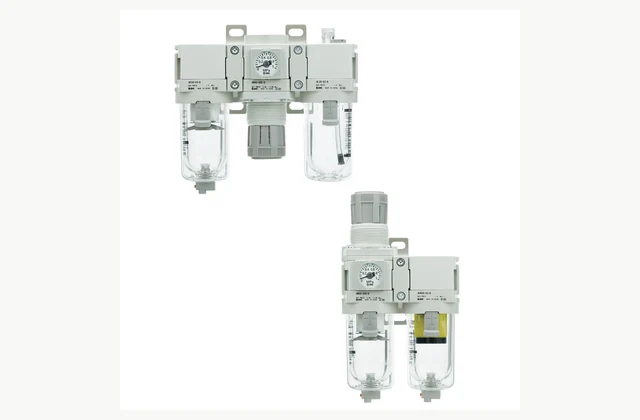
Shown as a configuration reference. Availability and the equipment offered for your project are confirmed separately.
Define downstream air requirements
Identify the most demanding valve, actuator or process served by the unit. State particle, moisture and oil requirements using the component instructions and the factory air assessment. A point-of-use filter is not automatically a substitute for the central dryer or a complete treatment system.
Size regulation at working flow
Provide peak and average airflow, inlet pressure variation and the required outlet pressure. Pressure droop under simultaneous demand matters more than a no-flow gauge setting. Port size and nominal series alone cannot establish that the regulator maintains useful pressure during the machine cycle.
Choose filtration and drainage deliberately
Discuss the contaminants present and the proposed filter grades and sequence. Confirm automatic or manual drain operation and where condensate is collected. A drain that is inaccessible or unsuitable for the operating pressure can undermine otherwise correct filtration and create avoidable maintenance interruptions.
Include lubrication only when required
Some downstream components permit or require particular lubrication, while other equipment or processes should not receive added oil. Check the exact instructions before adding a lubricator. Mixing lubricated and nonlubricated branches needs an intentional distribution design rather than a standard three-piece appearance.
Review isolation and pressure indication
Define accessible isolation, residual-pressure discharge, gauge orientation and any monitored pressure signal. The complete machine risk assessment determines the stop and isolation arrangement. An ordinary manual shutoff or gauge must not be presented as a validated safety function without the appropriate system design.
Protect bowls and maintain elements
State ambient temperature, cleaning chemicals, impact exposure and installation location. Confirm bowl materials, guards and replacement clearance with the offered variant. Obtain element, bowl, seal and drain identifiers, together with inspection criteria, so servicing restores the intended treatment rather than only replacing a visible part.
Compare a complete air preparation unit scope
| Decision | Information to compare |
|---|---|
| Define downstream air requirements | Downstream components, required air quality and incoming air assessment |
| Size regulation at working flow | Peak/average airflow, inlet range, outlet pressure and permitted droop |
| Choose filtration and drainage deliberately | Filter grades, contaminant load, drain type and condensate collection |
| Include lubrication only when required | Lubrication requirement, oil specification and branch separation |
| Review isolation and pressure indication | Isolation/discharge arrangement, gauge location and pressure monitoring |
| Protect bowls and maintain elements | Bowl material/guard, environment, element access and service-part identifiers |
Plan installation and access
Mount the unit in the specified flow direction with suitable support and clear access to drains and adjustment. Avoid pipe loads on modular joints. Provide upstream isolation and a safe method of relieving stored pressure before bowl removal, following the exact manufacturer's instructions.
Agree acceptance evidence before ordering
Measure outlet pressure through the real peak-demand cycle and check drains, leaks and pressure indication. Verify the installed element grades and any required air-quality test using an agreed method. Demonstrate safe isolation and service access, recording the full component sequence and bowl/drain variants.
Define OEM/ODM engineering boundaries
OEM bracket, gauge orientation and approved module combinations can be reviewed. ODM bowl, seal, regulator or flow changes require material and pressure validation. An official reference photograph does not certify the factory's air quality or establish an authorized supply relationship.
What should your air preparation unit RFQ include?
- Downstream components, required air quality and incoming air assessment
- Peak/average airflow, inlet range, outlet pressure and permitted droop
- Filter grades, contaminant load, drain type and condensate collection
- Lubrication requirement, oil specification and branch separation
- Isolation/discharge arrangement, gauge location and pressure monitoring
- Bowl material/guard, environment, element access and service-part identifiers
- Destination, working environment, access and delivery constraints
- Installation responsibility, utilities and connection drawings
- Acceptance samples, documented test method, operator training and maintenance scope
- OEM/ODM changes requested: identification, tooling, interfaces or new design; engineering feasibility to be confirmed
Need OEM / ODM customization?
Submit branding, packaging, configuration or engineering requirements for this equipment. Include the target market, initial and annual quantities, required changes and acceptance criteria.
Customization feasibility, permitted branding, development responsibilities, minimum quantity, cost and lead time are reviewed for the proposed supplier and configuration before a quotation is confirmed.
Frequently asked questions
How do I define downstream air requirements?
Identify the most demanding valve, actuator or process served by the unit. State particle, moisture and oil requirements using the component instructions and the factory air assessment. A point-of-use filter is not automatically a substitute for the central dryer or a complete treatment system.
How do I size regulation at working flow?
Provide peak and average airflow, inlet pressure variation and the required outlet pressure. Pressure droop under simultaneous demand matters more than a no-flow gauge setting. Port size and nominal series alone cannot establish that the regulator maintains useful pressure during the machine cycle.
How do I choose filtration and drainage deliberately?
Discuss the contaminants present and the proposed filter grades and sequence. Confirm automatic or manual drain operation and where condensate is collected. A drain that is inaccessible or unsuitable for the operating pressure can undermine otherwise correct filtration and create avoidable maintenance interruptions.
How do I include lubrication only when required?
Some downstream components permit or require particular lubrication, while other equipment or processes should not receive added oil. Check the exact instructions before adding a lubricator. Mixing lubricated and nonlubricated branches needs an intentional distribution design rather than a standard three-piece appearance.
How do I review isolation and pressure indication?
Define accessible isolation, residual-pressure discharge, gauge orientation and any monitored pressure signal. The complete machine risk assessment determines the stop and isolation arrangement. An ordinary manual shutoff or gauge must not be presented as a validated safety function without the appropriate system design.
How do I protect bowls and maintain elements?
State ambient temperature, cleaning chemicals, impact exposure and installation location. Confirm bowl materials, guards and replacement clearance with the offered variant. Obtain element, bowl, seal and drain identifiers, together with inspection criteria, so servicing restores the intended treatment rather than only replacing a visible part.
Reference information
- SMC AC-D official product reference
- SMC air preparation unit official family or technical reference
Reference data and images explain equipment configurations. IndustryApex engineers confirm the offered model, specification and commercial scope in your project quotation.