Specify a leather edge painting machine from the cut edge, coating material and finished-goods process. Match the applicator, feed guidance and layer sequence, then trial edge coverage on straight sections, corners and curves before selecting the production configuration.
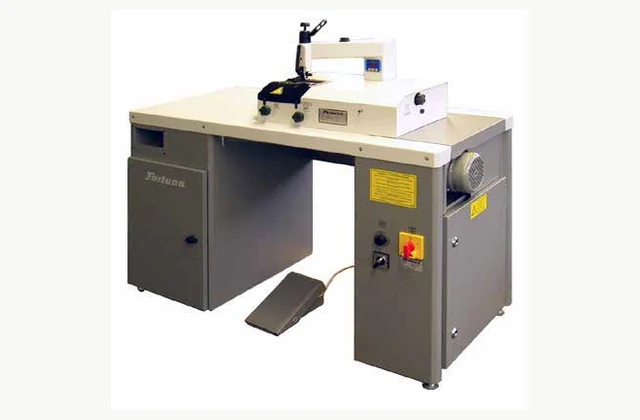
Choose a leather skiving machine for controlled edge thinning before folding, sewing or bonding. Define the bevel profile, residual thickness and feed behavior on actual material, keeping localized edge skiving distinct from full-width leather splitting.
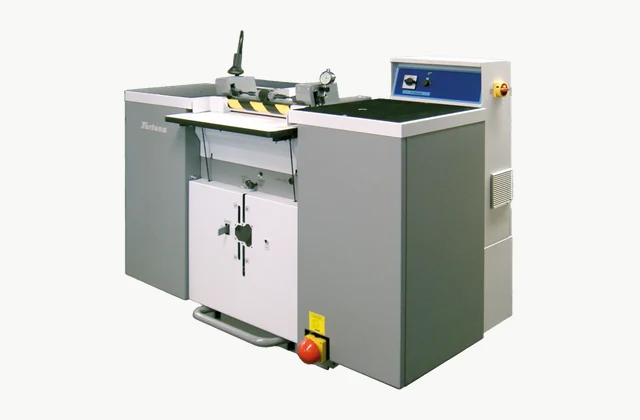
Specify a leather splitting machine around the usable piece width, target thickness and material compressibility. Match the feed and band-knife arrangement to the actual leather, then verify thickness after relaxation and downstream use rather than accept a thickness display alone.
Plan a leather spray finishing line around hides, coating chemistry and the complete application-to-drying route. Define transport, spray control, exhaust, cleaning and downstream handover, then verify finish uniformity with the actual leather and approved coating process.
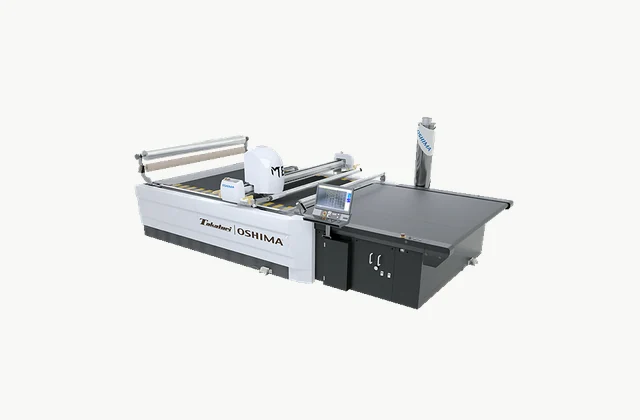
Select a multi-ply fabric cutting system from the compressed lay, material stability and required piece accuracy. Match knife, vacuum, spreading and offloading interfaces, then compare accepted parts from the top, middle and bottom of representative production lays.
Specify a textile fusing press around the fabric and interlining adhesive pair. Compare actual contact temperature, pressure, dwell and cooling, then verify bond performance and garment appearance after the agreed conditioning and cleaning process rather than rely on displayed settings.
Plan a continuous fabric dyeing range from fiber, dye system and the full preparation-to-finish route. Match application, drying, fixation and washing responsibilities, then assess saleable fabric shade and fastness with representative production lengths rather than treating every dye chemistry as interchangeable.
Select a digital textile printer from the fabric, ink and finishing route. For a direct-to-fabric belt system, specify transport and pretreatment alongside print quality, then verify saleable output after fixation and any washing required by the chosen ink chemistry.
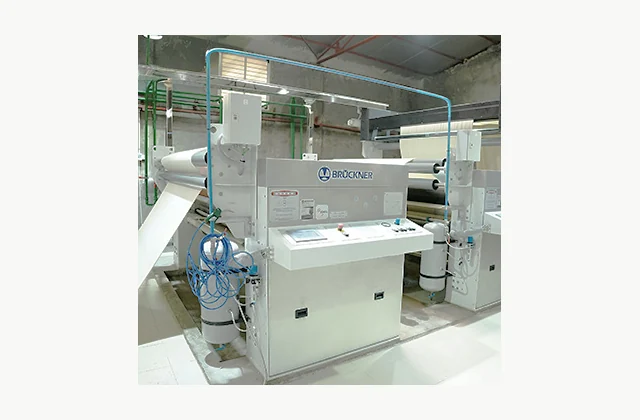
Specify a fabric calender from the desired surface, density and handle. Match roll arrangement, nip control, heat and web handling to representative fabric, keeping mechanical fabric finishing distinct from sublimation ink transfer and verifying the result after the agreed conditioning or washing process.
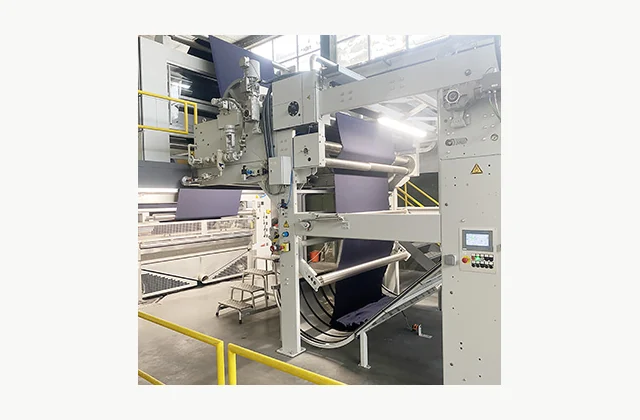
Choose a fabric relaxation dryer from wet load, fabric sensitivity and required residual shrinkage. Specify low-tension handling, moisture removal and relaxation behavior together, then evaluate dimensions and handle after the prescribed conditioning and care tests rather than compare chamber temperatures alone.
Specify a fabric sanforizing range around the required residual shrinkage of woven fabric. Match conditioning, compressive shrinking and drying or stabilization stages, then test finished dimensions after the agreed washing method with representative constructions and documented process settings.
Plan a textile coating line from the coating chemistry, fabric and required functional layer. Define application, drying or curing and web handling as one process, keeping a reference coating module distinct from a complete supplied line with all utility and environmental equipment.
Choose a textile compactor from knitted fabric form, dimensional targets and required handle. Match conditioning, overfeed, compaction and collection, then evaluate residual shrinkage and surface appearance after the agreed care test rather than accepting width or mass readings alone.
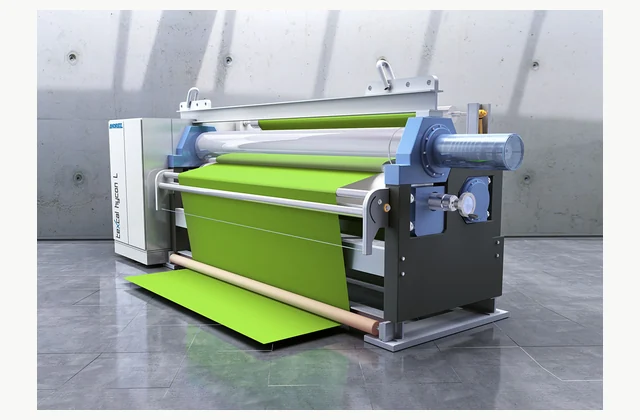
Specify a textile padder from the liquor, fabric and required wet pickup. Match bath management, roll loading and web handling, then verify application uniformity with the actual material rather than treat a nip-pressure setting as evidence of consistent chemical add-on.
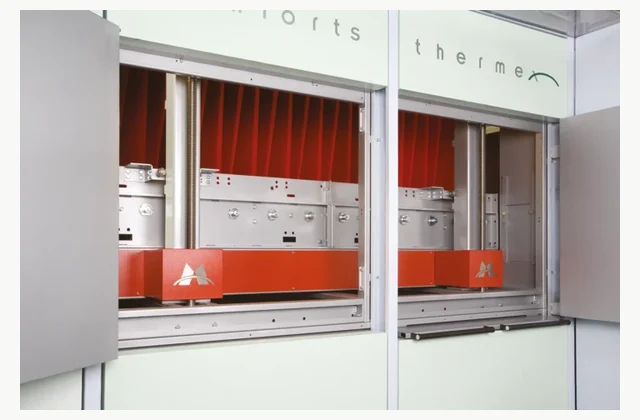
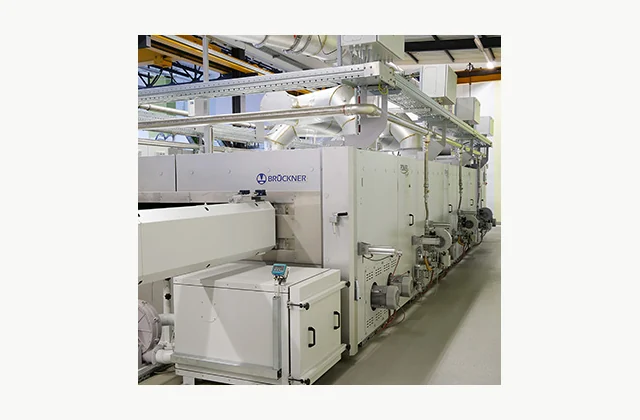
Plan a textile stenter from fabric construction and the required drying, heat-setting or curing process. Specify edge holding, working width, overfeed and thermal conditions together, then verify dimensions and finished properties on representative material rather than compare chamber count alone.
Specify a textile sublimation transfer calender from the printed transfer material, compatible textile and part-handling route. Match heat exposure, blanket pressure and tension, then evaluate final color and registration after cooling rather than rely on drum temperature or paper throughput alone.
Select an air-jet weaving machine from yarn, fabric construction and accepted woven output. Specify shedding, warp and weft handling alongside compressed-air requirements, then measure fabric quality and air use on representative styles rather than treating maximum loom speed as production capacity.
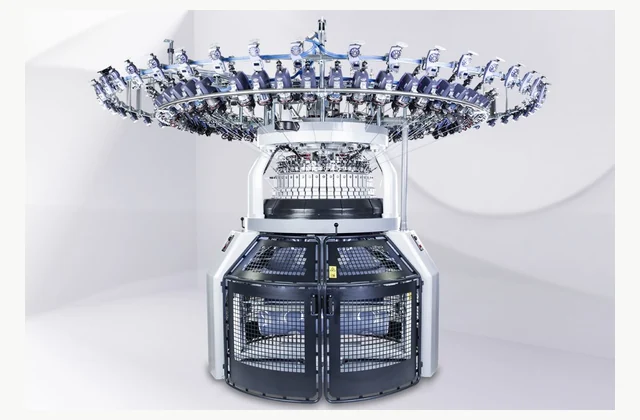
A circular knitting machine forms tubular fabric through coordinated yarn feeds and needles arranged around a cylinder. Fabric structure, yarn behavior and required gauge define the useful machine configuration rather than cylinder diameter alone.
A direct warping machine winds many parallel yarn ends onto a beam for subsequent warp preparation. Yarn properties, end count, tension and beam build determine whether the prepared warp can be processed consistently downstream.
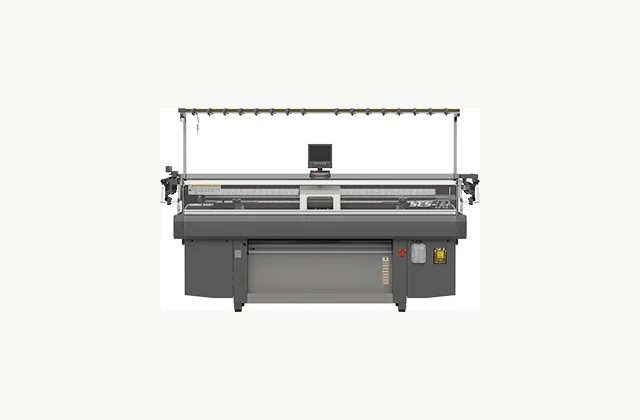
A flat knitting machine forms fabric panels or shaped knitted articles on needle beds. Yarn, gauge, needle selection and programming capability determine which structures and shaping operations are feasible.
A multiaxial technical-textile machine arranges reinforcement layers at specified orientations and secures them through a defined process. Fiber handling, layer geometry and stitch or binding arrangement determine the reinforcement architecture.
A projectile weaving machine carries weft through the shed with a projectile insertion mechanism. Yarn, fabric width, weave and edge requirements define the application and the support systems needed for consistent production.
A rapier weaving machine inserts weft with mechanically guided rapier elements and grippers. Yarn diversity, fabric construction, width and weft-color handling determine the configuration and its practical production envelope.
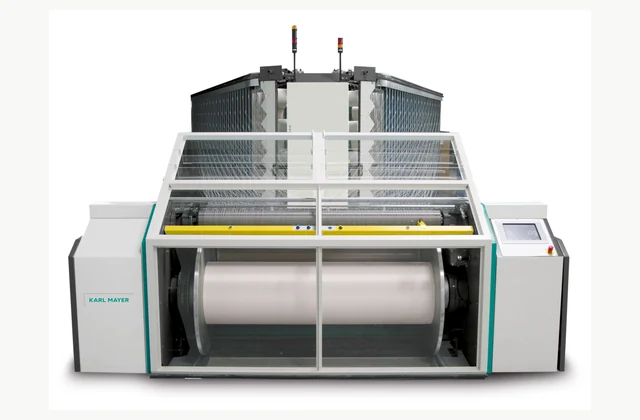
A sectional warper builds successive bands of warp yarn on a drum before beaming, supporting patterned or shorter-run warps. Section planning, yarn tension and the transfer to the final beam define the usable system.
Share the application, required output, destination, utilities, quantities and planned timing. For OEM / ODM projects, include the branding, configuration or engineering changes, sample approval and acceptance requirements.
A comparable yarn sizing machine quotation starts with yarn sizing machine application and required finished result, yarn and chemistry, application and drying. Record the required result, site interfaces and acceptance evidence in one revision-controlled RFQ. IndustryApex engineers use these inputs to define the equipment, integration…
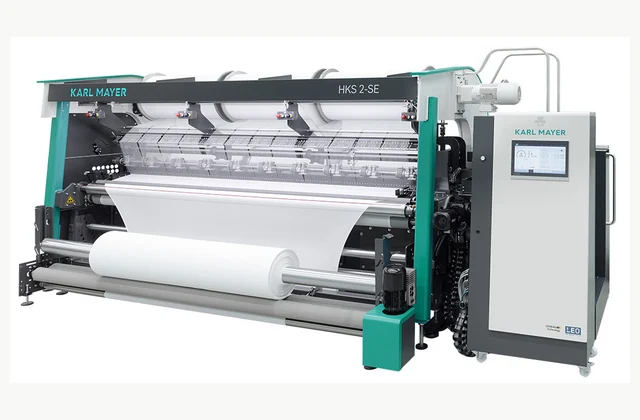
A comparable warp knitting machine quotation starts with warp knitting machine application and required finished result, structure and gauge, let-off and take-up. Record the required result, site interfaces and acceptance evidence in one revision-controlled RFQ. IndustryApex engineers use these inputs to define the equipment, integration…
A comparable sectional warping machine quotation starts with sectional warping machine application and required finished result, pattern and sections, drum and beaming. Record the required result, site interfaces and acceptance evidence in one revision-controlled RFQ. IndustryApex engineers use these inputs to define the equipment, integration…