
Choose a leather skiving machine for controlled edge thinning before folding, sewing or bonding. Define the bevel profile, residual thickness and feed behavior on actual material, keeping localized edge skiving distinct from full-width leather splitting. Skive production samples across the agreed leather range and edge geometries. Measure residual thickness and bevel width at defined positions, then fold or sew representative components using the buyer's process. Demonstrate a profile change and knife maintenance, recording surface marks, over-skiving and good components per complete operating cycle. Submit the intended configuration and any OEM/ODM changes for project-specific feasibility review.
Choose a leather skiving machine for controlled edge thinning before folding, sewing or bonding. Define the bevel profile, residual thickness and feed behavior on actual material, keeping localized edge skiving distinct from full-width leather splitting.
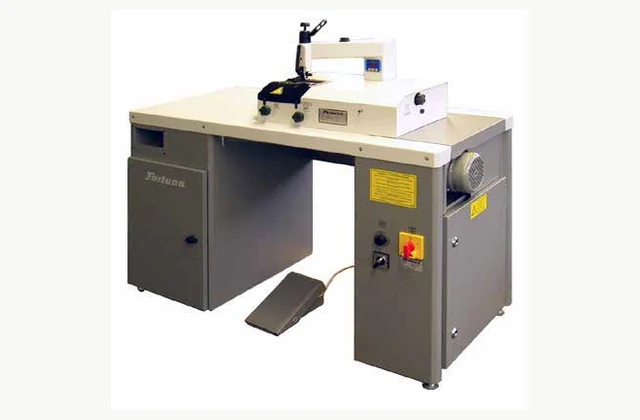
Shown as a configuration reference. Availability and the equipment offered for your project are confirmed separately.
Draw the required skived edge
Provide edge width, taper angle, residual thickness and the start and end of each skived area. Include fold and seam drawings. A single thickness target is insufficient because a broad gradual bevel and a narrow steep edge can behave differently during folding and stitching even on the same leather.
Characterize leather and laminations
Supply samples covering softness, grain coating, thickness variation and bonded layers. State whether the visible face may contact the feed parts. A rigid uncoated test strip does not establish how a soft, stretchable or heavily finished leather will feed without surface marking or local over-thinning.
Select feed and presser arrangements
Review feed roll, presser foot and guide choices for the required edge geometry. Trial curves and narrow components with the offered parts. A different presser shape may alter access and pressure distribution, so identify the actual supplied accessories and their adjustment limits rather than assume every illustrated attachment is included.
Control knife condition and sharpening
Define knife setup, grinding and inspection according to the offered machine's instructions. Confirm extraction of grinding residue and leather waste. A good initial bevel is not enough if operators cannot restore the cutting condition safely and consistently when the knife wears or the material batch changes.
Verify feed repeatability and transitions
Assess skive width and thickness through starts, stops, corners and changes in leather firmness. Include material orientation and permitted feed direction in the work instruction. Nominal feeding speed cannot prove consistent edges when an operator must repeatedly correct slip, stretching or unstable engagement at the beginning of a cut.
Plan changeovers and service support
List the leather families and edge profiles that share the machine, then identify settings and conversion parts for each. Obtain wear-part references, sharpening consumables and service access information. Repeatable setup records matter because an undocumented adjustment can remove too much material before a downstream seam failure becomes visible.
Compare a complete leather skiving machine scope
| Decision | Information to compare |
|---|---|
| Draw the required skived edge | Edge drawing, bevel width/angle, residual thickness and seam/fold locations |
| Characterize leather and laminations | Leather softness, coating, thickness range, laminations and face-contact limits |
| Select feed and presser arrangements | Feed roll, presser foot, guides, curved parts and included attachments |
| Control knife condition and sharpening | Knife setup, sharpening method, residue extraction and operator maintenance training |
| Verify feed repeatability and transitions | Width/thickness tolerance, start-stop transitions, feed direction and sample inspection |
| Plan changeovers and service support | Leather/profile changeovers, setup records, wear parts and service access |
Plan installation and access
Provide stable material presentation, waste collection and the extraction services specified for the offered machine. Qualified personnel should check electrical connections, guards and safe knife-service procedures. Train operators on feed and presser setup, thickness measurement and isolating the machine before cleaning, sharpening or replacing cutting parts.
Agree acceptance evidence before ordering
Skive production samples across the agreed leather range and edge geometries. Measure residual thickness and bevel width at defined positions, then fold or sew representative components using the buyer's process. Demonstrate a profile change and knife maintenance, recording surface marks, over-skiving and good components per complete operating cycle.
Define OEM/ODM engineering boundaries
OEM presser feet, guides and edge profiles can be reviewed. ODM feed, cutting geometry or controls require engineering and material trials. The reference machine family image does not establish stock, supply agency or feasibility of full-width splitting on an edge-skiving configuration.
What should your leather skiving machine RFQ include?
- Edge drawing, bevel width/angle, residual thickness and seam/fold locations
- Leather softness, coating, thickness range, laminations and face-contact limits
- Feed roll, presser foot, guides, curved parts and included attachments
- Knife setup, sharpening method, residue extraction and operator maintenance training
- Width/thickness tolerance, start-stop transitions, feed direction and sample inspection
- Leather/profile changeovers, setup records, wear parts and service access
- Destination, working environment, access and delivery constraints
- Installation responsibility, utilities and connection drawings
- Acceptance samples, documented test method, operator training and maintenance scope
- OEM/ODM changes requested: identification, tooling, interfaces or new design; engineering feasibility to be confirmed
Need OEM / ODM customization?
Submit branding, packaging, configuration or engineering requirements for this equipment. Include the target market, initial and annual quantities, required changes and acceptance criteria.
Customization feasibility, permitted branding, development responsibilities, minimum quantity, cost and lead time are reviewed for the proposed supplier and configuration before a quotation is confirmed.
Frequently asked questions
How do I draw the required skived edge?
Provide edge width, taper angle, residual thickness and the start and end of each skived area. Include fold and seam drawings. A single thickness target is insufficient because a broad gradual bevel and a narrow steep edge can behave differently during folding and stitching even on the same leather.
How do I characterize leather and laminations?
Supply samples covering softness, grain coating, thickness variation and bonded layers. State whether the visible face may contact the feed parts. A rigid uncoated test strip does not establish how a soft, stretchable or heavily finished leather will feed without surface marking or local over-thinning.
How do I select feed and presser arrangements?
Review feed roll, presser foot and guide choices for the required edge geometry. Trial curves and narrow components with the offered parts. A different presser shape may alter access and pressure distribution, so identify the actual supplied accessories and their adjustment limits rather than assume every illustrated attachment is included.
How do I control knife condition and sharpening?
Define knife setup, grinding and inspection according to the offered machine's instructions. Confirm extraction of grinding residue and leather waste. A good initial bevel is not enough if operators cannot restore the cutting condition safely and consistently when the knife wears or the material batch changes.
How do I verify feed repeatability and transitions?
Assess skive width and thickness through starts, stops, corners and changes in leather firmness. Include material orientation and permitted feed direction in the work instruction. Nominal feeding speed cannot prove consistent edges when an operator must repeatedly correct slip, stretching or unstable engagement at the beginning of a cut.
How do I plan changeovers and service support?
List the leather families and edge profiles that share the machine, then identify settings and conversion parts for each. Obtain wear-part references, sharpening consumables and service access information. Repeatable setup records matter because an undocumented adjustment can remove too much material before a downstream seam failure becomes visible.
Reference information
- FORTUNA ES 50 official product reference
- FORTUNA leather skiving machine official family or technical reference
Reference data and images explain equipment configurations. IndustryApex engineers confirm the offered model, specification and commercial scope in your project quotation.