
Specify a textile padder from the liquor, fabric and required wet pickup. Match bath management, roll loading and web handling, then verify application uniformity with the actual material rather than treat a nip-pressure setting as evidence of consistent chemical add-on. Run representative fabric and treatment liquor at documented conditions. Measure wet pickup across width and over the run, then assess the specified finished property after the complete downstream process. Demonstrate liquor change, cleaning and stable restart, recording concentration, temperature and good treated length rather than accepting unloaded roll rotation. Submit the intended configuration and any OEM/ODM changes for project-specific feasibility review.
Specify a textile padder from the liquor, fabric and required wet pickup. Match bath management, roll loading and web handling, then verify application uniformity with the actual material rather than treat a nip-pressure setting as evidence of consistent chemical add-on.
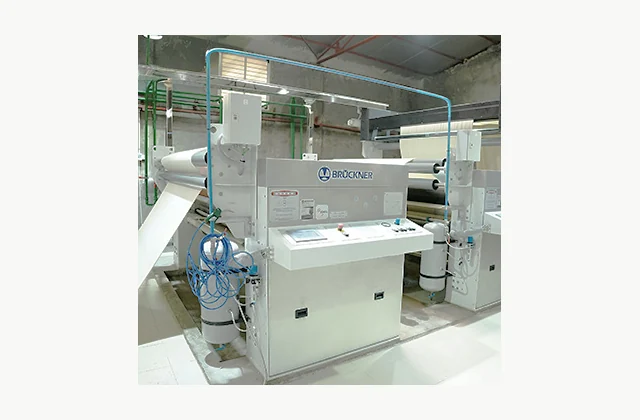
Shown as a configuration reference. Availability and the equipment offered for your project are confirmed separately.
Define fabric and treatment liquor
Provide fiber, construction, working width, mass and absorbency with the treatment chemistry and technical instructions. Include viscosity, solids and temperature conditions. A padder used for one aqueous treatment cannot automatically be assigned another chemistry when roll coverings, seals, filtration and the process route require different compatibility checks.
Choose bath and liquor handling
Describe immersion or application requirements, bath volume, circulation, level control and filtration in the offered arrangement. Define replenishment and sampling responsibilities. Uniform nip action cannot compensate for a treatment bath whose concentration, temperature or contamination changes during the run, so include the upstream chemical preparation boundary.
Match rolls covers and loading
Identify roll dimensions, covering material, hardness and the loading or deflection-control method for the exact offer. Check compatibility with the actual width and fabric. A total-pressure number is insufficient to demonstrate even squeeze action from center to edge or suitability for a delicate and highly absorbent construction.
Measure pickup across width and length
Agree a wet-pickup method based on representative fabric mass and sampling positions. Record actual pressure, speed and liquor conditions with the samples. A uniform-looking wet web can still have different chemical loading across its width, so the required treatment should be judged through measured pickup and any finished-property test.
Control tension edges and following stages
Define entry spread, edge condition, allowable extension and the handover to drying or fixation. Include start-stop behavior and any accumulator. A padder is one application step; a quote must not imply that its wet output is a finished treatment without the specified downstream process and controlled web handling.
Plan cleaning roll care and changes
List liquor changes, contamination limits and approved cleaning with the chemical supplier. Obtain roll inspection and replacement instructions and the access needed for maintenance. Surface wear or chemical swelling can alter pickup while the set pressure is unchanged, so include restoration and trial verification in the service plan.
Compare a complete textile padder scope
| Decision | Information to compare |
|---|---|
| Define fabric and treatment liquor | Fabric properties, absorbency, liquor instructions, viscosity/solids and temperature |
| Choose bath and liquor handling | Bath/application arrangement, circulation, filtration, concentration control and preparation boundary |
| Match rolls covers and loading | Roll covers/hardness, loading system, working width and chemical compatibility |
| Measure pickup across width and length | Pickup measurement, center/edge sampling, pressure/speed records and property tests |
| Control tension edges and following stages | Spreading, tension/edge limits, transitions and downstream drying/fixation interface |
| Plan cleaning roll care and changes | Liquor change/cleanout, contamination limits, roll inspection and service spares |
Plan installation and access
Qualified process and mechanical personnel should coordinate chemical preparation, bath services, drainage and the downstream fabric route. Electrical and safety specialists should assess nip protection and safe cleaning access. Retain the actual roll-cover specification, loading calibration, liquor-compatible component list and the approved sampling and maintenance procedures.
Agree acceptance evidence before ordering
Run representative fabric and treatment liquor at documented conditions. Measure wet pickup across width and over the run, then assess the specified finished property after the complete downstream process. Demonstrate liquor change, cleaning and stable restart, recording concentration, temperature and good treated length rather than accepting unloaded roll rotation.
Define OEM/ODM engineering boundaries
OEM widths, bath arrangements and approved loading packages can be reviewed. ODM rolls, chemical-contact parts or control systems require compatibility assessment and process trials. Reference imagery establishes neither agency nor a universal pickup accuracy or an included drying and fixation line for every treatment.
What should your textile padder RFQ include?
- Fabric properties, absorbency, liquor instructions, viscosity/solids and temperature
- Bath/application arrangement, circulation, filtration, concentration control and preparation boundary
- Roll covers/hardness, loading system, working width and chemical compatibility
- Pickup measurement, center/edge sampling, pressure/speed records and property tests
- Spreading, tension/edge limits, transitions and downstream drying/fixation interface
- Liquor change/cleanout, contamination limits, roll inspection and service spares
- Destination, working environment, access and delivery constraints
- Installation responsibility, utilities and connection drawings
- Acceptance samples, documented test method, operator training and maintenance scope
- OEM/ODM changes requested: identification, tooling, interfaces or new design; engineering feasibility to be confirmed
Need OEM / ODM customization?
Submit branding, packaging, configuration or engineering requirements for this equipment. Include the target market, initial and annual quantities, required changes and acceptance criteria.
Customization feasibility, permitted branding, development responsibilities, minimum quantity, cost and lead time are reviewed for the proposed supplier and configuration before a quotation is confirmed.
Frequently asked questions
How do I define fabric and treatment liquor?
Provide fiber, construction, working width, mass and absorbency with the treatment chemistry and technical instructions. Include viscosity, solids and temperature conditions. A padder used for one aqueous treatment cannot automatically be assigned another chemistry when roll coverings, seals, filtration and the process route require different compatibility checks.
How do I choose bath and liquor handling?
Describe immersion or application requirements, bath volume, circulation, level control and filtration in the offered arrangement. Define replenishment and sampling responsibilities. Uniform nip action cannot compensate for a treatment bath whose concentration, temperature or contamination changes during the run, so include the upstream chemical preparation boundary.
How do I match rolls covers and loading?
Identify roll dimensions, covering material, hardness and the loading or deflection-control method for the exact offer. Check compatibility with the actual width and fabric. A total-pressure number is insufficient to demonstrate even squeeze action from center to edge or suitability for a delicate and highly absorbent construction.
How do I measure pickup across width and length?
Agree a wet-pickup method based on representative fabric mass and sampling positions. Record actual pressure, speed and liquor conditions with the samples. A uniform-looking wet web can still have different chemical loading across its width, so the required treatment should be judged through measured pickup and any finished-property test.
How do I control tension edges and following stages?
Define entry spread, edge condition, allowable extension and the handover to drying or fixation. Include start-stop behavior and any accumulator. A padder is one application step; a quote must not imply that its wet output is a finished treatment without the specified downstream process and controlled web handling.
How do I plan cleaning roll care and changes?
List liquor changes, contamination limits and approved cleaning with the chemical supplier. Obtain roll inspection and replacement instructions and the access needed for maintenance. Surface wear or chemical swelling can alter pickup while the set pressure is unchanged, so include restoration and trial verification in the service plan.
Reference information
- BRÜCKNER POWER-PAD official product reference
- BRÜCKNER textile padder official family or technical reference
Reference data and images explain equipment configurations. IndustryApex engineers confirm the offered model, specification and commercial scope in your project quotation.