
Select a multi-ply fabric cutting system from the compressed lay, material stability and required piece accuracy. Match knife, vacuum, spreading and offloading interfaces, then compare accepted parts from the top, middle and bottom of representative production lays. Cut agreed production markers across the material and compressed-height range. Measure critical dimensions, notches and drills on defined samples from all lay levels, including small pieces and curved cuts. Demonstrate marker revision, sharpening, lay transfer and offloading, recording accepted bundles and the settings used for each material. Submit the intended configuration and any OEM/ODM changes for project-specific feasibility review.
Select a multi-ply fabric cutting system from the compressed lay, material stability and required piece accuracy. Match knife, vacuum, spreading and offloading interfaces, then compare accepted parts from the top, middle and bottom of representative production lays.
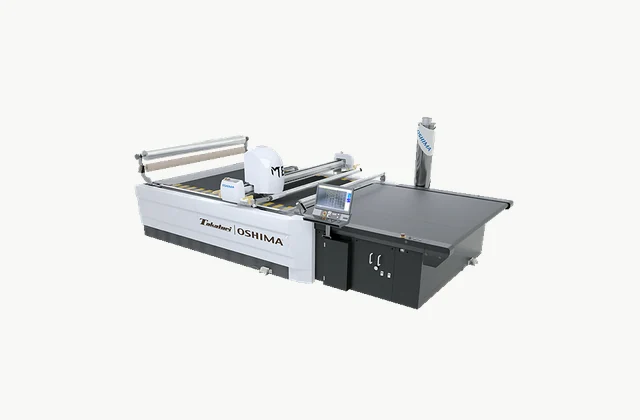
Shown as a configuration reference. Availability and the equipment offered for your project are confirmed separately.
Define fabric lays in their cutting condition
Provide fabric construction, width, layer count and compressed lay height for the intended styles. Include coatings, elastane and surface friction. An uncompressed stack measurement or a headline maximum cutting height cannot establish how a knife will behave through the actual production lay under vacuum.
Control spreading tension and relaxation
Describe the spreading equipment, fabric relaxation time and allowable extension before cutting. State how edges and grain are aligned. A cutter cannot recover accurate dimensions from an unstable or tensioned lay, so spreading and relaxation responsibilities must remain explicit even when purchased from another supplier.
Choose knife and detail tooling
Provide patterns with small radii, notches, drills and delicate corners. Review blade type, cooling or sharpening arrangements actually supplied. A machine capable of cutting a simple rectangle may not meet notch location or hole requirements through every layer of a dense or heat-sensitive lay.
Verify vacuum holding and conveyor transfers
Match vacuum zoning, table sealing and lay permeability to the material. Check movement during cutting and any transfer between conveyor sections. High pump power is not a substitute for a stable lay, particularly when small pieces are released or the cut nest approaches the table boundary.
Connect markers and cut-piece identification
Confirm pattern and marker formats, nesting responsibility, software licenses and revision control. Define bundle labels and offloading sequence for sewing. A file opening successfully does not prove the marker uses the correct size revision, fabric direction or part quantities for the production order.
Measure full-cycle good-part output
Trial representative markers at normal lay heights and record loading, cutting, sharpening, transfer and offloading. Measure pieces from top, middle and bottom layers. Compare good bundles after inspection rather than knife travel speed, and identify consumables and service skills required to restore accepted cutting quality after wear.
Compare a complete multi-ply fabric cutting system scope
| Decision | Information to compare |
|---|---|
| Define fabric lays in their cutting condition | Fabric construction, width, ply count, compressed lay height and surface friction |
| Control spreading tension and relaxation | Spreader interface, relaxation procedure, extension limits and grain alignment |
| Choose knife and detail tooling | Pattern radii, notches/drills, blade package and heat-sensitive detail trials |
| Verify vacuum holding and conveyor transfers | Material permeability, vacuum zoning, transfer movement and small-piece stability |
| Connect markers and cut-piece identification | Marker formats, licenses, nesting rules, revisions and bundle identification |
| Measure full-cycle good-part output | Layer-by-layer accuracy, good bundles, complete cycle and knife/service consumables |
Plan installation and access
Coordinate spreader, lay staging, conveyor tables and offloading access with the supplied cutter layout. Qualified installers should verify electrical, air, extraction and vacuum requirements for all included modules. Retain guarding and safe knife-service instructions, software backups, operator training and the approved pattern-transfer workflow.
Agree acceptance evidence before ordering
Cut agreed production markers across the material and compressed-height range. Measure critical dimensions, notches and drills on defined samples from all lay levels, including small pieces and curved cuts. Demonstrate marker revision, sharpening, lay transfer and offloading, recording accepted bundles and the settings used for each material.
Define OEM/ODM engineering boundaries
OEM tables, tooling and approved software interfaces can be reviewed. ODM knife mechanisms, vacuum zones or automated handling require engineering and lay trials. Reference imagery does not establish agency, included spreading equipment or a guaranteed cutting height and accuracy for a different fabric stack.
What should your multi-ply fabric cutting system RFQ include?
- Fabric construction, width, ply count, compressed lay height and surface friction
- Spreader interface, relaxation procedure, extension limits and grain alignment
- Pattern radii, notches/drills, blade package and heat-sensitive detail trials
- Material permeability, vacuum zoning, transfer movement and small-piece stability
- Marker formats, licenses, nesting rules, revisions and bundle identification
- Layer-by-layer accuracy, good bundles, complete cycle and knife/service consumables
- Destination, working environment, access and delivery constraints
- Installation responsibility, utilities and connection drawings
- Acceptance samples, documented test method, operator training and maintenance scope
- OEM/ODM changes requested: identification, tooling, interfaces or new design; engineering feasibility to be confirmed
Need OEM / ODM customization?
Submit branding, packaging, configuration or engineering requirements for this equipment. Include the target market, initial and annual quantities, required changes and acceptance criteria.
Customization feasibility, permitted branding, development responsibilities, minimum quantity, cost and lead time are reviewed for the proposed supplier and configuration before a quotation is confirmed.
Frequently asked questions
How do I define fabric lays in their cutting condition?
Provide fabric construction, width, layer count and compressed lay height for the intended styles. Include coatings, elastane and surface friction. An uncompressed stack measurement or a headline maximum cutting height cannot establish how a knife will behave through the actual production lay under vacuum.
How do I control spreading tension and relaxation?
Describe the spreading equipment, fabric relaxation time and allowable extension before cutting. State how edges and grain are aligned. A cutter cannot recover accurate dimensions from an unstable or tensioned lay, so spreading and relaxation responsibilities must remain explicit even when purchased from another supplier.
How do I choose knife and detail tooling?
Provide patterns with small radii, notches, drills and delicate corners. Review blade type, cooling or sharpening arrangements actually supplied. A machine capable of cutting a simple rectangle may not meet notch location or hole requirements through every layer of a dense or heat-sensitive lay.
How do I verify vacuum holding and conveyor transfers?
Match vacuum zoning, table sealing and lay permeability to the material. Check movement during cutting and any transfer between conveyor sections. High pump power is not a substitute for a stable lay, particularly when small pieces are released or the cut nest approaches the table boundary.
How do I connect markers and cut-piece identification?
Confirm pattern and marker formats, nesting responsibility, software licenses and revision control. Define bundle labels and offloading sequence for sewing. A file opening successfully does not prove the marker uses the correct size revision, fabric direction or part quantities for the production order.
How do I measure full-cycle good-part output?
Trial representative markers at normal lay heights and record loading, cutting, sharpening, transfer and offloading. Measure pieces from top, middle and bottom layers. Compare good bundles after inspection rather than knife travel speed, and identify consumables and service skills required to restore accepted cutting quality after wear.
Reference information
- OSHIMA M8S official product reference
- OSHIMA multi-ply fabric cutting system official family or technical reference
Reference data and images explain equipment configurations. IndustryApex engineers confirm the offered model, specification and commercial scope in your project quotation.