PLASTICS & RECYCLING
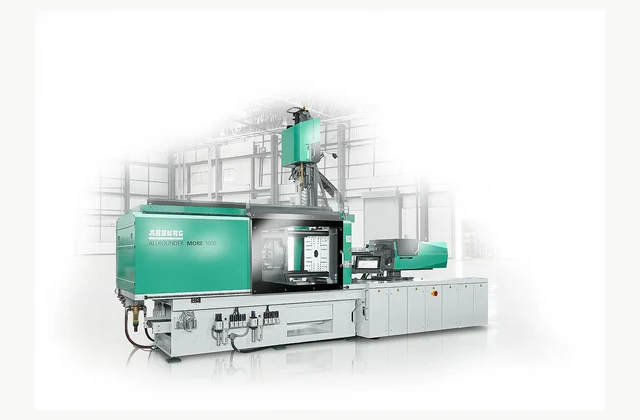
Plastic injection molding machine
Select injection molding machines around the part, resin, mold envelope and validated good-part cycle.
Explore the buying guideReference: Haitian Mars IIs injection molding machine family

Equipment category
Build a process specification for molding, extrusion, material preparation and recycling from the actual resin, feedstock and finished-output requirements.
Select injection molding machines around the part, resin, mold envelope and validated good-part cycle.
Explore the buying guideReference: Haitian Mars IIs injection molding machine family

Specify a plastic extrusion line from resin, finished profile or pipe geometry and the entire downstream process.
Explore the buying guideReference: JWELL Large-diameter HDPE pipe extrusion line family
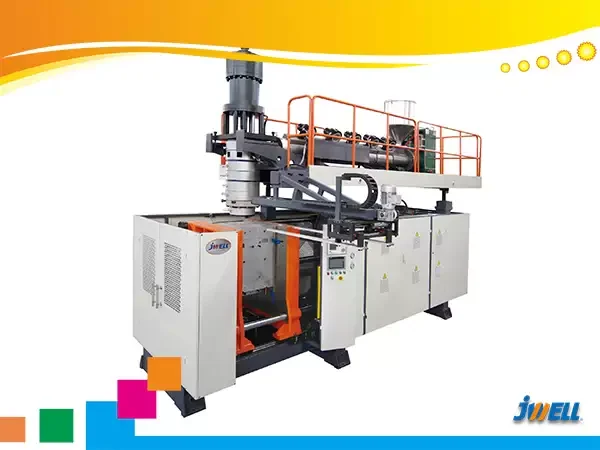
Select plastic blow molding around the hollow part, resin, mold layout and tested wall distribution.
Explore the buying guideReference: JWELL 100L open-top barrel extrusion blow molding family
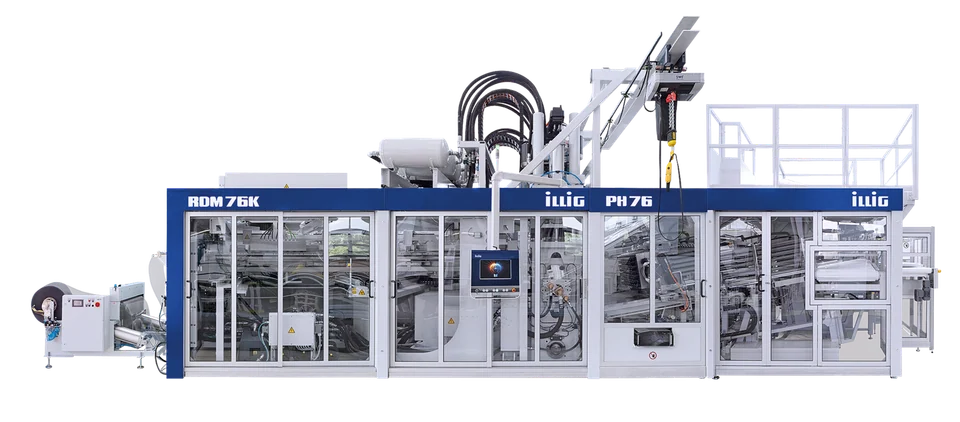
Match thermoforming machines to sheet or roll material, draw geometry, tooling and the complete trim-and-stack process.
Explore the buying guideReference: ILLIG RDM 76K 4G roll-fed thermoformer

Injection stretch blow molding combines preform injection with controlled stretching and blowing to produce plastic containers. Begin with the container drawing, resin and required finished-container tests. Compare process architecture, molds, neck handling, utilities and changeovers before agreeing machine output or an OEM/ODM container-development project.
Explore the buying guideReference: Nissei ASB ASB-70DPH

An injection blow molding machine injection-forms a preform around a core before blowing the container. It differs from injection stretch blow molding because a stretching stage must not be assumed. Compare application fit, configuration and OEM/ODM scope through the buyer checklist below.
Explore the buying guideReference: Jomar Model 85S Gen2 hybrid
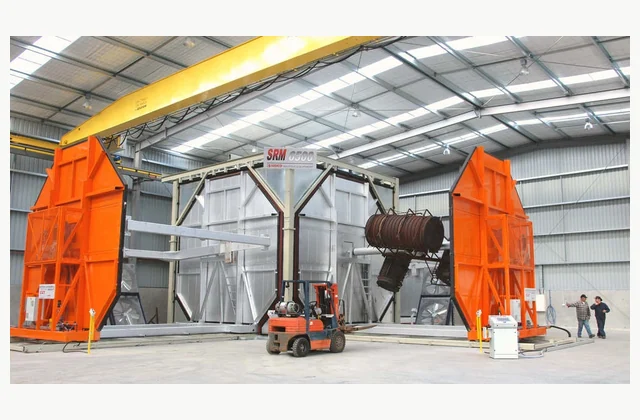
Rotational molding uses a heated mold and controlled rotation to distribute polymer for hollow parts. Oven, arm and cooling arrangements must fit the whole mold cycle, including loading, insert placement and demolding. Compare application fit, configuration and OEM/ODM scope through the buyer checklist below.
Explore the buying guideReference: Rotomachinery Group Shuttle SRM family

Plastic compression molding forms a prepared polymer charge inside closing tooling. Continuous closure-making equipment is a specific process example; buyers should distinguish it from generic presses and injection-molding systems. Compare application fit, configuration and OEM/ODM scope through the buyer checklist below.
Explore the buying guideReference: SACMI CCM32MB compression molding machine

Particle foam shape molding machines fuse expanded polymer beads within shaped tooling. They serve molded protective, insulating or technical parts, whereas producing large EPS blocks for later cutting is a different procurement family with different handling and acceptance needs. Compare application fit, configuration and OEM/ODM scope through the buyer checklist below.
Explore the buying guideReference: Kurtz PRO FOAMER shape molding machine

EPS block molding machines fuse pre-expanded polystyrene beads into large blocks for subsequent conditioning and cutting. They differ from shape molding equipment that produces finished three-dimensional parts directly in dedicated cavities; block quality must be assessed across the entire section. Compare application fit, configuration and OEM/ODM scope through the buyer checklist below.
Explore the buying guideReference: HIRSCH MONOLITH EPS block molding machine

Polyurethane metering and foaming equipment conditions and doses reactive components before mixing them for a defined process. The product may be insulation, flexible foam or another polyurethane article, but chemical systems and process layouts cannot be treated as interchangeable merely because both use PU. Compare application fit, configuration and OEM/ODM scope through the buyer checklist below.
Explore the buying guideReference: KraussMaffei RimStar PU metering machine

Composite pultrusion lines continuously pull reinforcing fibers through a resin application and shaping or curing process to make profiles. They differ from plastic-only profile extruders and from winding machines that place fibers around a rotating mandrel; reinforcement architecture is central to selection. Compare application fit, configuration and OEM/ODM scope through the buyer checklist below.
Explore the buying guideReference: KraussMaffei/Pultrex iPul pultrusion system

Filament winding machines place continuous reinforcement around a rotating mandrel according to a controlled path. They are used for hollow composite components, with fiber angle, tension and material delivery shaping the laminate; curing and mandrel removal may require separate equipment. Compare application fit, configuration and OEM/ODM scope through the buyer checklist below.
Explore the buying guideReference: Roth Composite Machinery Type 1 Twin filament winding machine

Plastic pipe extrusion lines melt polymer, form an annular section and control it through sizing, cooling, hauling and cutting or coiling. Solid-wall pipe production is distinct from double-wall corrugated pipe equipment, whose forming process and tooling require a separate purchasing review. Compare application fit, configuration and OEM/ODM scope through the buyer checklist below.
Explore the buying guideReference: JWELL PE solid pipe extrusion line

Double-wall corrugated pipe lines create a structured pipe wall with a corrugated exterior and an inner layer, using a forming system distinct from solid-wall extrusion. Melt delivery, moving mold blocks, cooling and joining between wall regions must work together for the intended pipe construction. Compare application fit, configuration and OEM/ODM scope through the buyer checklist below.
Explore the buying guideReference: JWELL Vertical double-wall corrugated pipe production line

Plastic profile extrusion lines produce continuous shaped sections through a die and downstream calibration, cooling, pulling and cutting. Hollow window profiles are one reference application. They differ from pipe lines and from fiber-reinforced pultrusion, even when finished sections appear superficially similar. Compare application fit, configuration and OEM/ODM scope through the buyer checklist below.
Explore the buying guideReference: JWELL PVC window profile extrusion line
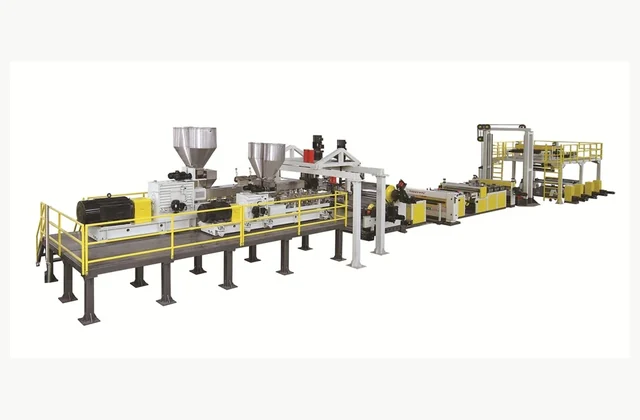
Plastic sheet extrusion lines produce a continuous flat web that is cooled and delivered as rolls or cut sheets. A PET sheet line is one reference application. Sheet thickness, surface, flatness and downstream forming needs differ from those of thin cast packaging film. Compare application fit, configuration and OEM/ODM scope through the buyer checklist below.
Explore the buying guideReference: JWELL PET twin-screw sheet extrusion line
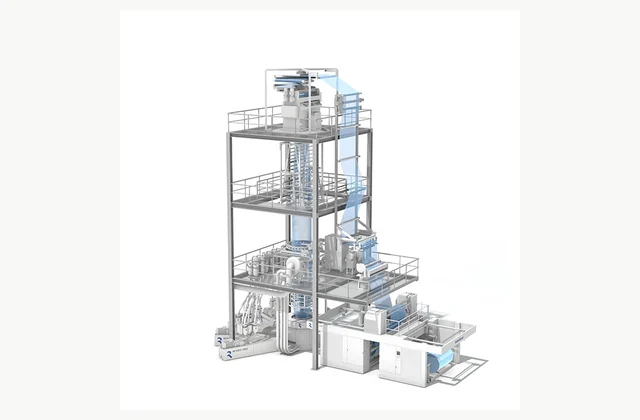
Blown film extrusion lines form a molten polymer tube, inflate and cool it, then collapse and wind the film. They differ from cast film lines that cool a flat web on rolls. Bubble stability, layer construction and winding requirements shape the useful configuration. Compare application fit, configuration and OEM/ODM scope through the buyer checklist below.
Explore the buying guideReference: Reifenhauser EVO blown film line
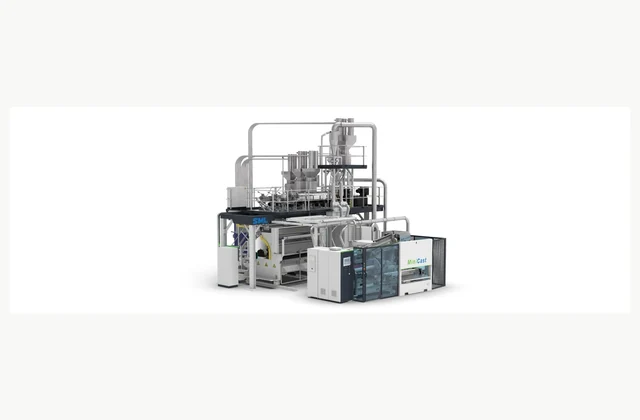
Cast film extrusion lines spread molten polymer through a flat die onto a cooling arrangement before winding. They differ from blown film towers and from thicker sheet lines. Web uniformity, cooling, edge management and roll delivery define the useful film production specification. Compare application fit, configuration and OEM/ODM scope through the buyer checklist below.
Explore the buying guideReference: SML MiniCast stretch wrap cast film line
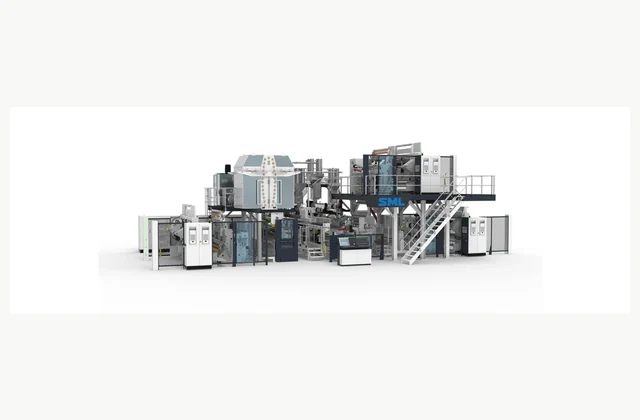
Extrusion coating and lamination lines apply molten polymer to a moving substrate or use it to bond webs. They differ from machines that make free-standing cast film. Substrate handling, adhesion, coating uniformity and winding are central to selecting the complete converting system. Compare application fit, configuration and OEM/ODM scope through the buyer checklist below.
Explore the buying guideReference: SML FlexPack extrusion coating and laminating line

Plastic foam sheet extrusion lines create a cellular sheet or an intermediate web for subsequent foaming stages, depending on the polymer and process. XPE equipment illustrates one material route. Physical foaming, chemical foaming and crosslinking-based systems must not be treated as equivalent single-step machines. Compare application fit, configuration and OEM/ODM scope through the buyer checklist below.
Explore the buying guideReference: JWELL XPE foam sheet extrusion line

A wood plastic composite extrusion line combines polymer and plant filler to make profiles such as decking. Filler preparation and moisture distinguish the process from ordinary neat-polymer profile extrusion. Start with polymer wood filler recipe and additives and filler particle moisture and preparation, then compare the complete configured system and a documented acceptance trial.
Explore the buying guideReference: JWELL PE/PP WPC decking profile extrusion line
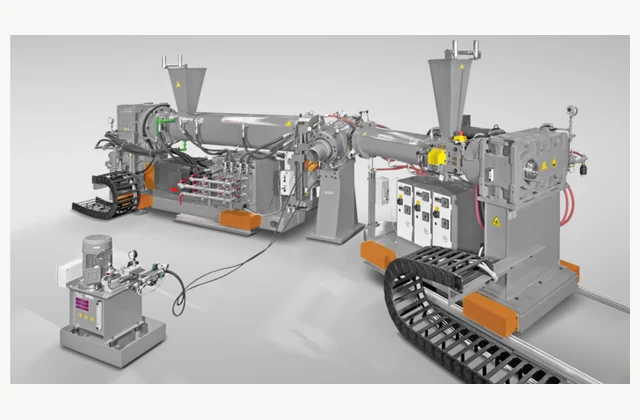
A wire and cable coating line extrudes insulation or sheathing around a moving conductor. Concentricity and electrical integrity distinguish it from making unsupported plastic pipe or profiles. Start with conductor drawing diameter and construction and insulation sheath polymer and layers, then compare the complete configured system and a documented acceptance trial.
Explore the buying guideReference: TROESTER GS cable extrusion unit

A twin screw compounding line disperses ingredients into polymer under controlled shear and residence. It makes a formulated compound, unlike simply remelting scrap to cut pellets. Start with polymer additive filler liquid recipe and moisture heat and hazard sensitivities, then compare the complete configured system and a documented acceptance trial.
Explore the buying guideReference: Coperion ZSK Mc18 twin screw compounding extruder
Build a comparable request
Share the application, required output, destination, utilities, quantities and planned timing. For OEM / ODM projects, include the branding, configuration or engineering changes, sample approval and acceptance requirements.
Practical buying decisions
A comparable multi component injection molding system quotation starts with part and multi-material interface drawing, material grades colors and shrinkage, bonding separation appearance targets. Record the required result, site interfaces and acceptance evidence in one revision-controlled RFQ. IndustryApex engineers use these inputs to define the…
Read the guideA comparable thermoset injection molding system quotation starts with thermoset grade reinforcement and storage, part cure dimensional property targets, abrasiveness moisture release behavior. Record the required result, site interfaces and acceptance evidence in one revision-controlled RFQ. IndustryApex engineers use these inputs to define the equipment,…
Read the guideA comparable liquid silicone injection molding system quotation starts with two-part silicone grade and ratio, part drawing flash and cure limits, color inserts cleanliness requirements. Record the required result, site interfaces and acceptance evidence in one revision-controlled RFQ. IndustryApex engineers use these inputs to define…
Read the guide