
Rotational molding uses a heated mold and controlled rotation to distribute polymer for hollow parts. Oven, arm and cooling arrangements must fit the whole mold cycle, including loading, insert placement and demolding. Provide part drawings, resin powder, wall requirements and the mold envelope with its fixture and charge. Consider the largest turning envelope and center of gravity rather than finished part dimensions alone.
Rotational molding uses a heated mold and controlled rotation to distribute polymer for hollow parts. Oven, arm and cooling arrangements must fit the whole mold cycle, including loading, insert placement and demolding. Compare application fit, configuration and OEM/ODM scope through the buyer checklist below.
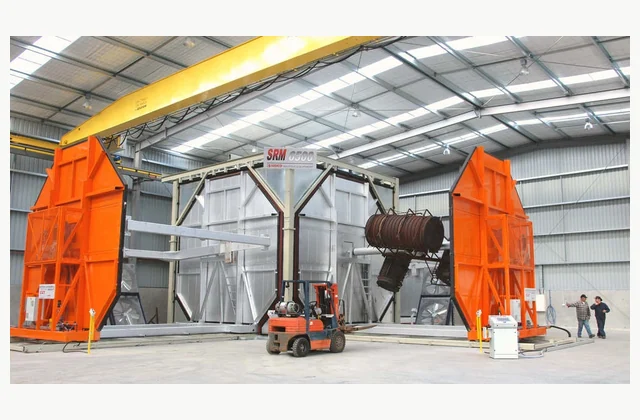
Shown as a configuration reference. Availability and the equipment offered for your project are confirmed separately.
Arm layout: application and input specification
Rotational molding uses a heated mold and controlled rotation to distribute polymer for hollow parts. Oven, arm and cooling arrangements must fit the whole mold cycle, including loading, insert placement and demolding.
Provide part drawings, resin powder, wall requirements and the mold envelope with its fixture and charge. Consider the largest turning envelope and center of gravity rather than finished part dimensions alone.
Rotational molding commonly develops a hollow wall without a conventional injection gate, but that does not make wall distribution automatic. Part corners, deep recesses and inserts influence heating and polymer movement. Ask for a technical review of the proposed geometry before treating the machine envelope as sufficient evidence.
Mold envelope: configuration tradeoffs
Compare shuttle, carousel or other proposed arm layouts against different SKU cycle times. Independently moving molds can change scheduling, but the oven, cooling and labor balance still need a complete production study.
The mold includes more than the cavity dimensions. Flanges, vents, clamps and the support spider travel through the heating and cooling cycle. Provide the complete assembly mass and turning envelope, with lifting points and intended orientation, so arm loading and access can be reviewed together.
| Decision | What to resolve | Useful evidence |
|---|---|---|
| Arm layout | SKU cycle compatibility | Complete mold-cycle observation |
| Mold envelope | Turning clearance and fixtures | Dimensioned layout and fixture review |
| Cooling | Part release and distortion | Accepted part after normal demolding |
Process integration and handover points
Assign mold clamping, lifting, powder charging, venting, inserts and product removal. Plan how each mold travels between oven and cooling positions and how operators reach it without creating conflicts with moving arms.
Product scheduling determines whether a shuttle arrangement is suitable. A long-cycle part can occupy heating or cooling resources differently from several smaller molds. Compare the complete planned mix and operator sequence, including how work continues when a mold needs extra cooling or manual insert preparation.
Installation and maintainable operating arrangements
Review heating fuel or electrical supply, ventilation and process cooling. Confirm floor loading, clearances and the route for replacing molds. Include powder handling and the specific cleaning and housekeeping requirements of the resin.
Cooling is a dimensional process step rather than simply waiting for demolding. Review the sequence proposed for the resin and geometry, the available cooling medium and how the part remains supported. Inspect distortion after the agreed conditioning period instead of measuring only a freshly released part.
Acceptance evidence for cooling
Mold representative parts and inspect wall distribution, dimensions, appearance and application-specific functionality. Record charge, mold revision and process recipe. Include demolding and a normal mold change when comparing accepted output.
Powder preparation and weighing influence repeatability. State how resin, color and any additives will be received, stored and charged, including controls against contamination between colors. Ask who supplies dosing aids and how the charge associated with each accepted trial part will be recorded.
OEM/ODM scope and future changes
ODM can cover arm fixtures, unusual mold envelopes or part-handling automation. Agree fixture calculations, mold ownership, recipe records and altered-cycle acceptance. Machine paint and labels are a separate OEM request.
For customized tanks or technical housings, identify the functional tests downstream of molding. Leak paths around inserts, mating surfaces and mounting features may govern acceptance more than exterior appearance. Keep the mold revision, powder identity and cycle record with these results for subsequent production qualification.
Image reference: Rotomachinery Group Shuttle SRM family. The illustrated manufacturer configuration does not establish stock, an agency appointment or permission to relabel it. OEM/ODM requests require a written feasibility response for the actual proposed equipment.
What should your rotational molding machine RFQ include?
- Part drawings and hollow geometry
- Resin powder grade and additives
- Mold envelope, mass and center of gravity
- Charge method, inserts and venting
- SKU mix and complete cycle expectations
- Arm fixtures and demolding access
- Heating, cooling and ventilation duties
- Mold movement and floor layout
- Part wall/dimensional acceptance
- OEM/ODM fixtures, mold ownership and recipes
Need OEM / ODM customization?
Submit branding, packaging, configuration or engineering requirements for this equipment. Include the target market, initial and annual quantities, required changes and acceptance criteria.
Customization feasibility, permitted branding, development responsibilities, minimum quantity, cost and lead time are reviewed for the proposed supplier and configuration before a quotation is confirmed.
Frequently asked questions
What inputs determine selection of rotational molding machine?
Provide part drawings, resin powder, wall requirements and the mold envelope with its fixture and charge. Consider the largest turning envelope and center of gravity rather than finished part dimensions alone.
How should I compare mold envelope options?
Compare shuttle, carousel or other proposed arm layouts against different SKU cycle times. Independently moving molds can change scheduling, but the oven, cooling and labor balance still need a complete production study.
Which adjoining operations need to be specified?
Assign mold clamping, lifting, powder charging, venting, inserts and product removal. Plan how each mold travels between oven and cooling positions and how operators reach it without creating conflicts with moving arms.
What is a useful acceptance trial for rotational molding machine?
Mold representative parts and inspect wall distribution, dimensions, appearance and application-specific functionality. Record charge, mold revision and process recipe. Include demolding and a normal mold change when comparing accepted output.
Which OEM/ODM changes can I request?
ODM can cover arm fixtures, unusual mold envelopes or part-handling automation. Agree fixture calculations, mold ownership, recipe records and altered-cycle acceptance. Machine paint and labels are a separate OEM request.
What application boundary is easy to overlook?
Rotational molding commonly develops a hollow wall without a conventional injection gate, but that does not make wall distribution automatic. Part corners, deep recesses and inserts influence heating and polymer movement. Ask for a technical review of the proposed geometry before treating the machine envelope as sufficient evidence.
Reference information
- Rotomachinery Group Shuttle SRM family official reference
- Rotomachinery Group related technology or portfolio reference
Reference data and images explain equipment configurations. IndustryApex engineers confirm the offered model, specification and commercial scope in your project quotation.