
Cast film extrusion lines spread molten polymer through a flat die onto a cooling arrangement before winding. They differ from blown film towers and from thicker sheet lines. Web uniformity, cooling, edge management and roll delivery define the useful film production specification. Specify polymer formulations, layer construction, useful film width and thickness with converting requirements. Include mechanical, optical, sealing or stretch performance as applicable. A line's maximum speed is not a product qualification and should not substitute for accepted film properties.
Cast film extrusion lines spread molten polymer through a flat die onto a cooling arrangement before winding. They differ from blown film towers and from thicker sheet lines. Web uniformity, cooling, edge management and roll delivery define the useful film production specification. Compare application fit, configuration and OEM/ODM scope through the buyer checklist below.
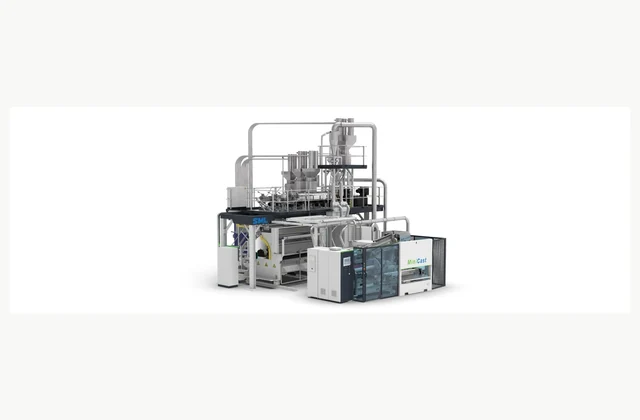
Shown as a configuration reference. Availability and the equipment offered for your project are confirmed separately.
Film construction: application and input specification
Cast film extrusion lines spread molten polymer through a flat die onto a cooling arrangement before winding. They differ from blown film towers and from thicker sheet lines. Web uniformity, cooling, edge management and roll delivery define the useful film production specification.
Specify polymer formulations, layer construction, useful film width and thickness with converting requirements. Include mechanical, optical, sealing or stretch performance as applicable. A line's maximum speed is not a product qualification and should not substitute for accepted film properties.
Stretch film requires an application-specific evaluation. Useful elongation, load containment and handling depend on the product specification and test method. The MiniCast reference illustrates a cast stretch-film system, but its image should not be read as evidence for every cast-film application.
Useful yield: configuration tradeoffs
Compare extrusion, feedblock and die concepts, chill-roll arrangement, web treatment and winding against the construction. Review how each layer contributes to the film. Additional extruders or layers should address a defined function rather than being purchased as an unexplained flexibility claim.
Web edges influence both yield and winding. Define the useful width after trim and ask how trim is collected and returned where proposed. A wider die does not necessarily create more accepted rolls if edge instability or trimming consumes the added material.
| Decision | What to resolve | Useful evidence |
|---|---|---|
| Film construction | Layer purpose and material behavior | Actual-formulation property samples |
| Useful yield | Trim and gauge consistency | Defined-width accepted-roll evaluation |
| Winding | Roll build and later conversion | Conditioned-roll converter trial |
Process integration and handover points
Assign resin feeding, melt treatment, film casting, cooling, trimming, treatment and roll handling. Coordinate trim return and downstream converting. Define the accepted width and roll format so output comparisons exclude unstable edges, transition material or film that cannot be used by the converter.
Cooling conditions affect structure and surface. Review resin, die and roll arrangements together and keep the trial conditions traceable. A material change may require adjustment across the line rather than simply altering the extruder temperature or reusing the previous film recipe.
Installation and maintainable operating arrangements
Review power, cooling-water quality, temperature control and floor space for the complete line. Reserve die-cleaning, roll-service and reel-handling access. Include management of trim and startup scrap so the offered production arrangement can run without obstructing maintenance or accepted-roll movement.
Gauge acceptance needs a sampling plan across and along the web. Include the finished roll and relevant conditioning period. A favorable sample near the center of a short trial is insufficient when the converter needs stable material across the entire useful width and campaign.
Acceptance evidence for winding
Produce the specified construction from actual materials and inspect gauge distribution, surface, relevant film properties and roll build. Include ordinary recipe or format changes and a converter trial where needed. Evaluate useful wound film rather than melt output or a short visually attractive web.
The winder must suit the roll format and film surface. Blocking, telescoping or tension effects can appear after production. Inspect stored and converted rolls using the agreed handling conditions, including core and reel dimensions, instead of evaluating the film only while supported on the line.
OEM/ODM scope and future changes
ODM may include layer architecture, dies, cooling, treatment and winding interfaces. Agree material trials, recipe access and qualification responsibilities. OEM identification and manuals are separate from substantiating a new recyclable, food-contact or other application claim for the resulting film.
Maintain the approved formulation, layer, die and winding records together. A revised recycled input or a thinner construction can affect conversion and application performance. Review affected tests before presenting the new film as equivalent to the previously accepted product.
Image reference: SML MiniCast stretch wrap cast film line. The illustrated manufacturer configuration does not establish stock, an agency appointment or permission to relabel it. OEM/ODM requests require a written feasibility response for the actual proposed equipment.
Include these application details in your quotation request:
- Polymer blends and layer architecture
- Useful width, gauge and roll-format requirements
- Film-property and converting test methods
- Extruder, feedblock and flat-die concept
- Cooling-roll and water-circuit requirements
- Trim collection and controlled return scope
- Treatment, slitting and winding interfaces
- Die-service and reel-handling access
- Actual-construction film and converter trials
- OEM/ODM recipes and qualification responsibilities
What should your cast film extrusion line RFQ include?
- Polymer blends and layer architecture
- Useful width, gauge and roll-format requirements
- Film-property and converting test methods
- Extruder, feedblock and flat-die concept
- Cooling-roll and water-circuit requirements
- Trim collection and controlled return scope
- Treatment, slitting and winding interfaces
- Die-service and reel-handling access
- Actual-construction film and converter trials
- OEM/ODM recipes and qualification responsibilities
Need OEM / ODM customization?
Submit branding, packaging, configuration or engineering requirements for this equipment. Include the target market, initial and annual quantities, required changes and acceptance criteria.
Customization feasibility, permitted branding, development responsibilities, minimum quantity, cost and lead time are reviewed for the proposed supplier and configuration before a quotation is confirmed.
Frequently asked questions
What inputs determine selection of cast film extrusion line?
Specify polymer formulations, layer construction, useful film width and thickness with converting requirements. Include mechanical, optical, sealing or stretch performance as applicable. A line's maximum speed is not a product qualification and should not substitute for accepted film properties.
How should I compare useful yield options?
Compare extrusion, feedblock and die concepts, chill-roll arrangement, web treatment and winding against the construction. Review how each layer contributes to the film. Additional extruders or layers should address a defined function rather than being purchased as an unexplained flexibility claim.
Which adjoining operations need to be specified?
Assign resin feeding, melt treatment, film casting, cooling, trimming, treatment and roll handling. Coordinate trim return and downstream converting. Define the accepted width and roll format so output comparisons exclude unstable edges, transition material or film that cannot be used by the converter.
What is a useful acceptance trial for cast film extrusion line?
Produce the specified construction from actual materials and inspect gauge distribution, surface, relevant film properties and roll build. Include ordinary recipe or format changes and a converter trial where needed. Evaluate useful wound film rather than melt output or a short visually attractive web.
Which OEM/ODM changes can I request?
ODM may include layer architecture, dies, cooling, treatment and winding interfaces. Agree material trials, recipe access and qualification responsibilities. OEM identification and manuals are separate from substantiating a new recyclable, food-contact or other application claim for the resulting film.
What application boundary is easy to overlook?
Stretch film requires an application-specific evaluation. Useful elongation, load containment and handling depend on the product specification and test method. The MiniCast reference illustrates a cast stretch-film system, but its image should not be read as evidence for every cast-film application.
Reference information
- SML MiniCast stretch wrap cast film line official reference
- SML related technology or portfolio reference
Reference data and images explain equipment configurations. IndustryApex engineers confirm the offered model, specification and commercial scope in your project quotation.