
Plastic sheet extrusion lines produce a continuous flat web that is cooled and delivered as rolls or cut sheets. A PET sheet line is one reference application. Sheet thickness, surface, flatness and downstream forming needs differ from those of thin cast packaging film. Specify polymer formulation, incoming material condition, sheet dimensions and downstream application. Include recycled-content controls, surface quality and forming or optical requirements. Define measurement and sampling conditions so a nominal thickness range does not substitute for the actual sheet quality specification.
Plastic sheet extrusion lines produce a continuous flat web that is cooled and delivered as rolls or cut sheets. A PET sheet line is one reference application. Sheet thickness, surface, flatness and downstream forming needs differ from those of thin cast packaging film. Compare application fit, configuration and OEM/ODM scope through the buyer checklist below.
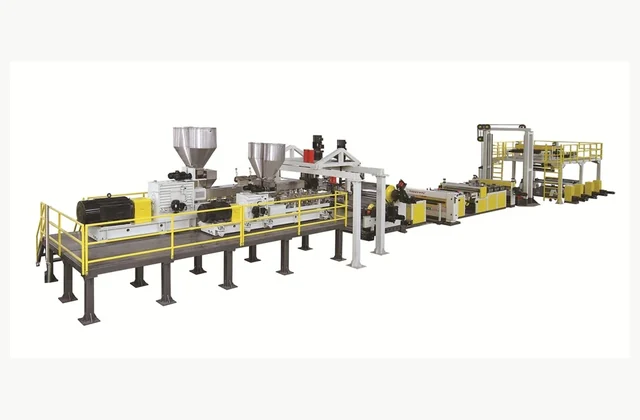
Shown as a configuration reference. Availability and the equipment offered for your project are confirmed separately.
Material route: application and input specification
Plastic sheet extrusion lines produce a continuous flat web that is cooled and delivered as rolls or cut sheets. A PET sheet line is one reference application. Sheet thickness, surface, flatness and downstream forming needs differ from those of thin cast packaging film.
Specify polymer formulation, incoming material condition, sheet dimensions and downstream application. Include recycled-content controls, surface quality and forming or optical requirements. Define measurement and sampling conditions so a nominal thickness range does not substitute for the actual sheet quality specification.
Material preparation must suit the polymer. PET and other moisture-sensitive materials need a defined conditioning or processing route. Ask the supplier to identify its inlet requirements and demonstrate the actual recycled or virgin blend rather than using an easier reference formulation.
Sheet quality: configuration tradeoffs
Compare extrusion and material-conditioning concepts, die, roll stack and winding or cutting against the resin and product. Review single or multilayer construction as a complete configuration. A high extrusion output is not useful if cooling and take-off cannot deliver accepted sheet.
Thickness should be evaluated across the web and along production. The buyer's useful width may exclude trim or unstable edge regions. Define where accepted sheet begins and ends so output comparisons use marketable material rather than the full die width.
| Decision | What to resolve | Useful evidence |
|---|---|---|
| Material route | Conditioning and recycled-feed control | Actual formulation processing trial |
| Sheet quality | Thickness, surface and flatness | Defined-position cooled-sheet samples |
| Conversion | Forming or other downstream use | Representative converter trial |
Process integration and handover points
Assign feeding, drying or degassing where required, melt treatment, sheet formation, cooling, trim collection and discharge. Coordinate any coating, protective film or inline forming operation. Identify who owns material preparation and quality at the inlet to the extruder and downstream converter.
Roll contact influences surface and cooling. Optical, printing or thermoforming applications can expose marks that a general visual check misses. Retain accepted samples and test the required downstream operation with the proposed roll finish and material formulation.
Installation and maintainable operating arrangements
Review power, temperature-control circuits, water quality and the complete line footprint. Reserve access for die cleaning, roll service and reel handling. Confirm how trim and startup scrap are collected without contaminating the specified material or obstructing accepted sheet movement.
Trim recycling can change the material balance. State whether edge trim returns inline, is separately processed or remains outside the offer. Control its identity and condition, particularly where repeated recirculation or mixed layers could alter the sheet's appearance or specified properties.
Acceptance evidence for conversion
Run the intended material blend into representative sheet and assess thickness distribution, surface, flatness and relevant downstream performance. Inspect wound rolls or cut sheets after normal cooling and handling. Include changeover and scrap behavior rather than accepting melt output alone.
Winding and sheet delivery need application-specific acceptance. Define roll build, edge alignment, core and handling restrictions, or cut-length flatness where relevant. Check the material after it is released from line tension and cooled, not only while it remains supported by the rolls.
OEM/ODM scope and future changes
ODM may include dies, layers, surface treatment and winding or inline interfaces. Agree tool ownership, approved material blends and converter trials. OEM branding and manuals are separate from qualifying food-contact, optical or other application claims for the actual sheet construction.
Keep resin, additive, die and roll settings linked to accepted samples. A lower-cost recycled source or changed layer can affect forming and appearance. Review those changes with the converter before treating the new blend as interchangeable routine feed.
Image reference: JWELL PET twin-screw sheet extrusion line. The illustrated manufacturer configuration does not establish stock, an agency appointment or permission to relabel it. OEM/ODM requests require a written feasibility response for the actual proposed equipment.
Include these application details in your quotation request:
- Polymer formulation and incoming material condition
- Recycled-feed identity and permitted variation
- Sheet width, thickness and surface criteria
- Downstream forming or conversion specification
- Drying, degassing and melt-treatment scope
- Die, layer and roll-stack configuration
- Cooling-water and temperature-control requirements
- Trim, winding or cut-sheet delivery
- Actual-blend sheet and converter acceptance
- OEM/ODM tooling and material-qualification ownership
What should your plastic sheet extrusion line RFQ include?
- Polymer formulation and incoming material condition
- Recycled-feed identity and permitted variation
- Sheet width, thickness and surface criteria
- Downstream forming or conversion specification
- Drying, degassing and melt-treatment scope
- Die, layer and roll-stack configuration
- Cooling-water and temperature-control requirements
- Trim, winding or cut-sheet delivery
- Actual-blend sheet and converter acceptance
- OEM/ODM tooling and material-qualification ownership
Need OEM / ODM customization?
Submit branding, packaging, configuration or engineering requirements for this equipment. Include the target market, initial and annual quantities, required changes and acceptance criteria.
Customization feasibility, permitted branding, development responsibilities, minimum quantity, cost and lead time are reviewed for the proposed supplier and configuration before a quotation is confirmed.
Frequently asked questions
What inputs determine selection of plastic sheet extrusion line?
Specify polymer formulation, incoming material condition, sheet dimensions and downstream application. Include recycled-content controls, surface quality and forming or optical requirements. Define measurement and sampling conditions so a nominal thickness range does not substitute for the actual sheet quality specification.
How should I compare sheet quality options?
Compare extrusion and material-conditioning concepts, die, roll stack and winding or cutting against the resin and product. Review single or multilayer construction as a complete configuration. A high extrusion output is not useful if cooling and take-off cannot deliver accepted sheet.
Which adjoining operations need to be specified?
Assign feeding, drying or degassing where required, melt treatment, sheet formation, cooling, trim collection and discharge. Coordinate any coating, protective film or inline forming operation. Identify who owns material preparation and quality at the inlet to the extruder and downstream converter.
What is a useful acceptance trial for plastic sheet extrusion line?
Run the intended material blend into representative sheet and assess thickness distribution, surface, flatness and relevant downstream performance. Inspect wound rolls or cut sheets after normal cooling and handling. Include changeover and scrap behavior rather than accepting melt output alone.
Which OEM/ODM changes can I request?
ODM may include dies, layers, surface treatment and winding or inline interfaces. Agree tool ownership, approved material blends and converter trials. OEM branding and manuals are separate from qualifying food-contact, optical or other application claims for the actual sheet construction.
What application boundary is easy to overlook?
Material preparation must suit the polymer. PET and other moisture-sensitive materials need a defined conditioning or processing route. Ask the supplier to identify its inlet requirements and demonstrate the actual recycled or virgin blend rather than using an easier reference formulation.
Reference information
- JWELL PET twin-screw sheet extrusion line official reference
- JWELL related technology or portfolio reference
Reference data and images explain equipment configurations. IndustryApex engineers confirm the offered model, specification and commercial scope in your project quotation.