FACTORY UTILITIES
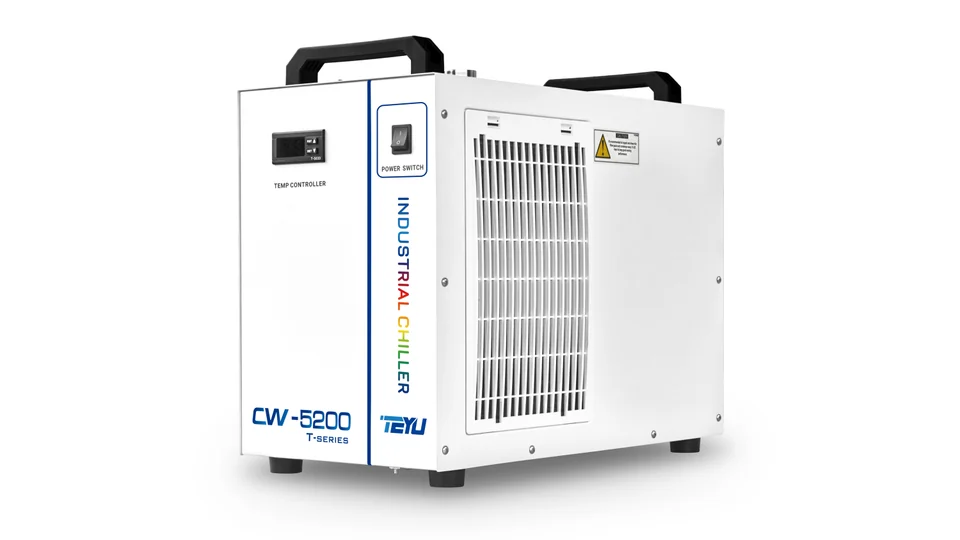
Industrial water chiller
Size an industrial chiller by heat load and coolant conditions at the working site.
Explore the buying guideReference: TEYU S&A CW-5200

Equipment category
Specify compressed air, process gases, water, cooling, vacuum and filtration using measured operating conditions and complete system boundaries.
Size an industrial chiller by heat load and coolant conditions at the working site.
Explore the buying guideReference: TEYU S&A CW-5200

Choose a vacuum pump by the actual process pressure and gas load.
Explore the buying guideReference: Busch R5 RA 0155 A

Specify blower flow and differential pressure together with the full installation duty.
Explore the buying guideReference: KAESER OMEGA P

Select a centrifugal pump from the duty point and the complete suction and discharge system.
Explore the buying guideReference: KSB Etanorm family

Match a submersible drainage pump to water conditions, solids and the actual lift.
Explore the buying guideReference: Tsurumi LH family
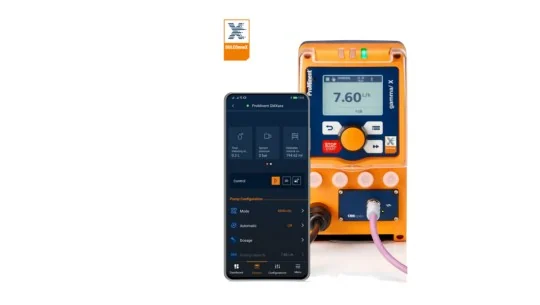
Select a chemical dosing pump by chemical, flow range and the complete injection circuit.
Explore the buying guideReference: ProMinent gamma/X
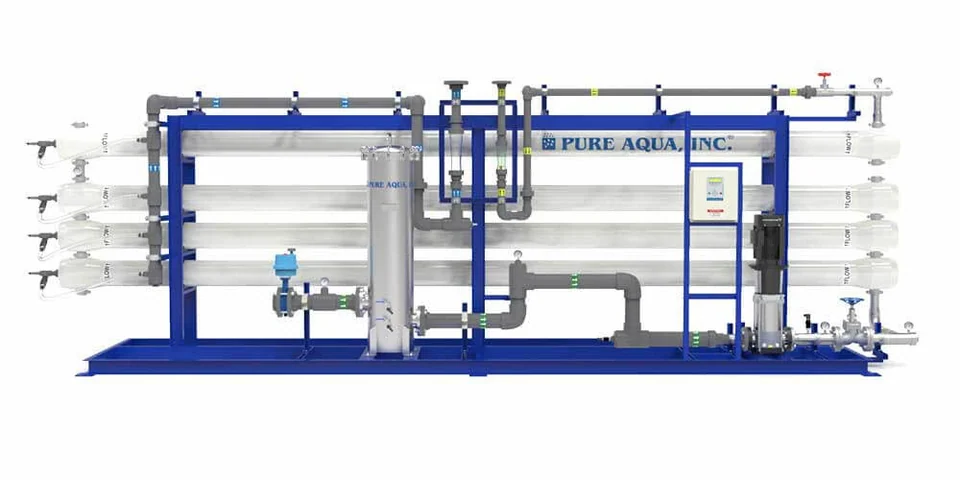
Design industrial reverse osmosis around feed-water analysis and the required product water.
Explore the buying guideReference: Pure Aqua RO-400 industrial brackish-water system

Compare air operated diaphragm pump proposals around fluid compatibility, delivered flow at system resistance and the compressed-air supply. Define the process boundary, supporting equipment and acceptance evidence before choosing a configuration. Send the same application details to each bidder and include project-specific OEM or ODM requirements in the initial inquiry.
Explore the buying guideReference: Debem BOXER 100 PP air-operated double-diaphragm pump
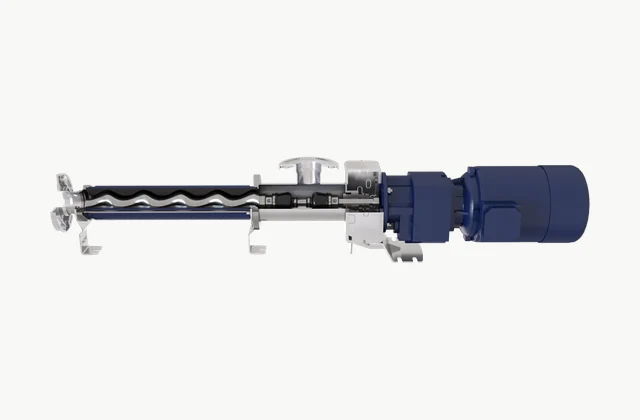
Compare progressing cavity pump proposals around fluid rheology, rotor-stator compatibility and protected positive-displacement operation. Define the process boundary, supporting equipment and acceptance evidence before choosing a configuration. Send the same application details to each bidder and include project-specific OEM or ODM requirements in the initial inquiry.
Explore the buying guideReference: PCM EcoMoineau C, official engineering cutaway reference
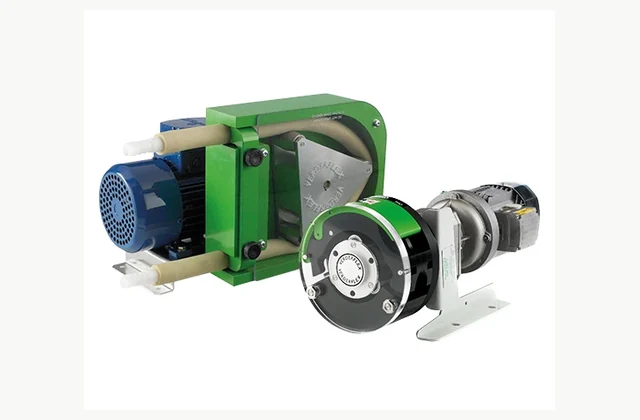
An industrial peristaltic pump moves liquid by repeatedly compressing a hose or tube, keeping the fluid inside that replaceable element. It is a distinct process choice when isolating the fluid path and handling abrasive or sensitive media matter. Fluid remains in a replaceable hose or tube; hose life and pulsation shape the specification.
Explore the buying guideReference: Verderflex Rapide

An industrial gear pump displaces liquid in spaces between gear teeth and the casing. Its suitability depends on fluid lubrication, viscosity and clearances, giving it a different buying boundary from a general centrifugal water pump. Gear-based displacement for compatible liquids; inlet viscosity and lubrication behavior matter.
Explore the buying guideReference: Verdergear Process H series

A process twin screw pump uses synchronized screws to convey liquid through the casing. The guide concerns process-fluid transfer and cleaning duties, distinct from a screw air compressor or a general rotary pump category. Screw displacement for a stated process fluid; define solids, sealing and cleaning needs.
Explore the buying guideReference: Packo ZS twin screw
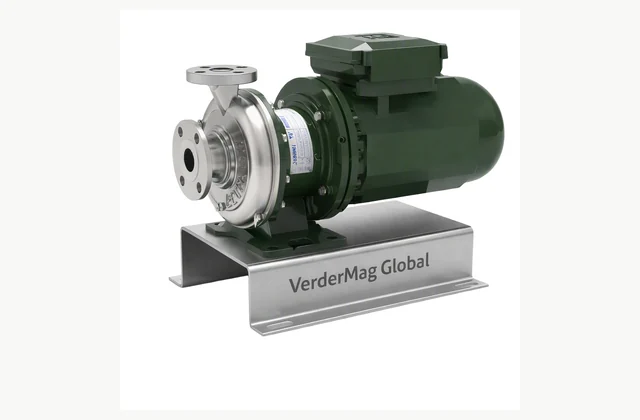
A magnetic drive chemical pump transfers torque through a containment shell without a conventional rotating shaft seal through the casing. The guide addresses sealless chemical transfer and its thermal or lubrication limits, beyond a general process-pump comparison. Sealless drive for compatible chemicals; containment and dry-run behavior require evaluation.
Explore the buying guideReference: Verdermag Global

A vertical multistage pump builds pressure through stacked impeller stages in a compact vertical arrangement. This technology-specific guide focuses on clean-liquid pressure duties, while the broader centrifugal-pump guide remains the general starting point. Stacked stages meet pressure duties; specify fluid conditions and usable operating range.
Explore the buying guideReference: KSB Movitec

A split case water pump uses an axially divided casing that permits access to internal components while much of the connected piping remains in place. It is commonly evaluated for substantial clean-water flow duties, distinct from a compact vertical multistage pressure pump. Split-case service arrangement for water duty; suction conditions and maintenance access matter.
Explore the buying guideReference: KSB Omega
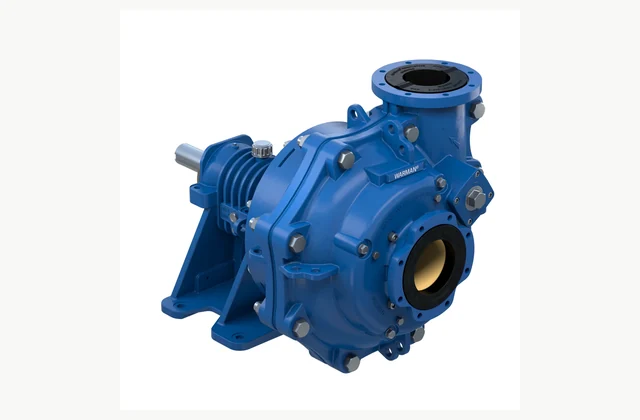
An industrial slurry pump moves a liquid carrying suspended solids, with wear and solids passage central to selection. This guide concerns abrasive process slurry rather than a general clean-water pump or an assumed universal solution for every sludge. Transfers abrasive solids-bearing liquid; slurry characterization drives wear design and acceptance.
Explore the buying guideReference: Weir Warman WBH
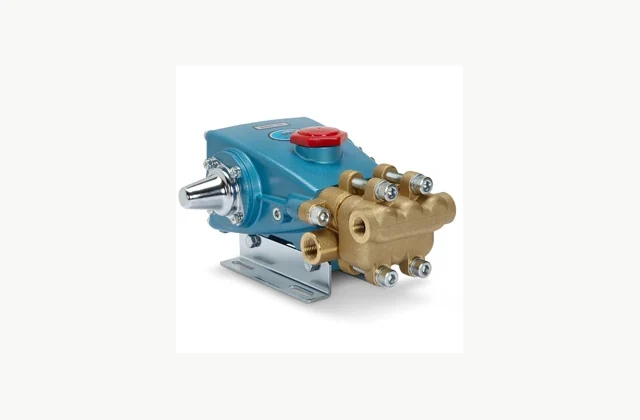
A high-pressure plunger pump displaces liquid through reciprocating plungers and check valves. Selection must address pressure protection, inlet supply and pulsation as well as the required flow, distinguishing it from a centrifugal pressure booster. Reciprocating pressure duty for industrial fluids; define inlet quality and pulsation control.
Explore the buying guideReference: Cat Pumps 270

A drum transfer pump inserts a pump tube into a drum or container to move liquid through a selected outlet arrangement. Its buying boundary includes container access, fluid compatibility and handling, rather than a fixed installed process pump alone. Transfers fluid directly from drums or containers; access, compatibility and grounding require review.
Explore the buying guideReference: Lutz B2 Vario PP
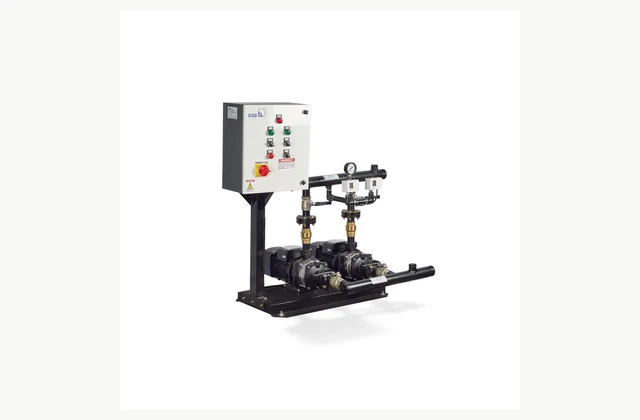
An industrial water booster set combines pumps, manifolds, controls and pressure sensing to maintain a required water supply. It is a packaged system-selection problem, distinct from choosing the individual multistage pump used inside some sets. Integrated pressure-control pumping package; compare demand profile, redundancy and controls.
Explore the buying guideReference: KSB moviBOOST Dual

A liquid ring vacuum pump uses a rotating liquid ring to create compression chambers for gas evacuation. This technology-specific guide addresses seal-liquid and condensable-vapor behavior, while the general industrial vacuum guide remains the selection hub. Vacuum generation with seal liquid; vapor loading and liquid recovery distinguish the process.
Explore the buying guideReference: Busch DOLPHIN LX
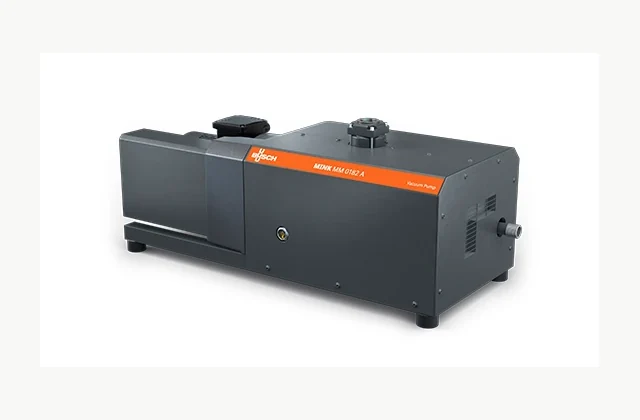
A dry claw vacuum pump compresses gas with synchronized noncontacting claw rotors without process liquid in the compression chamber. This guide isolates claw technology and its contamination limits from the broader industrial-vacuum selection page. Claw displacement without contact in the pumping chamber; inlet contamination needs assessment.
Explore the buying guideReference: Busch MINK MM

A dry screw vacuum pump moves gas through synchronized screw rotors without process oil in the compression chamber. This guide concentrates on process-gas thermal management, purging and contamination behavior, distinguishing screw technology from claw or liquid-ring vacuum systems. Screw-based vacuum for a defined process stream; purge and condensable handling require review.
Explore the buying guideReference: Busch COBRA DH
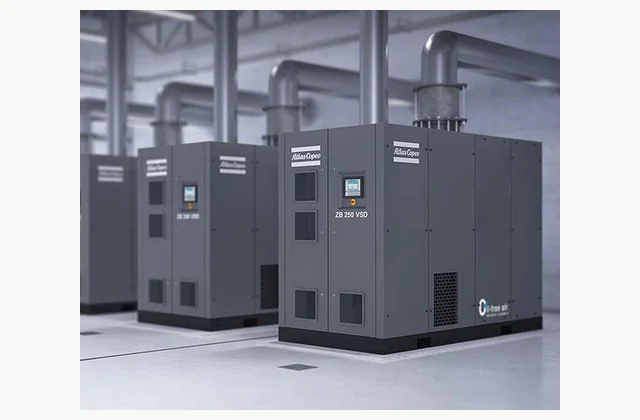
A centrifugal turbo blower uses a high-speed rotating impeller to raise gas pressure for low-pressure air duties. The guide focuses on the blower and its operating map, rather than a high-pressure plant air compressor or a positive-displacement lobe blower. Dynamic low-pressure air supply; operating range and inlet conditions distinguish it from Roots blowers.
Explore the buying guideReference: Atlas Copco ZB VSD
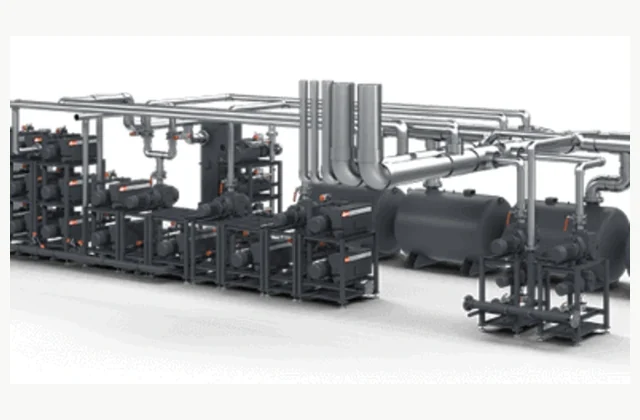
A central vacuum station combines pumps, receivers, controls and distribution to serve several users. Its buying boundary is coordinated vacuum availability at the tools, distinct from the selection of one individual pump technology. Shared vacuum supply serving multiple users; buffering, redundancy and distribution define scope.
Explore the buying guideReference: Busch Industrial central vacuum system
Build a comparable request
Share the application, required output, destination, utilities, quantities and planned timing. For OEM / ODM projects, include the branding, configuration or engineering changes, sample approval and acceptance requirements.
Practical buying decisions
An industrial water reuse RFQ should start with the required use of the recovered water and representative analysis of the available stream. Define treated-water quality, usable flow and every residual output before selecting a membrane or other process. The highest nominal recovery is not automatically…
Read the guideAn industrial process cooling RFQ should define the required cooling duty at actual operating conditions, the process-fluid specification and the site connection boundary. Send the production load profile and required supply and return conditions before comparing a nominal capacity. IndustryApex engineers use these inputs to…
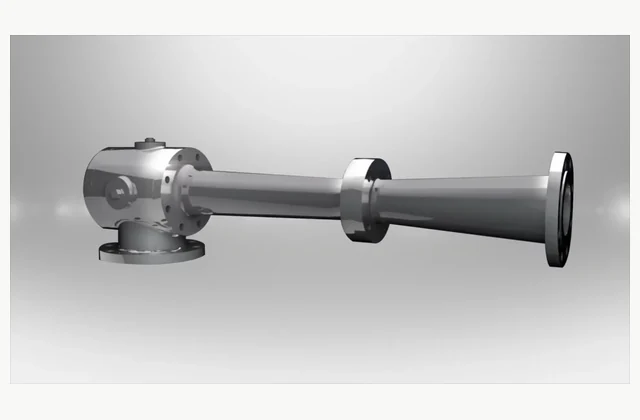
Read the guideA comparable steam jet vacuum ejector quotation starts with steam jet vacuum ejector application and required process result, gas load and motive steam, stages condensers and backpressure. Record the required result, site interfaces and acceptance evidence in one revision-controlled RFQ. IndustryApex engineers use these inputs…
Read the guide