
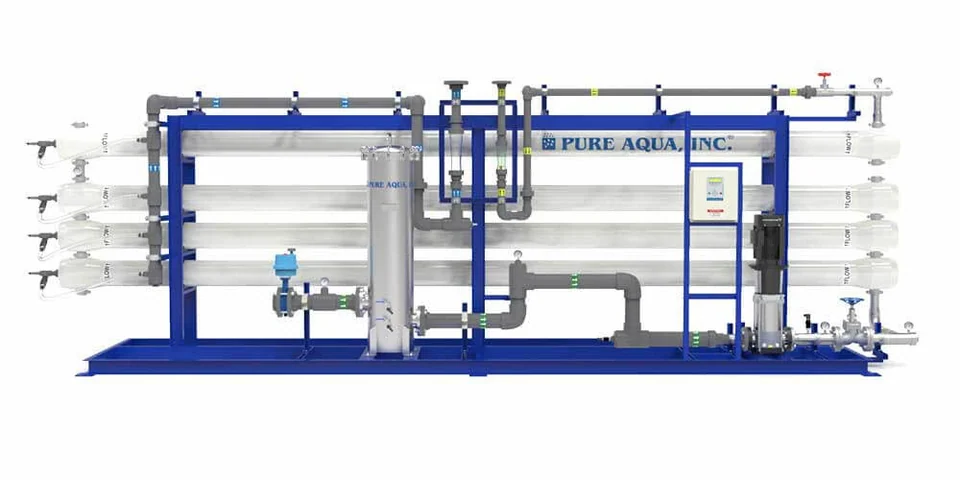
Shown as a configuration reference. Availability and the equipment offered for your project are confirmed separately.
An industrial water reuse RFQ should start with the required use of the recovered water and representative analysis of the available stream. Define treated-water quality, usable flow and every residual output before selecting a membrane or other process. The highest nominal recovery is not automatically the best complete treatment proposal.
Reviewed 2026-10-22 · IndustryApex editorial and engineering procurement resources. Reference equipment images illustrate the relevant process; they do not establish a completed IndustryApex project or the offered configuration.
Industrial water reuse quality: define the receiving process
State where the recovered water will be used and who approves its quality. List the individual limits and operating variation that matter for that process. Keep a process-water requirement distinct from discharge criteria or a general statement that the water looks clear. Decide how off-spec water is held, diverted or retreated and who owns that decision.
RO water reuse feed analysis and treatment sequence
Use samples that represent the sources, operating periods and chemicals entering the proposed reuse train. Record the laboratory method and sampling basis where relevant. Ask the engineer to identify pretreatment and unknowns that need further testing. For reverse osmosis, feed conditions and concentration effects influence the proposed operating window; a previous membrane rating alone does not determine a suitable recovery for your stream.
Water reuse mass balance: compare usable recovery
Define the feed, accepted reusable water, concentrate, cleaning waste and other losses over an agreed period. State whether a quoted recovery describes one unit or the full plant. Use the same boundary for competing proposals. If a configuration recycles a stream internally, avoid counting that circulating flow as new recovered water. Record the assumptions behind the balance before estimating savings.
RO concentrate disposal cost and consumables
Identify the final destination of concentrate, sludge and cleaning waste. Confirm site handling and any required specialist disposal review. Include pretreatment chemicals, membranes or media, cleaning, testing, maintenance and auxiliary utilities. A water-production skid without a residual route can leave a significant part of the project unresolved. Ask for customer-supplied items and excluded connections to be listed.
Industrial water reuse acceptance criteria and monitoring
Set the feed envelope, sampling points, quality methods, operating conditions and test period. Measure usable output and recovery within the agreed boundary and record relevant chemical and energy use. Include startup, cleaning and response to off-spec water. Where the feed is uncertain, separate a trial or pilot stage from a production commitment. Retain the actual process settings and evidence associated with the accepted configuration.
Industrial water reuse cost: test the complete economics
Compare the whole cost of accepted reused water, including treatment and residual management. Count avoided water purchase or disposal costs only where those costs and the operating route have been confirmed. Review a lower-recovery case, different feed conditions and reduced annual utilization. IndustryApex engineers use this scope to identify the equipment and information needed for a project-specific proposal rather than promise a universal recovery or payback.
Your project brief
- Receiving process, quality limits and approval owner
- Feed sources, representative analysis and variation
- Usable-water target and complete stream balance
- Pretreatment, cleaning, residual handling and consumables
- Pilot need, acceptance plan, site and commercial responsibility
Buyer questions
Should I choose the highest quoted RO recovery?
Compare recovery at the same feed, water-quality target and complete treatment boundary. Include cleaning, concentrate handling and operating evidence.
Can RO concentrate be ignored in project cost?
No. Its handling or further treatment belongs in the material balance and commercial scope, together with cleaning and other residual streams.
What is the difference between unit recovery and plant recovery?
A unit figure describes its stated boundary. Full-plant recovery must account for accepted reusable water and all external inputs and losses across the complete train.
Can a reuse project support OEM or ODM requirements?
Controls, layout, interfaces and functional changes can be reviewed for the application. Feasibility, process evidence and the offered scope are confirmed for the project.
Continue your project review
Reference basis
Selection questions were checked against the following public technical material. Source names identify the reference basis and do not establish a supply relationship or performance promise.
- DuPont reverse-osmosis technical manual
- Alfa Laval wastewater concentration and pilot-test discussion
Request the technical evidence for your proposed configuration. Prices, supply, OEM / ODM feasibility and project commitments are confirmed in the actual proposal.
Explore the Industrial reverse osmosis system buying guide and RFQ checklist ↗