
An industrial slurry pump moves a liquid carrying suspended solids, with wear and solids passage central to selection. This guide concerns abrasive process slurry rather than a general clean-water pump or an assumed universal solution for every sludge. Choose the configuration by solids distribution and slurry behavior and wet-end materials and operating speed. Evaluate representative slurry or an agreed justified test plan, measuring flow stability, head, power and the proposed wear indicators. Include restart after the expected settling period and inspect blockage or seal behavior. OEM/ODM requirements are reviewed against the intended process, site interfaces and acceptance evidence; the reference image identifies a product family and does not establish supply availability or an authorized brand relationship.
An industrial slurry pump moves a liquid carrying suspended solids, with wear and solids passage central to selection. This guide concerns abrasive process slurry rather than a general clean-water pump or an assumed universal solution for every sludge. Transfers abrasive solids-bearing liquid; slurry characterization drives wear design and acceptance.
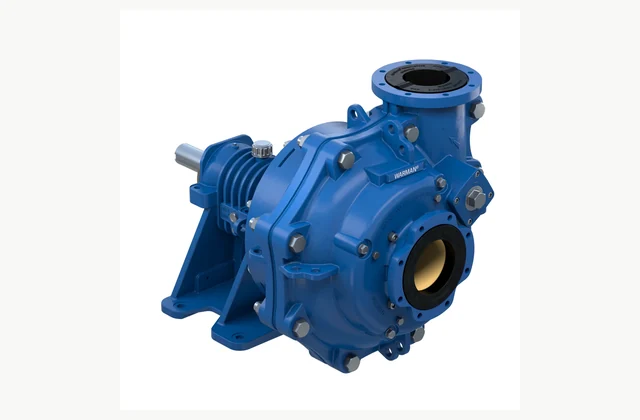
Shown as a configuration reference. Availability and the equipment offered for your project are confirmed separately.
What is the application scope for industrial slurry pump?
An industrial slurry pump moves a liquid carrying suspended solids, with wear and solids passage central to selection. This guide concerns abrasive process slurry rather than a general clean-water pump or an assumed universal solution for every sludge.
Transfers abrasive solids-bearing liquid; slurry characterization drives wear design and acceptance. A water-based performance test cannot establish slurry wear life. Solids concentration and particle distribution influence both hydraulic behavior and the rate at which clearances change. Ask which correction or testing method supports the proposed duty and how wear will be monitored. Settling during stoppages can create a different startup problem from continuous transfer, so the restart sequence belongs in the process design.
How should solids distribution and slurry behavior be specified?
Provide particle size distribution, concentration, density, shape, abrasiveness and settling behavior. The largest particle alone does not describe wear or transport risk, and slurry properties may change through the production campaign.
The RFQ should make solids distribution and slurry behavior a separate review item. Describe the expected variation, not only the easiest operating case, and ask the bidder to identify restrictions that affect the intended production mix.
What configuration evidence should be compared?
Compare liners, impellers, sealing and speed against the slurry duty. A wear-resistant material can still be unsuitable chemically, and an oversized or poorly operated pump may create recirculation and accelerated wear.
| Decision | Evidence to compare | Procurement consequence |
|---|---|---|
| Solids distribution and slurry behavior | Provide particle size distribution, concentration, density, shape, abrasiveness and settling behavior. The largest particle alone does not describe wear or transport risk, and slurry properties may change through the production campaign. | Defines the input and work envelope to be included in the offer. |
| Wet-end materials and operating speed | Compare liners, impellers, sealing and speed against the slurry duty. A wear-resistant material can still be unsuitable chemically, and an oversized or poorly operated pump may create recirculation and accelerated wear. | Determines configuration, supporting equipment and exclusions. |
| Production acceptance | Evaluate representative slurry or an agreed justified test plan, measuring flow stability, head, power and the proposed wear indicators. Include restart after the expected settling period and inspect blockage or seal behavior. | Establishes the agreed demonstration and inspection records. |
What must be prepared for installation?
Coordinate sump or tank geometry, agitation, supported suction, flushing and drainage. Provide safe access to heavy wet-end parts and containment for abrasive or chemically hazardous slurry.
Preserve the slurry specification, accepted operating region, flushing sequence and initial wear measurements. The site team needs identified wear components, lifting procedures and a method for relating inspection results to changes in solids or production conditions.
How should production acceptance be demonstrated?
Evaluate representative slurry or an agreed justified test plan, measuring flow stability, head, power and the proposed wear indicators. Include restart after the expected settling period and inspect blockage or seal behavior.
Define acceptable results before the trial and retain the test records. Include a realistic restart and a representative changeover; investigate rejected output rather than reporting only the best part of a demonstration.
Which service provisions protect repeatability?
Track liner and impeller wear, clearances, seal water where required and bearing condition. Plan inspection intervals from actual wear data rather than a generic operating-hour promise.
Obtain a preventive schedule, spare-parts list and escalation contact before shipment. Confirm what can be diagnosed remotely, what requires trained local personnel and how replacement components will be identified after revisions.
What can be customized through OEM or ODM?
OEM bases and monitoring can be configured; ODM slurry duties require combined hydraulic, wear and chemical review, with test methods and replacement scope agreed.
Submit the proposed changes with the industrial slurry pump duty and acceptance plan. Separate a purchased option from new engineering, and agree drawings, validation responsibility, documentation and spare-part support before design release. The manufacturer example is a technical reference only; customization does not imply permission to copy protected designs or use a brand.
What should your industrial slurry pump RFQ include?
- Industrial slurry pump application and required process result
- Solids distribution and slurry behavior: Provide particle size distribution, concentration, density, shape, abrasiveness and settling behavior. The largest particle alone does not describe wear or transport risk, and slurry properties may change through the production campaign.
- Wet-end materials and operating speed: Compare liners, impellers, sealing and speed against the slurry duty. A wear-resistant material can still be unsuitable chemically, and an oversized or poorly operated pump may create recirculation and accelerated wear.
- Representative input variation and difficult production cases
- Required acceptance evidence: Evaluate representative slurry or an agreed justified test plan, measuring flow stability, head, power and the proposed wear indicators. Include restart after the expected settling period and inspect blockage or seal behavior.
- Site and utility scope: Coordinate sump or tank geometry, agitation, supported suction, flushing and drainage. Provide safe access to heavy wet-end parts and containment for abrasive or chemically hazardous slurry.
- Service provision: Track liner and impeller wear, clearances, seal water where required and bearing condition. Plan inspection intervals from actual wear data rather than a generic operating-hour promise.
- OEM/ODM engineering scope: OEM bases and monitoring can be configured; ODM slurry duties require combined hydraulic, wear and chemical review, with test methods and replacement scope agreed.
- Upstream preparation and downstream handling interfaces
- Destination country and applicable installation requirements
- Production schedule, changeover mix and operator availability
- Drawings, samples, inspection method and rejected-output criteria
Need OEM / ODM customization?
Submit branding, packaging, configuration or engineering requirements for this equipment. Include the target market, initial and annual quantities, required changes and acceptance criteria.
Customization feasibility, permitted branding, development responsibilities, minimum quantity, cost and lead time are reviewed for the proposed supplier and configuration before a quotation is confirmed.
Frequently asked questions
What defines the application boundary for industrial slurry pump?
An industrial slurry pump moves a liquid carrying suspended solids, with wear and solids passage central to selection. This guide concerns abrasive process slurry rather than a general clean-water pump or an assumed universal solution for every sludge. Transfers abrasive solids-bearing liquid; slurry characterization drives wear design and acceptance. Define the intended production result before comparing nominal ratings, and ask for evidence using the actual input conditions.
What should the industrial slurry pump RFQ state about solids distribution and slurry behavior?
Provide particle size distribution, concentration, density, shape, abrasiveness and settling behavior. The largest particle alone does not describe wear or transport risk, and slurry properties may change through the production campaign. Send the representative inputs and the difficult cases together, then require the supplier to state any restrictions or preparation steps needed to repeat the proposed result.
How should wet-end materials and operating speed be checked?
Compare liners, impellers, sealing and speed against the slurry duty. A wear-resistant material can still be unsuitable chemically, and an oversized or poorly operated pump may create recirculation and accelerated wear. Ask the bidder to document the selected arrangement and exclusions against the real duty. Confirm which supporting components and setup work are included in the commercial scope.
What acceptance test is appropriate for industrial slurry pump?
Evaluate representative slurry or an agreed justified test plan, measuring flow stability, head, power and the proposed wear indicators. Include restart after the expected settling period and inspect blockage or seal behavior. Agree the sampling method and rejection criteria before the trial, and keep configuration and inspection records for the later site-acceptance comparison.
What installation and service details should be confirmed?
Coordinate sump or tank geometry, agitation, supported suction, flushing and drainage. Provide safe access to heavy wet-end parts and containment for abrasive or chemically hazardous slurry. Track liner and impeller wear, clearances, seal water where required and bearing condition. Plan inspection intervals from actual wear data rather than a generic operating-hour promise. Allocate local preparations and specialist support to named parties before shipment so commissioning and subsequent maintenance have a clear owner.
Can industrial slurry pump configurations be customized through OEM or ODM?
OEM bases and monitoring can be configured; ODM slurry duties require combined hydraulic, wear and chemical review, with test methods and replacement scope agreed. Supply drawings and operating conditions for feasibility review. Engineering changes require agreed validation and documentation; a reference brand image does not establish an authorized supply or manufacturing relationship.
Reference information
- Warman® WBH® Heavy-duty Process Pumps for Abrasive Slurry | Weir
- Our Warman® Range of Pumps | Weir
Reference data and images explain equipment configurations. IndustryApex engineers confirm the offered model, specification and commercial scope in your project quotation.