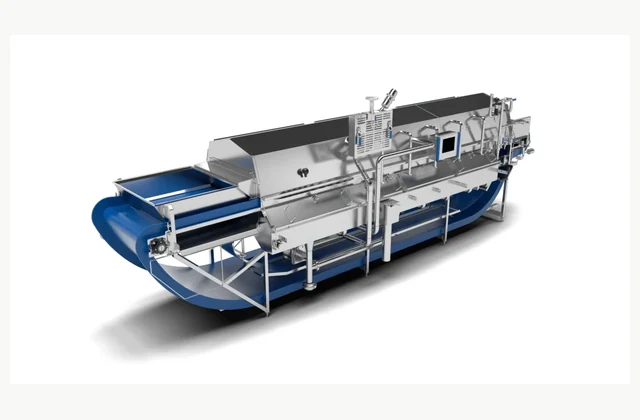
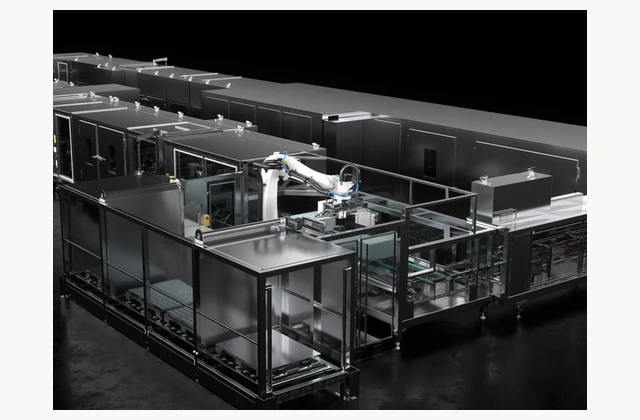
Fruit and vegetable washers must remove the relevant contamination while protecting usable produce. Start with the crop, cut condition, incoming soil and required next process. Compare water movement, separation, discharge and sanitation using representative product trials, then define a complete line scope and any OEM/ODM changes.
Fruit and vegetable peeling equipment removes skins using a method suited to the crop. An abrasive root-vegetable peeler is a reference for tubers, not evidence that the same machine handles every soft fruit. Compare application fit, configuration and OEM/ODM scope through the buyer checklist below.
Vegetable cutting and dicing equipment converts prepared produce into defined slices, strips or cubes. A dicer suited to firm pieces should not automatically be substituted for a belt cutter handling fragile leaves. Compare application fit, configuration and OEM/ODM scope through the buyer checklist below.
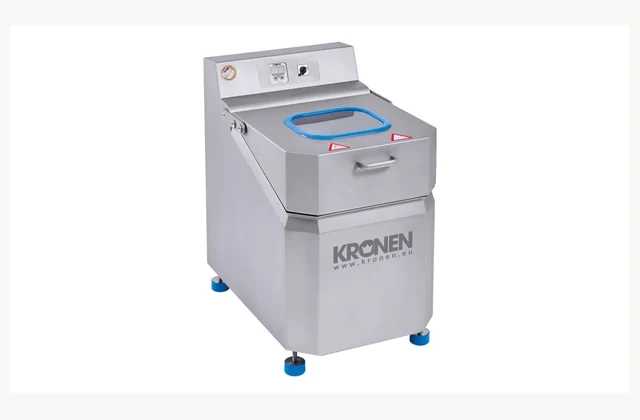
Vegetable dewatering equipment removes surface water after washing. A basket spin-dryer handles products differently from a continuous belt dryer; selection must protect product quality while meeting the condition required for packing. Compare application fit, configuration and OEM/ODM scope through the buyer checklist below.
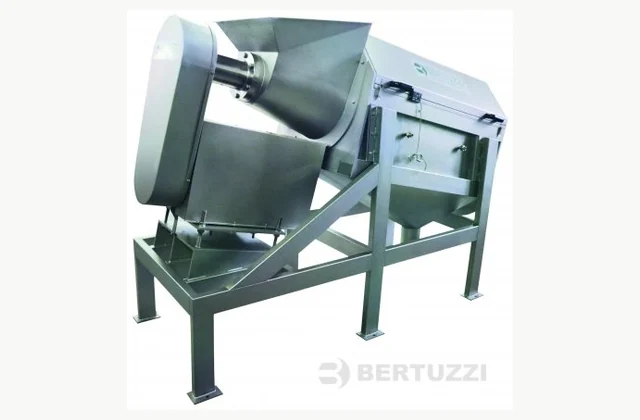
Fruit destoning machines separate pits or stones from edible fruit. Some configurations also break down pulp or remove part of the peel. The Bertuzzi reference illustrates avocado and large-stone fruit processing, not a universal whole-fruit pitter. Compare application fit, configuration and OEM/ODM scope through the buyer checklist below.
Fruit pulpers and finishers separate usable juice or puree from seeds, skins and coarse fibers. A destoner removes large pits, while a finisher controls the remaining texture and unwanted solids; some fruit lines require both stages in a defined sequence. Compare application fit, configuration and OEM/ODM scope through the buyer checklist below.
Fruit juice presses separate liquid from prepared fruit through a pressing and drainage process. They are distinct from citrus cup extractors and puree finishers. A hydraulic filter press is one available approach; the raw fruit and desired juice determine the suitable system. Compare application fit, configuration and OEM/ODM scope through the buyer checklist below.
Citrus juice extractors separate juice from whole prepared citrus fruit while managing peel, seeds and oil-bearing tissues. They differ from presses used for apple mash. Fruit sizing and the relationship between extraction parts and the peel are important purchasing considerations. Compare application fit, configuration and OEM/ODM scope through the buyer checklist below.
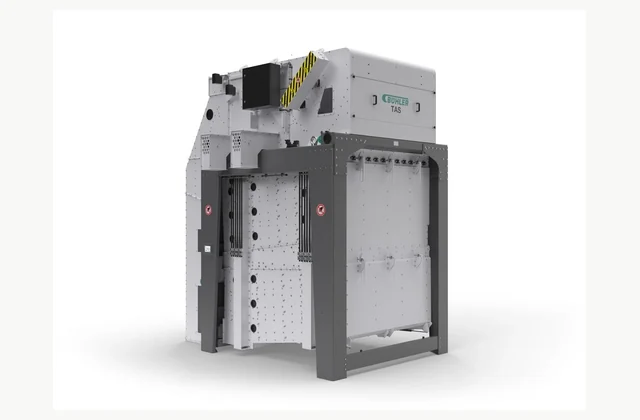
Food grain cleaning machines separate unwanted material from grain before further processing. Screening and aspiration can remove different impurity groups, but they do not automatically replace destoning, optical sorting or other dedicated treatments required by the incoming contamination and finished-food specification. Compare application fit, configuration and OEM/ODM scope through the buyer checklist below.
Rice milling lines combine preparation, husking, separation, whitening and related quality operations to convert paddy into a defined rice product. A complete line differs from a single whitener: upstream grain condition and the balance among stages determine saleable yield and product quality. Compare application fit, configuration and OEM/ODM scope through the buyer checklist below.
Food grain roller mills reduce prepared grain or intermediate milling streams between controlled rolls. They are process components within a milling flow rather than complete flour plants. Roll surface, feed distribution and the surrounding separation stages determine the useful grinding duty. Compare application fit, configuration and OEM/ODM scope through the buyer checklist below.
Food optical sorters examine products in a controlled presentation and divert items matching defined defect criteria. They complement preparation and other separation steps. Their usefulness depends on the actual commodity, visible or detectable differences and the balance between defect removal and good-product loss. Compare application fit, configuration and OEM/ODM scope through the buyer checklist below.
Industrial food fryers cook products in a controlled oil process. Batch and continuous systems serve different recipes and production patterns. Product handling, heat delivery, oil circulation and fines removal must be considered together rather than selecting equipment from nominal bath volume alone. Compare application fit, configuration and OEM/ODM scope through the buyer checklist below.
Food frying oil filtration systems remove food particles from an oil circuit or collected frying oil. They support oil management but do not reverse every chemical change in used oil. Filter principle, solids loading and connection to the fryer define the appropriate procurement scope. Compare application fit, configuration and OEM/ODM scope through the buyer checklist below.
Food blanchers apply controlled heat treatment before later operations such as freezing, drying or further processing. A water blancher and cooler is one configuration. Blanching objectives differ from complete cooking or commercial sterilization, so the buyer must define the actual process purpose. Compare application fit, configuration and OEM/ODM scope through the buyer checklist below.
Steam cooking tunnels convey food through a controlled steam-treatment enclosure. A belt steamer is one configuration; surface treatment, blanching and complete cooking can involve different objectives. The buyer must define the required product result rather than assuming every steam exposure performs the same process. Compare application fit, configuration and OEM/ODM scope through the buyer checklist below.
Continuous cooking on a helical belt, with chamber atmosphere controlled around the product throughout its residence. This is a cooking system, rather than a spiral transfer conveyor. Start with food recipe and piece dimensions and raw inlet temperature range, then compare the complete configured system and a documented acceptance trial.
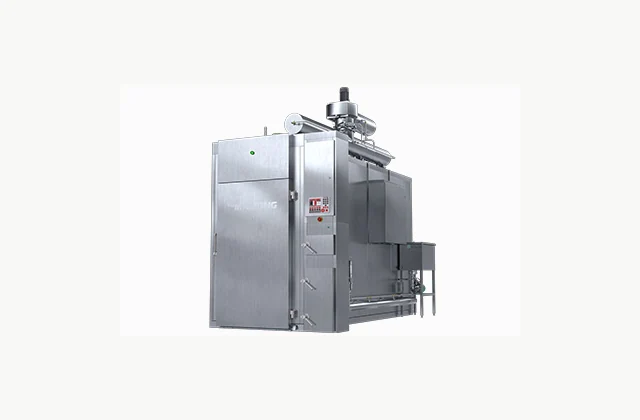
Batch smokehouse processing combines drying, smoking and heat treatment in a controlled chamber. Specify a smoke generator and loaded trolley arrangement rather than buying a cabinet by outside dimensions. Start with food casing and product diameter and loaded trolley weight and pattern, then compare the complete configured system and a documented acceptance trial.
In-container thermal processing treats sealed food packs in a pressure vessel. It differs from a continuous UHT liquid system because heat must penetrate the complete package and its contents. Start with recipe viscosity and solid particles and container material shape and closure, then compare the complete configured system and a documented acceptance trial.
High pressure processing exposes compatible packaged food to hydrostatic pressure. This guide concerns in-pack treatment; it does not assume that HPP alone makes every food shelf stable. Start with food formulation acidity water activity and validated microbial and shelf-life objective, then compare the complete configured system and a documented acceptance trial.
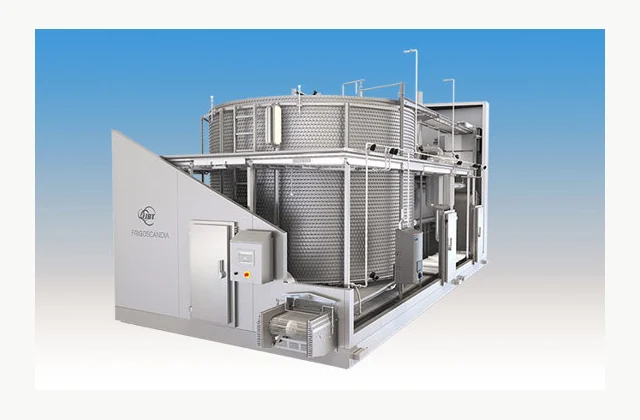
A spiral freezer moves food through a refrigerated enclosure on a helical belt. Freezing duty, belt loading and product temperature distinguish this machine from an ordinary spiral conveyor. Start with product size composition and packaging and incoming and target temperature, then compare the complete configured system and a documented acceptance trial.
A fluidized-bed IQF freezer uses refrigerated airflow to separate and freeze small food pieces. It targets individually separated product rather than a frozen block or cartons. Start with food piece size and fines and surface water and stickiness, then compare the complete configured system and a documented acceptance trial.
Freeze drying removes water from frozen food under vacuum. The product-specific freezing and drying profile, rather than a chamber volume claim, determines useful output and quality. Start with food composition thickness and solids and prefreezing method and starting condition, then compare the complete configured system and a documented acceptance trial.
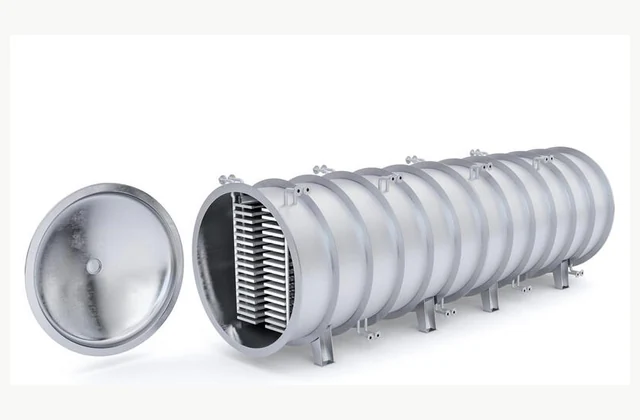
A food vacuum belt dryer continuously dries liquid or paste feed on moving belts inside a vacuum chamber. This page focuses on vacuum belt duty, not an ambient-air produce dryer. Start with feed solids viscosity and foaming and thermal sensitivity and sticky phase, then compare the complete configured system and a documented acceptance trial.
Reference: Bucher Unipektin DryBand vacuum belt dryer
Build a comparable request
Start with the work your equipment needs to do.
Share the application, required output, destination, utilities, quantities and planned timing. For OEM / ODM projects, include the branding, configuration or engineering changes, sample approval and acceptance requirements.
A comparable candy cooking and depositing line quotation starts with candy cooking and depositing line application and required finished result, recipe and cooking, deposit and setting. Record the required result, site interfaces and acceptance evidence in one revision-controlled RFQ. IndustryApex engineers use these inputs to…
A comparable chocolate enrobing machine quotation starts with chocolate enrobing machine application and required finished result, centers and coating, coverage and weight. Record the required result, site interfaces and acceptance evidence in one revision-controlled RFQ. IndustryApex engineers use these inputs to define the equipment, integration…
A comparable chocolate molding line quotation starts with chocolate molding line application and required finished result, mold and deposit, cooling and release. Record the required result, site interfaces and acceptance evidence in one revision-controlled RFQ. IndustryApex engineers use these inputs to define the equipment, integration…