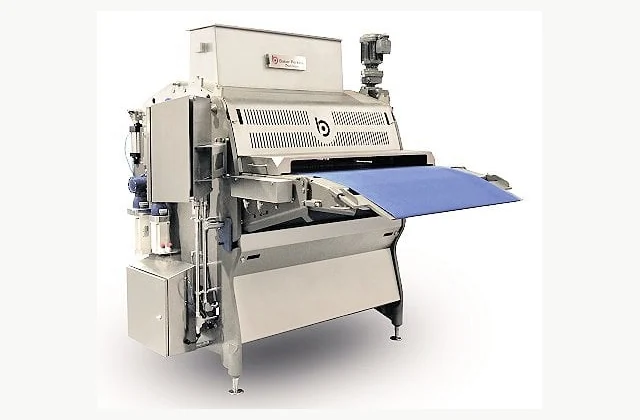
Cookie forming equipment shapes dough with tooling selected for the recipe and intended appearance. Rotary molding, wire cutting and depositing impose different dough-handling requirements, so the forming method must be established before comparing machines.
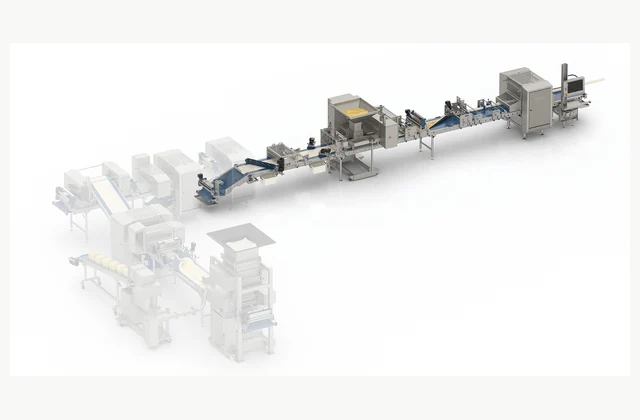
A pastry make-up line cuts, fills, folds and finishes a prepared dough sheet. Selection must protect laminated layers while producing the intended seams, filling placement and geometry through each successive module.
A pizza make-up line forms or receives bases and applies the specified sauce, cheese and other toppings. Base geometry, ingredient behavior and the topping pattern determine the required modules and product handling.
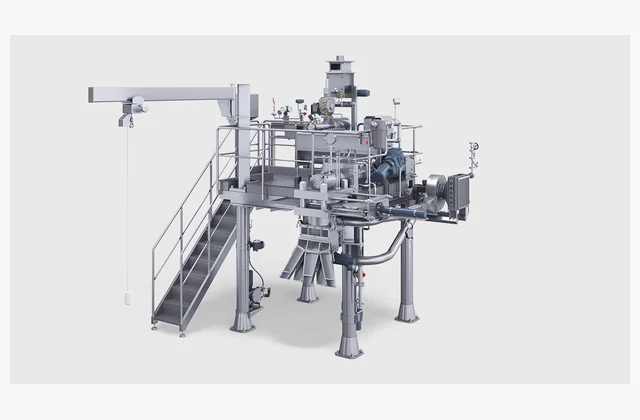
A pasta extrusion line mixes and conditions food dough before forcing it through a shaped die. Raw material, vacuum conditions where used, die construction and downstream drying all influence the final cooked texture and shape.
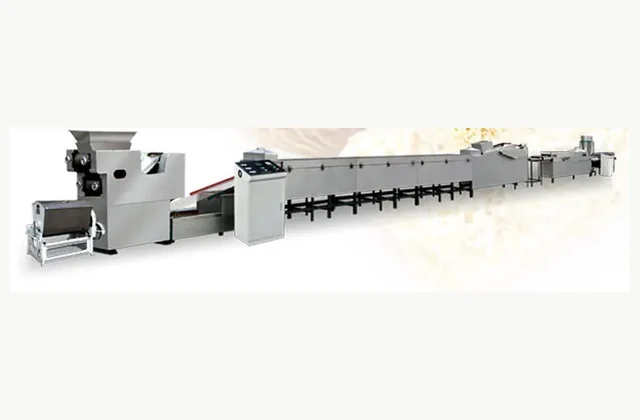
An instant noodle line prepares dough, creates strands, cooks them and establishes a stable portion through the selected drying or frying route. The flour system, strand geometry and rehydration target define the process.
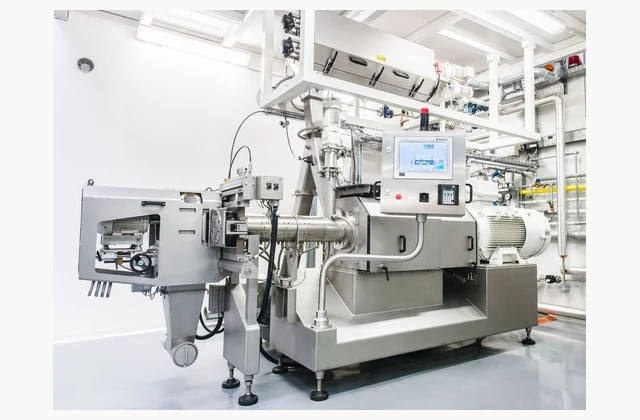
A cereal food extrusion line conditions, cooks and shapes formulated food through a die, usually with downstream drying or coating. Expansion, density and eating texture depend on the recipe and the complete thermal and mechanical history.
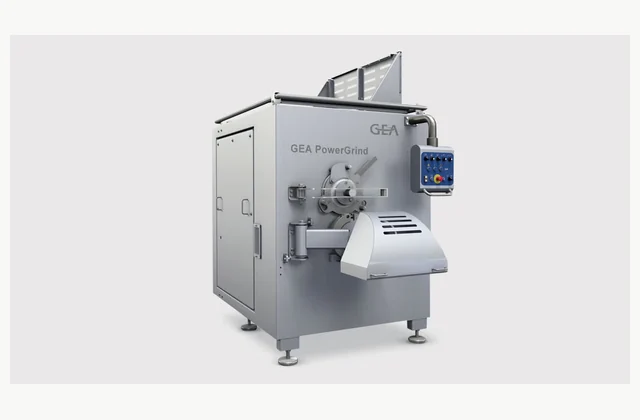
An industrial meat grinder feeds chilled meat or qualified frozen material through a selected cutting and plate system. Raw material state, particle definition and temperature rise determine the correct feed and cutting arrangement.
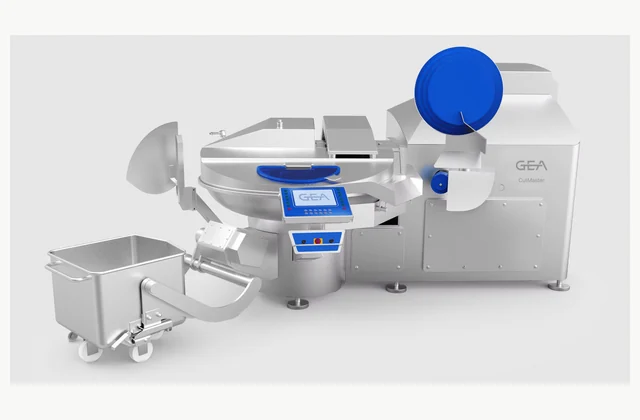
A food bowl cutter repeatedly carries ingredients past a rotating knife head to chop, mix or emulsify them. Recipe composition, knife arrangement and the controlled endpoint determine whether the required coarse texture or fine emulsion is obtained.
A hygienic meat mixer distributes brine, spices and other ingredients through protein material while controlling the required structure. Mixing tool action, batch fill and optional vacuum or cooling must be matched to the actual recipe.
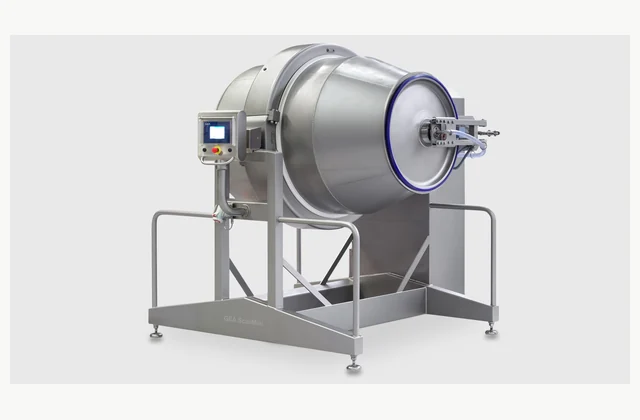
A vacuum meat tumbler massages or tumbles protein pieces with a defined recipe under controlled pressure and motion. Product geometry, tissue sensitivity, brine formulation and temperature determine an acceptable operating cycle.
A brine injection machine meters recipe liquid through needles into moving protein products. Product thickness, bone content, needle arrangement and controlled brine condition govern distribution and the resulting pickup consistency.
A meat portion cutter divides variable raw pieces into specified weight, length or shape targets. The sensing and cutting method must suit the meat geometry, temperature and acceptable trim strategy for the actual product.
A sausage filling and portioning system meters food mass into the required casing or downstream forming tool. Product consistency, inclusions, casing type and portion format determine the pump, horn and linking arrangement.
A food patty former shapes meat or alternative-protein mass using a defined forming and release arrangement. The approved mix structure, product temperature and desired shape determine usable portion consistency and surface quality.
A battering and breading system applies liquid coating and dry crumb to prepared food pieces. Product surface condition, coating rheology and crumb properties determine pickup, coverage and whether the intended texture survives further cooking.
A fish filleting machine separates fillets from prepared whole fish through a defined cutting and guidance process. Species, size range, fish condition and preparation determine whether the proposed machine can achieve the required fillet quality.
A chocolate refining mill reduces solid particles within a fat-based mass to the required distribution. Recipe composition, incoming particle size and viscosity determine the appropriate refining route and heat-removal arrangement.
A chocolate conche treats refined mass through controlled mixing, shear and thermal conditions to develop the required flow and flavor characteristics. It serves a different process purpose from reducing solid particles in a refiner.
A chocolate tempering machine manages heating, cooling and shear to establish the required cocoa-butter crystal condition before forming or coating. Recipe, flow variation and downstream use define whether the process is stable.
A chocolate molding line deposits conditioned mass into molds, develops the required set through cooling and releases finished pieces. Cavity design, fillings, inclusions and the sequence of operations define the actual line scope.
A chocolate enrober coats prepared centers with a flowing mass and transfers them toward cooling. Center geometry, temperature, desired coating weight and bottom coverage determine the curtain, belt and excess-removal arrangement.
A candy cooking and depositing line prepares a controlled syrup or confectionery mass and portions it into the chosen molds. The gelling or setting system, solids condition and addition sequence govern the complete process.
Share the application, required output, destination, utilities, quantities and planned timing. For OEM / ODM projects, include the branding, configuration or engineering changes, sample approval and acceptance requirements.
A comparable candy cooking and depositing line quotation starts with candy cooking and depositing line application and required finished result, recipe and cooking, deposit and setting. Record the required result, site interfaces and acceptance evidence in one revision-controlled RFQ. IndustryApex engineers use these inputs to…
A comparable chocolate enrobing machine quotation starts with chocolate enrobing machine application and required finished result, centers and coating, coverage and weight. Record the required result, site interfaces and acceptance evidence in one revision-controlled RFQ. IndustryApex engineers use these inputs to define the equipment, integration…
A comparable chocolate molding line quotation starts with chocolate molding line application and required finished result, mold and deposit, cooling and release. Record the required result, site interfaces and acceptance evidence in one revision-controlled RFQ. IndustryApex engineers use these inputs to define the equipment, integration…