
Build industrial Wi-Fi using an access point, bridge or client selected for the radio environment, mobile devices and network policy. Compare coverage and roaming through an installation survey and representative tests, with antennas and destination variants included in the equipment scope. Prioritize roles, survey, variant. Use the checkpoints to build a consistent equipment scope and confirm the intended trial or installation evidence. The official image is a product reference; it does not establish availability or an authorized supplier relationship. Submit OEM/ODM changes for application-specific feasibility review.
Build industrial Wi-Fi using an access point, bridge or client selected for the radio environment, mobile devices and network policy. Compare coverage and roaming through an installation survey and representative tests, with antennas and destination variants included in the equipment scope.
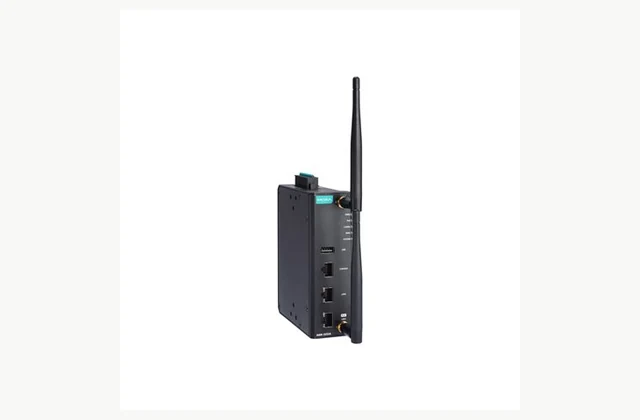
Shown as a configuration reference. Availability and the equipment offered for your project are confirmed separately.
Define wireless roles and connected devices
An industrial wireless unit may serve as an access point, client or bridge depending on its supported modes and configuration. Describe fixed or moving devices, traffic and the network role of each unit. A product that supports several modes does not necessarily provide every role simultaneously. Identify client capabilities and required protocols before choosing the infrastructure. The purpose is reliable application communication, not simply a visible wireless connection or the highest advertised link rate.
Survey the actual radio environment
Buildings, metal structures, moving equipment and other radio systems influence coverage and interference. Provide the installation layout and have the wireless design assessed for the site. Antenna type, position and cable route are part of that design. A demonstration in an open room does not establish performance on the production floor. Consider changes during normal operation, such as materials or vehicles entering the path, rather than planning solely from a static drawing.
Match bands and destination requirements
The device and antennas must suit the permitted bands and radio requirements of the destination. Identify countries and the exact regional variant. The Moxa AWK-3252A family includes selected market and temperature options, so an image or global family name should not establish the delivered configuration. Discuss channel planning and client compatibility with the responsible network team. Do not assume a higher-generation radio or wider channel automatically improves an industrial application in a crowded environment.
| Selection issue | Information to specify |
|---|---|
| Roles | AP, client or bridge positions and connected equipment. |
| Survey | Structures, interference, antenna locations and changing conditions. |
| Variant | Destination bands and exact hardware or antenna arrangement. |
| Mobility | Client firmware, paths and tolerated interruption. |
| Network | Authentication, segmentation, uplink and management responsibilities. |
| Acceptance | Representative application traffic and installed coverage evidence. |
Evaluate roaming and application continuity
Mobile equipment can move between access points, making roaming behavior relevant to its application. State the allowed communication interruption and identify the actual clients, firmware and network infrastructure. Roaming is an interaction among the system components, not a single access-point specification. Test representative travel paths with the application running. A brief connectivity check while stationary cannot establish continuity for a moving machine passing through overlapping coverage areas.
Specify security and network integration
Define authentication, encryption, management access, segmentation and the systems that maintain credentials. Confirm compatibility with the site’s network services and any management software. Updates and replacement configuration need clear ownership. A product security feature does not replace a complete access policy. Include the wired uplink, power arrangement and any required modules or accessories so the wireless proposal becomes an installable and supportable part of the plant network.
Accept coverage using the intended workload
Commission with the selected antennas, actual clients and representative application traffic. Verify agreed locations, mobile paths, recovery and management functions under appropriate site conditions. Retain placement, channel, firmware and configuration records. Check alerts and the process for diagnosing a failed link. The acceptance should describe useful application communication, not treat an aggregated radio data-rate figure as guaranteed throughput available to every connected device across the installation.
Scope OEM/ODM around a tested radio package
Mounting, labels, preconfiguration and antenna organization can be reviewed. Changes to radios, antennas, enclosure or software can affect destination requirements and need engineering and validation. Provide deployment countries, site conditions and client details with the brief. A customized package should preserve model identity, approved antenna arrangements and update access. Reference photographs do not establish private-label rights or guarantee coverage or roaming for a different installation.
What should your industrial wireless access point RFQ include?
- Roles: AP, client or bridge positions and connected equipment.
- Survey: Structures, interference, antenna locations and changing conditions.
- Variant: Destination bands and exact hardware or antenna arrangement.
- Mobility: Client firmware, paths and tolerated interruption.
- Network: Authentication, segmentation, uplink and management responsibilities.
- Acceptance: Representative application traffic and installed coverage evidence.
- Destination, site conditions and delivery access
- Installation boundary, utilities and connection drawings
- Acceptance procedure, documentation and training scope
- OEM/ODM changes: interface, material, branding or new design; written engineering feasibility required
Need OEM / ODM customization?
Submit branding, packaging, configuration or engineering requirements for this equipment. Include the target market, initial and annual quantities, required changes and acceptance criteria.
Customization feasibility, permitted branding, development responsibilities, minimum quantity, cost and lead time are reviewed for the proposed supplier and configuration before a quotation is confirmed.
Frequently asked questions
Are access-point, bridge and client modes interchangeable?
They serve different network roles and depend on the selected device and configuration. Describe the connected equipment and topology and check supported simultaneous functions. A product listing several modes does not establish that any arrangement will work without a defined network design.
Can coverage be predicted from radio power alone?
No. Antennas, placement, structures, interference and clients affect usable communication. Assess the actual installation and test representative conditions. A high-power or high-link-rate description does not establish coverage through metal structures or application performance across a changing industrial work area.
Why must the regional radio variant be specified?
Permitted bands and destination requirements differ, and product families can include market-specific variants. Give the deployment countries and intended antennas and obtain confirmation of the exact configuration. A global website or familiar model name should not be treated as approval for every location.
Does an access point guarantee seamless roaming?
Roaming depends on clients, firmware, infrastructure, coverage and the application. State the tolerated interruption and test actual travel paths with representative devices. A stationary connection test or one advertised feature does not establish continuity for the complete moving-equipment system.
What should industrial Wi-Fi acceptance measure?
Verify application communication at agreed locations and paths using the supplied antennas, clients and representative traffic. Include recovery and management functions and retain configuration records. An aggregated radio data rate is not a substitute for evidence of usable communication in the final installation.
Can an industrial wireless package be customized?
Labels, mounting and preconfiguration may be reviewed. Radio, antenna, enclosure or software changes require technical and destination assessment. Provide site and client details with the OEM/ODM brief and preserve approved component identity so a customized package remains testable and maintainable.
Reference information
- AWK-3252A Series - WLAN AP/Bridge/Client | Moxa
- Wireless AP/Bridge/Client | Moxa
Reference data and images explain equipment configurations. IndustryApex engineers confirm the offered model, specification and commercial scope in your project quotation.