
Connect distributed field signals to a controller or supervisory system with remote I/O selected for signal types, network protocols and failure behavior. Build a channel schedule first, then compare wiring, power and configuration as a complete cabinet and application interface. Prioritize channels, electrical, host. Use the checkpoints to build a consistent equipment scope and confirm the intended trial or installation evidence. The official image is a product reference; it does not establish availability or an authorized supplier relationship. Submit OEM/ODM changes for application-specific feasibility review.
Connect distributed field signals to a controller or supervisory system with remote I/O selected for signal types, network protocols and failure behavior. Build a channel schedule first, then compare wiring, power and configuration as a complete cabinet and application interface.
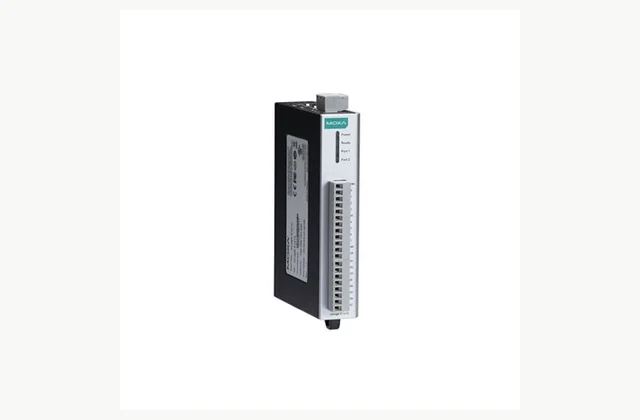
Shown as a configuration reference. Availability and the equipment offered for your project are confirmed separately.
Create the field signal schedule
Remote I/O brings input and output channels onto a communication network, but channel type determines which field devices can be connected. List digital inputs, transistor or relay outputs, analog signals and temperature inputs separately. Include sensor supply and load requirements. A product family offering many signal types does not mean one module supports them all. Select the exact variant from the schedule rather than assume an available terminal can be configured for any signal.
Match electrical behavior and wiring
Digital channels can differ in source, sink, contact and power arrangements, while analog inputs depend on signal range and connection design. Identify wiring, commons, isolation and any external conditioning or protection needed. Check output load characteristics against the selected channel and required switching behavior. The Moxa ioLogik E1200 reference covers multiple I/O configurations; its family photograph should not be used to infer the channel count or electrical capability of the delivered module.
Confirm controller and protocol compatibility
State the controller or host, firmware and supported communication method. A physical Ethernet connection does not establish that the device acts in the required protocol role or has the necessary configuration file. Ask how channels are addressed and how values are scaled or represented. Where several applications need access, define their roles and ownership of outputs. Test the actual host and module rather than assume that a shared protocol label guarantees every required behavior.
| Selection issue | Information to specify |
|---|---|
| Channels | Signal types, ranges, counts and exact module variants. |
| Electrical | Sensor and load supply, wiring, isolation and switching needs. |
| Host | Controller, protocol role, versions and mapping. |
| Behavior | Update needs, stale inputs and output states on interruption. |
| Installation | Cabinet power, terminals, network topology and replacement setup. |
| Acceptance | Each field signal verified through the intended application. |
Define updates and communication-loss behavior
Specify the response needed for the application, including update expectations and how unavailable or stale input data is identified. Decide what outputs should do after lost communication or power, using the responsible control design. Default or retained states must be understood and configured where supported. A remote-I/O block should not be assumed suitable for a safety function merely because it connects to industrial equipment; that requires a separately appropriate design and evidence.
Plan power, cabinets and maintenance
Separate module power, sensor supply and output-load supply where the design requires it. Include terminal access, wire identification, mounting and the cabinet environment. Network daisy-chain features may simplify cabling but still require assessment of topology and failure effects. Decide how replacement modules receive the right addresses and settings. Retain the channel schedule and wiring drawing so a technician can distinguish a failed field device from a network, power or configuration problem.
Accept each channel through the application
Commissioning should verify channel identity, polarity, scaling and output operation through an appropriate controlled procedure. Include agreed communication interruptions and restoration. Compare the delivered variant, terminals and accessories with the order and retain its configuration. A changing input on a browser page does not prove correct mapping into the controller or the required application response. The final evidence should connect the field signal to the value or command used by the system.
Scope OEM/ODM at the cabinet interface
Prewiring, labels, connectors, mounting and configuration can be reviewed. New I/O electronics, firmware or electrical ratings need engineering validation and lifecycle support. Provide the field schedule and control requirements with the brief. A custom assembly should retain identifiable components and an accurate wiring and addressing map. Private labeling must not imply safety capability, protocol compatibility or environmental performance that has not been demonstrated for the delivered arrangement.
What should your remote i/o module RFQ include?
- Channels: Signal types, ranges, counts and exact module variants.
- Electrical: Sensor and load supply, wiring, isolation and switching needs.
- Host: Controller, protocol role, versions and mapping.
- Behavior: Update needs, stale inputs and output states on interruption.
- Installation: Cabinet power, terminals, network topology and replacement setup.
- Acceptance: Each field signal verified through the intended application.
- Destination, site conditions and delivery access
- Installation boundary, utilities and connection drawings
- Acceptance procedure, documentation and training scope
- OEM/ODM changes: interface, material, branding or new design; written engineering feasibility required
Need OEM / ODM customization?
Submit branding, packaging, configuration or engineering requirements for this equipment. Include the target market, initial and annual quantities, required changes and acceptance criteria.
Customization feasibility, permitted branding, development responsibilities, minimum quantity, cost and lead time are reviewed for the proposed supplier and configuration before a quotation is confirmed.
Frequently asked questions
Does a remote-I/O family support every signal on one module?
No. Families commonly include variants with different digital, analog or temperature arrangements. Create a channel schedule and select exact modules. A photograph or general family description does not establish that every terminal can accept the field signal or drive the load required by the application.
What output information must be specified?
Identify load type, supply, switching requirements and the required state during communication or power loss. Check the exact channel’s electrical capability and wiring. A nominal output count does not establish suitability for every solenoid, relay or other connected load under the intended conditions.
Does Ethernet connectivity prove controller compatibility?
No. Confirm protocol role, configuration information, addressing and representation of data with the actual controller or host. Test the intended exchange. Matching a protocol name alone does not settle version, mapping or multi-application behavior, especially where more than one system could write outputs.
Can ordinary remote I/O perform a machine safety function?
Do not assume it can. Safety functions need an appropriate control design and equipment with relevant supporting evidence. Specify ordinary process I/O separately and have the responsible machine-safety engineer assess any protective function rather than infer suitability from industrial branding or network connectivity.
How should remote I/O be commissioned?
Verify every channel from the field connection through the host application, including identity, wiring, scaling and agreed output behavior. Test planned interruption and restoration cases under the responsible procedure. Retain the configuration and channel map so acceptance establishes more than a status value displayed locally.
Can remote-I/O cabinets be customized for an OEM?
Prewiring, connectors, identification and configuration may be reviewed. Changes to electronics, firmware or ratings require validation and support commitments. Provide signal and control schedules and preserve component identity and drawings so the customized assembly can be replaced and maintained without undocumented assumptions.
Reference information
- ioLogik E1200 Series - Universal Controllers & I/Os | Moxa
- Stay Ahead By Reading the Field | MoxaGroup 23
Reference data and images explain equipment configurations. IndustryApex engineers confirm the offered model, specification and commercial scope in your project quotation.