
Connect equipment using different industrial communication protocols with a gateway chosen for exact protocol roles, data mapping and application behavior. Define the devices and required exchanges before comparing ports, then validate the proposed configuration with representative equipment. Prioritize protocols, data, electrical. Use the checkpoints to build a consistent equipment scope and confirm the intended trial or installation evidence. The official image is a product reference; it does not establish availability or an authorized supplier relationship. Submit OEM/ODM changes for application-specific feasibility review.
Connect equipment using different industrial communication protocols with a gateway chosen for exact protocol roles, data mapping and application behavior. Define the devices and required exchanges before comparing ports, then validate the proposed configuration with representative equipment.
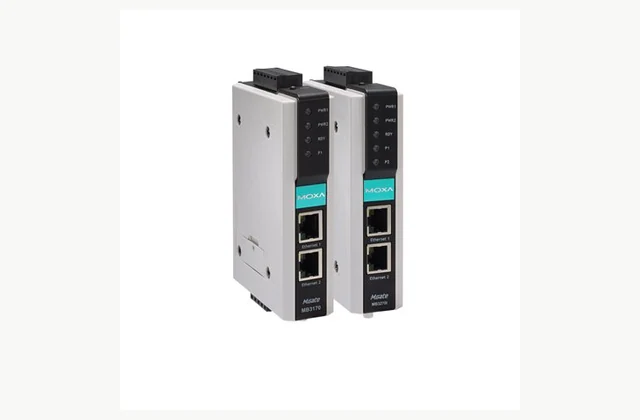
Shown as a configuration reference. Availability and the equipment offered for your project are confirmed separately.
Identify both protocols and their roles
An industrial protocol gateway translates or coordinates specified communication protocols. A device that only transports serial bytes over Ethernet is a different solution. List the exact source and destination protocols and whether each device acts as a client, server, master or other defined role. Include model and firmware information. A familiar protocol name does not establish every supported role or simultaneous connection arrangement, so the inquiry must describe the complete exchange.
Create the data and addressing map
List the values, commands and status information that must move between devices. Specify register or object addresses, data types, scaling, byte order and update requirements where applicable. Include error and validity information rather than mapping only normal process values. The Moxa MGate MB3170/MB3270 reference supports particular Modbus communication arrangements; another protocol pair needs its own documented gateway capability and mapping. A port-compatible device is not automatically a suitable translator.
Check physical and electrical interfaces
Protocol compatibility does not settle RS-232, RS-422 or RS-485 wiring, termination or isolation needs. Identify connectors, cable arrangement and the actual electrical interfaces of every device. Confirm any optical or other selected variant and required accessories. An isolation option should not be assumed present in the base model. Include power, mounting and environment in the cabinet design so the communication proposal also becomes an installable equipment package.
| Selection issue | Information to specify |
|---|---|
| Protocols | Exact pair, roles, device models and firmware. |
| Data | Addresses, types, scaling, byte order and commands. |
| Electrical | Serial standard, connectors, wiring and required isolation. |
| Timing | Polling, response expectations and concurrent connections. |
| Failure handling | Timeouts, stale values and validity indications. |
| Acceptance | Actual-device mapping tests and configuration restoration. |
Define timing, polling and simultaneous access
The gateway must suit the application’s communication pattern, not just connect once during a demonstration. Describe polling rates, response expectations, device counts and concurrent clients. Serial bus loading and endpoint response can constrain useful update behavior. Ask how timeouts, priorities and retries affect the intended exchange. A maximum connection count does not guarantee that every connection can update at the fastest desired rate while the actual field devices respond.
Plan failure and data-validity behavior
Loss of a field device or network path should produce behavior understood by the application. Define how stale values, communication faults and command failures are indicated. Decide which party implements the response in the gateway, controller or supervisory system. Avoid leaving old process values appearing valid after a connection fails. The proposed configuration should document these cases and make them testable without assuming that successful normal traffic resolves abnormal conditions.
Validate mappings with actual equipment
Test representative values and commands using the intended devices, including boundaries and abnormal states appropriate to the project. Confirm scaling and byte order and observe recovery after agreed interruptions. Retain the configuration, mapping table, versions and access information under the site’s procedures. Commissioning should prove the application exchange, not just a changing network status light. Include software licenses, configuration tools and technical support in the handover scope.
Scope OEM/ODM around the mapping deliverable
Preconfiguration, labels, mounting and device-specific mapping can be reviewed. Changes to protocol software, hardware or supported functions need engineering and a lifecycle plan. Provide device information and the required exchanges with the brief. A customized gateway should retain a readable mapping and a restoration method. Private labeling does not establish protocol compatibility or transfer another manufacturer’s implementation rights; the delivered design needs its own validation evidence.
What should your industrial protocol gateway RFQ include?
- Protocols: Exact pair, roles, device models and firmware.
- Data: Addresses, types, scaling, byte order and commands.
- Electrical: Serial standard, connectors, wiring and required isolation.
- Timing: Polling, response expectations and concurrent connections.
- Failure handling: Timeouts, stale values and validity indications.
- Acceptance: Actual-device mapping tests and configuration restoration.
- Destination, site conditions and delivery access
- Installation boundary, utilities and connection drawings
- Acceptance procedure, documentation and training scope
- OEM/ODM changes: interface, material, branding or new design; written engineering feasibility required
Need OEM / ODM customization?
Submit branding, packaging, configuration or engineering requirements for this equipment. Include the target market, initial and annual quantities, required changes and acceptance criteria.
Customization feasibility, permitted branding, development responsibilities, minimum quantity, cost and lead time are reviewed for the proposed supplier and configuration before a quotation is confirmed.
Frequently asked questions
Is a serial device server the same as a protocol gateway?
No. A device server can transport serial communication over a network without translating the application protocol. A protocol gateway must support the required protocol pair and roles. Describe the actual exchange so hardware that merely provides compatible connectors is not mistaken for a complete translator.
What belongs in a gateway data map?
Include addresses or objects, data types, scaling, byte order, update needs and status or validity information. Add required commands and their responses. The map should describe both normal values and communication-failure behavior so the receiving application can interpret the translated data correctly.
Does supporting Modbus guarantee every Modbus arrangement works?
No. Serial and TCP roles, addressing, device counts and simultaneous access vary by implementation. Identify the exact devices and desired communication paths. Require confirmation and test the proposed configuration rather than assuming a protocol label covers every client, server or master arrangement.
Why does serial isolation need separate confirmation?
Electrical interface and isolation options can differ across variants. Check wiring, environment and the devices being connected and specify the exact model. A family brochure showing an isolated version does not establish that the quoted base gateway includes the same electrical arrangement.
How should gateway failure behavior be accepted?
Agree what happens when a device or network path is unavailable, including stale values, fault indications and command response. Test these cases with the responsible application team. Successful normal polling alone does not show that the system recognizes invalid data or recovers as intended.
Can protocol gateways be customized for an OEM machine?
Mapping, preconfiguration and integration can be reviewed with exact device information. Protocol software or hardware changes require validation and ongoing support commitments. An OEM/ODM deliverable should include the mapping table, configuration backup and evidence of the intended exchange, rather than only a branded enclosure.
Reference information
- MGate MB3170/MB3270 Series - Modbus TCP Gateways | Moxa
- Protocol Gateways | Moxa
Reference data and images explain equipment configurations. IndustryApex engineers confirm the offered model, specification and commercial scope in your project quotation.