
Protect defined industrial communication boundaries with a security appliance selected for the network, protocols and operational constraints. Evaluate inspection, policy management and availability as part of an engineered security design, with clear update and incident responsibilities after commissioning. Prioritize policy, functions, compatibility. Use the checkpoints to build a consistent equipment scope and confirm the intended trial or installation evidence. The official image is a product reference; it does not establish availability or an authorized supplier relationship. Submit OEM/ODM changes for application-specific feasibility review.
Protect defined industrial communication boundaries with a security appliance selected for the network, protocols and operational constraints. Evaluate inspection, policy management and availability as part of an engineered security design, with clear update and incident responsibilities after commissioning.
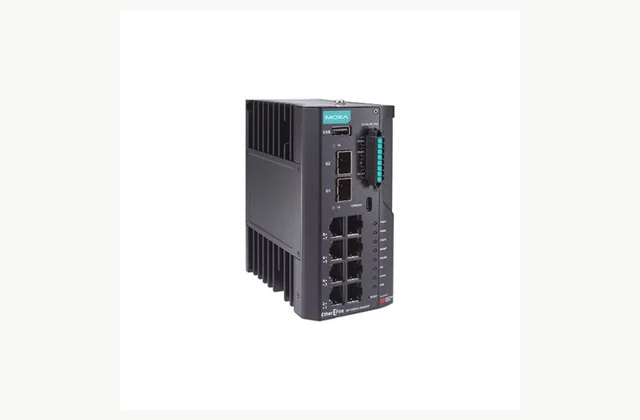
Shown as a configuration reference. Availability and the equipment offered for your project are confirmed separately.
Begin with zones and permitted communication
An industrial security appliance enforces or monitors a policy at a defined network location. Identify the assets, network zones and communications that must continue for production. Decide where the appliance will sit and what traffic passes through it. Buying a firewall or intrusion-prevention product does not create a complete security architecture. The design needs an owner who can distinguish necessary industrial traffic from access that should be restricted.
Distinguish firewall, detection and prevention
Packet filtering, industrial-protocol inspection, intrusion detection and intrusion prevention are different functions. State which the project needs and confirm availability on the exact hardware, software and licensed arrangement. Detection can produce alerts, while prevention can affect traffic delivery and needs an operational policy. The Moxa IEF-G9010 reference illustrates a network-security appliance; its general description should not be treated as proof that another device supports the same protocols or current inspection features.
Verify protocol and traffic compatibility
List controllers, engineering tools, industrial protocols and application flows. Include discovery, time-sensitive exchanges and maintenance activities that can be overlooked in a simple port list. Ask how the proposed inspection rules interact with these flows and test with representative equipment. A permitted connection at the transport layer does not necessarily establish that deeper inspection handles every required application behavior. Document exceptions and their justification instead of leaving temporary unrestricted rules in place.
| Selection issue | Information to specify |
|---|---|
| Policy | Assets, zones and communication that must be permitted or restricted. |
| Functions | Filtering, protocol inspection, detection or prevention actually included. |
| Compatibility | Controllers, tools and application behavior to test. |
| Availability | Performance with inspection and required failure response. |
| Lifecycle | Licenses, updates, monitoring and policy ownership. |
| Acceptance | Controlled flow tests, logs and configuration restoration. |
Assess availability and failure behavior
A security device becomes part of the production communication path. Define performance with the intended inspection enabled, expected traffic and the required response to power or device failure. Bypass, redundancy and fail-open or fail-closed behavior have different security and availability implications. The responsible engineering and security teams should choose the policy together. Hardware presence alone does not establish the desired failure behavior in the actual topology.
Plan rules, updates and monitoring
Identify who maintains the policy, receives alerts and evaluates updates. Inspection capabilities may depend on subscription, signature or management services, so itemize these and their renewal conditions. Clarify firmware support, backup, time records and integration with monitoring systems. An appliance installed with a static initial configuration can lose usefulness if nobody owns its lifecycle. Retain a documented process for changes that might affect production communication or incident visibility.
Commission through controlled operational tests
Use a representative or appropriately controlled environment to verify permitted flows, monitoring and the intended rule behavior. Agree test cases with the asset owner rather than perform intrusive experiments on production equipment. Check restoration from backup and review logs with the people who will respond to them. The acceptance package should identify versions, licenses, enabled features and policy. A connected appliance with all traffic allowed has not demonstrated the intended security outcome.
Bound OEM/ODM and integration responsibilities
Panel integration, labels, policy deployment and monitoring interfaces can be reviewed. Altering firmware, inspection engines or hardware introduces substantial validation and lifecycle responsibilities. Provide protocol requirements and the operational policy with any OEM/ODM brief. Preserve component and software identity and clarify update access. A customized exterior or a reference manufacturer’s image must not imply threat coverage, certification or private-label authorization that has not been established for the delivered system.
What should your industrial network security appliance RFQ include?
- Policy: Assets, zones and communication that must be permitted or restricted.
- Functions: Filtering, protocol inspection, detection or prevention actually included.
- Compatibility: Controllers, tools and application behavior to test.
- Availability: Performance with inspection and required failure response.
- Lifecycle: Licenses, updates, monitoring and policy ownership.
- Acceptance: Controlled flow tests, logs and configuration restoration.
- Destination, site conditions and delivery access
- Installation boundary, utilities and connection drawings
- Acceptance procedure, documentation and training scope
- OEM/ODM changes: interface, material, branding or new design; written engineering feasibility required
Need OEM / ODM customization?
Submit branding, packaging, configuration or engineering requirements for this equipment. Include the target market, initial and annual quantities, required changes and acceptance criteria.
Customization feasibility, permitted branding, development responsibilities, minimum quantity, cost and lead time are reviewed for the proposed supplier and configuration before a quotation is confirmed.
Frequently asked questions
Is a firewall the same as an intrusion-prevention appliance?
No. Filtering, detection, deeper protocol inspection and prevention describe different capabilities. Some products combine them, but exact software, licensing and supported protocols matter. State the desired policy and operational response so the supplier identifies the functions actually included in the proposed appliance.
Can an appliance secure a plant simply by being installed?
No. It needs a defined network position, permitted communication policy and lifecycle owner. The wider design includes assets, access and response procedures. Acceptance should demonstrate the intended controls and alerts rather than assume that a connected product provides a complete industrial security architecture.
Why must industrial protocols be listed explicitly?
Inspection can interact with application behavior beyond basic port connectivity. Controllers, engineering tools and discovery functions may have specific needs. Provide the actual flows and test the proposed rules with representative devices, documenting exceptions instead of assuming every supported protocol name covers all operating cases.
How should bypass or failure behavior be chosen?
Availability and security implications differ between bypass, redundancy and fail-open or fail-closed arrangements. The asset owner and engineering team should define the response for the actual topology. Confirm it on the exact configuration and test agreed scenarios rather than relying on the presence of a feature label.
What ongoing costs should the inquiry include?
Identify firmware support, inspection updates, signature or management subscriptions, monitoring integration and renewal conditions. Clarify who evaluates and deploys changes. A complete comparison should show what remains functional and supported over time, rather than only the initial hardware and commissioning price.
Can security appliances be customized for OEM equipment?
Panel integration, policy deployment and interfaces can be reviewed. Firmware, inspection or hardware changes require substantial validation and update commitments. Specify the protocols and operating policy, retain software identity and confirm the maintenance boundary so OEM/ODM work does not create an unsupported security dependency.
Reference information
- IEF-G9010 Series - Network Security Appliance | Moxa
- Industrial Network Security | Moxa
Reference data and images explain equipment configurations. IndustryApex engineers confirm the offered model, specification and commercial scope in your project quotation.