
A horizontal flow wrapper draws film around individually spaced products and seals the continuous tube into packs. Product support and orientation matter for bars, trays and irregular pieces moving through the seal area. Send product dimensions, weight, rigidity and surface condition together with pack drawings. State which side must face the consumer and whether trays, cards or unsupported products reach the infeed.
A horizontal flow wrapper draws film around individually spaced products and seals the continuous tube into packs. Product support and orientation matter for bars, trays and irregular pieces moving through the seal area. Compare application fit, configuration and OEM/ODM scope through the buyer checklist below.
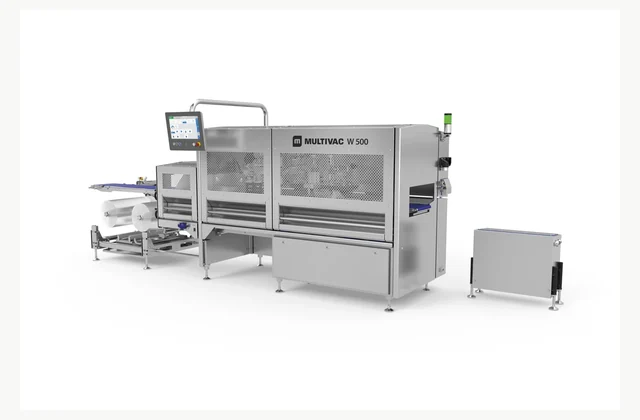
Shown as a configuration reference. Availability and the equipment offered for your project are confirmed separately.
Film route: application and input specification
A horizontal flow wrapper draws film around individually spaced products and seals the continuous tube into packs. Product support and orientation matter for bars, trays and irregular pieces moving through the seal area.
Send product dimensions, weight, rigidity and surface condition together with pack drawings. State which side must face the consumer and whether trays, cards or unsupported products reach the infeed.
The product determines the infeed before the film is selected. A rigid tray can tolerate different support from a soft bakery item or an irregular component. Inspect where the product transfers between belts and whether gaps permit tipping, dragging or loss of the intended presentation.
Infeed: configuration tradeoffs
Compare film-from-above and film-from-below routes, seal positions and infeed support. Jaw action and available sealing time must suit the actual film and product spacing; format names alone are insufficient.
End-seal clearance must be evaluated at the actual spacing variation. An attractive pack produced from manually aligned samples does not prove that a fluctuating upstream feed will avoid product trapped in the jaws. Include realistic gaps, double arrivals and skewed items in the challenge set.
| Decision | What to resolve | Useful evidence |
|---|---|---|
| Film route | Product support and presentation | Correct orientation in completed packs |
| Infeed | Spacing and product-detection logic | Gaps and restart demonstration |
| Sealing | Film and product clearance | Filled-pack seal inspection |
Process integration and handover points
Assign product singulation, flighted infeed, registration, coding and discharge accumulation. Decide which supplier owns product detection and reject logic when upstream machines vary the gap or orientation of arriving items.
Film selection must consider folding, sealing and package opening together. Printed film registration can add a further constraint when the artwork repeat differs from the natural product pitch. Submit real reels and an approved pack sample, including any required tear feature or seal presentation.
Installation and maintainable operating arrangements
Check cleaning access around belts, jaws and film paths. Reserve space for reel changes and safe removal of format parts. Confirm power, air, gas flushing where required and permitted cleaning conditions.
For food applications, distinguish mechanical wrapping from preservation. Gas flushing, barrier material and pack integrity need a product-specific assessment; the presence of a gas connection does not establish shelf life. Define how atmosphere and seals will be evaluated if these functions are requested.
Acceptance evidence for sealing
Run the lightest and longest products with production film. Inspect end seals, longitudinal seals, registration and product damage. Include missed-product gaps, stops and changeovers, measuring accepted packs rather than jaw cycles.
A format change may require guides, flights, forming geometry and jaw-related settings. Obtain a change-parts list for each product group and identify parts shared between formats. Observe whether the normal operator can return to the reference setup without extensive trial-and-error film waste.
OEM/ODM scope and future changes
ODM requests may alter infeed flights, product supports, film geometry or controls. Require a revised line drawing and a joint trial with upstream equipment; OEM graphics do not change the need for film compatibility.
The final acceptance should include discharge accumulation and the next process. Packages that appear acceptable at the wrapper can loosen, scuff or become unstable in a conveyor transfer. Review coding readability and seal placement after the intended downstream handling, retaining both accepted and rejected reference samples.
Image reference: MULTIVAC W 500 flowpacker family. The illustrated manufacturer configuration does not establish stock, an agency appointment or permission to relabel it. OEM/ODM requests require a written feasibility response for the actual proposed equipment.
What should your horizontal flow wrapper RFQ include?
- Product dimensions and stability
- Pack orientation and presentation
- Film structure and seal requirements
- Product spacing and upstream variability
- Infeed flights, trays and supports
- Printer, gas flush and reject functions
- Reel handling and cleaning access
- Accepted-pack criteria and seal tests
- Format parts and changeover duties
- OEM/ODM line drawings and approval samples
Need OEM / ODM customization?
Submit branding, packaging, configuration or engineering requirements for this equipment. Include the target market, initial and annual quantities, required changes and acceptance criteria.
Customization feasibility, permitted branding, development responsibilities, minimum quantity, cost and lead time are reviewed for the proposed supplier and configuration before a quotation is confirmed.
Frequently asked questions
What inputs determine selection of horizontal flow wrapper?
Send product dimensions, weight, rigidity and surface condition together with pack drawings. State which side must face the consumer and whether trays, cards or unsupported products reach the infeed.
How should I compare infeed options?
Compare film-from-above and film-from-below routes, seal positions and infeed support. Jaw action and available sealing time must suit the actual film and product spacing; format names alone are insufficient.
Which adjoining operations need to be specified?
Assign product singulation, flighted infeed, registration, coding and discharge accumulation. Decide which supplier owns product detection and reject logic when upstream machines vary the gap or orientation of arriving items.
What is a useful acceptance trial for horizontal flow wrapper?
Run the lightest and longest products with production film. Inspect end seals, longitudinal seals, registration and product damage. Include missed-product gaps, stops and changeovers, measuring accepted packs rather than jaw cycles.
Which OEM/ODM changes can I request?
ODM requests may alter infeed flights, product supports, film geometry or controls. Require a revised line drawing and a joint trial with upstream equipment; OEM graphics do not change the need for film compatibility.
What application boundary is easy to overlook?
The product determines the infeed before the film is selected. A rigid tray can tolerate different support from a soft bakery item or an irregular component. Inspect where the product transfers between belts and whether gaps permit tipping, dragging or loss of the intended presentation.
Reference information
- MULTIVAC W 500 flowpacker family official reference
- MULTIVAC related technology or portfolio reference
Reference data and images explain equipment configurations. IndustryApex engineers confirm the offered model, specification and commercial scope in your project quotation.