
A bottle capping machine fits a project when the actual cap, liner and neck finish can be presented and closed consistently. Screw caps, snap closures, pump dispensers and roll-on closures should not be treated as interchangeable jobs. Provide packaging samples from more than one production batch, including the bottle filled to its normal quantity. A closure can appear tight while being cross-threaded or having a damaged liner.
Start with the closure rather than bottle speed
A bottle capping machine fits a project when the actual cap, liner and neck finish can be presented and closed consistently. Screw caps, snap closures, pump dispensers and roll-on closures should not be treated as interchangeable jobs. Provide packaging samples from more than one production batch, including the bottle filled to its normal quantity. A closure can appear tight while being cross-threaded or having a damaged liner. Define the finished-pack requirements for leak resistance, tamper features and consumer opening effort, then select the capping principle that can be demonstrated against them.
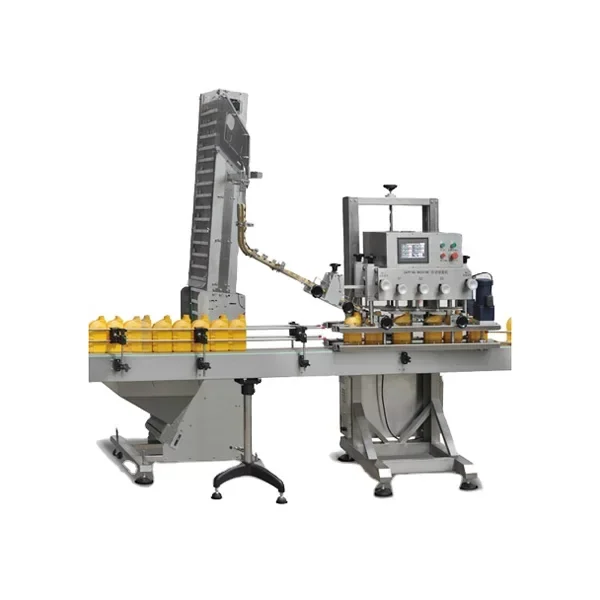
Shown as a configuration reference. Availability and the equipment offered for your project are confirmed separately.
Compare tightening mechanisms and bottle restraint
Spindle cappers use wheels to tighten passing closures, while chuck-type arrangements grip and rotate the cap through a defined cycle. Ask the supplier to justify the proposed method for your formats, particularly unusually shaped caps and trigger sprays. Specify bottle restraint without crushing thin containers or marking decoration. Format adjustment should include cap height, conveyor guides and any orientation equipment. Request the limits for the smallest cap and tallest bottle, together with required change parts. A generic torque setting should be linked to a practical verification method on your finished packs.
Design cap feeding and line accumulation
Cap sorting, elevation, chute delivery and replenishment often decide whether the capper can sustain the promised output. Test randomly presented closures from the intended bags or boxes and include deformed or inverted caps in the recovery discussion. Show the hopper filling position and maintenance access on the line layout. Confirm how uncapped bottles are detected, diverted or stopped, and how downstream congestion is communicated. Compressed-air demand, conveyor spacing and guarding should be included in the station specification. A dedicated accumulator may be needed where a filler and capper have different interruption patterns.
Budget for closures, change parts and wear items
Compare the capper, sorter, elevator, bottle conveyor, torque monitoring and reject equipment as a complete package. Ask whether additional cap geometries require a new chute, bowl, chuck or wheel set. Include spare gripping belts, tightening wheels, sensors and the tools needed for adjustment. Calculate labor for cap replenishment and format changes separately from nominal running speed. Installation, training and the closure supplier’s validation work may sit outside the machine price. Keep warranty exclusions visible where damaged caps, bottle variation or unsuitable liners could otherwise be blamed on an undefined production input.
Prove closure quality under real conditions
Acceptance should record correctly capped output, cross-threading, missing closures, scuffed bottles and opening-torque results after the agreed conditioning period. Test a normal start, an empty cap supply, a line stop and a restart with filled bottles already in the station. Define leak testing appropriate to the product and pack rather than a universal test. Include at least one representative format change and retain the setup record. Inspect the actual liner and tamper feature after the test. The result should show the closure process remains controlled, not merely that the conveyor can move quickly.
Make OEM and ODM changes traceable
An inquiry should include the exact closure and bottle files, torque expectations, cap supply method and surrounding line dimensions. OEM requests can cover approved branding, documentation and user-interface language. ODM requests may involve cap orientation, special restraint or new feeding geometry and need a design review with the packaging supplier. Agree ownership of cap-handling tooling, access to settings and responsibilities for future container changes. Ask for a versioned parts list and acceptance plan matching the offered capper. Keep the original bottle and cap samples as procurement references throughout manufacturing and commissioning.
Manufacturer configuration references
Review the linked manufacturer information as configuration references. Request the current sheet, included scope and relevant evidence for the exact proposed equipment; these references do not establish an IndustryApex supply relationship.
What should you include in your RFQ?
- Closure drawings and samples
- Bottle neck finish
- Cap liner and tamper feature
- Application and opening torque
- Bottle material and wall stiffness
- Trigger orientation if applicable
- Mixed formats and changeover frequency
- Required good bottles per shift
- Cap sorter elevator and chute
- Conveyor height and bottle spacing
- Power air and line interfaces
- Country OEM and acceptance requirements
For OEM / ODM requests, include the branding, packaging, configuration or engineering changes you need, initial and annual quantities, target market, sample approval and acceptance requirements. Feasibility and commercial scope are confirmed for the specific project.
Need OEM / ODM customization?
Submit branding, packaging, configuration or engineering requirements for this equipment. Include the target market, initial and annual quantities, required changes and acceptance criteria.
Customization feasibility, permitted branding, development responsibilities, minimum quantity, cost and lead time are reviewed for the proposed supplier and configuration before a quotation is confirmed.
Frequently asked questions
Does a screw capper suit every closure?
No. Screw, snap, pump and roll-on closures need different handling and closing mechanisms. Submit cap, liner and neck samples together and require evidence of correct closure and opening effort for each approved packaging combination.
How do spindle and chuck cappers compare?
Compare spindle and chuck cappers through trials with the actual closure and bottle. Spindle arrangements tighten passing caps with wheels; chuck arrangements grip and rotate a cap. Bottle restraint, format changes and torque verification should determine the choice.
What affects cap feeding reliability?
Cap geometry, deformation, orientation and replenishment affect feeding reliability. Test closures from normal production lots through the proposed sorter, elevator and chute, including inverted caps and recovery after an empty hopper or jam.
Why do capper prices vary?
Prices vary with closing mechanism, cap sorting, orientation, bottle restraint, monitoring and format range. Request the full conveyor and feeding scope plus wear parts, installation and trials; nominal bottles per minute does not define an equivalent package.
How do I verify closure torque?
Measure application or opening torque using an agreed instrument, conditioning period and sampling method for the finished pack. Include cross-thread and leak checks because a tight-looking closure can still have a damaged liner or incorrect engagement.
Can capper controls and branding be customized?
Yes. Request branding, languages, recipes and defined line signals with the bottle and closure files. Changes to cap orientation, restraint or feeding need manufacturer engineering review and sample acceptance; preserve access to configuration backups and format-part identifiers.
Reference information
- VKPAK: VK-SC spindle screw capping machine
- VKPAK: Liquid filling line equipment
Reference data and images explain equipment configurations. IndustryApex engineers confirm the offered model, specification and commercial scope in your project quotation.