
Determine useful airflow and pressure from the equipment that runs together. Record variation and air quality before asking for a compressor size.
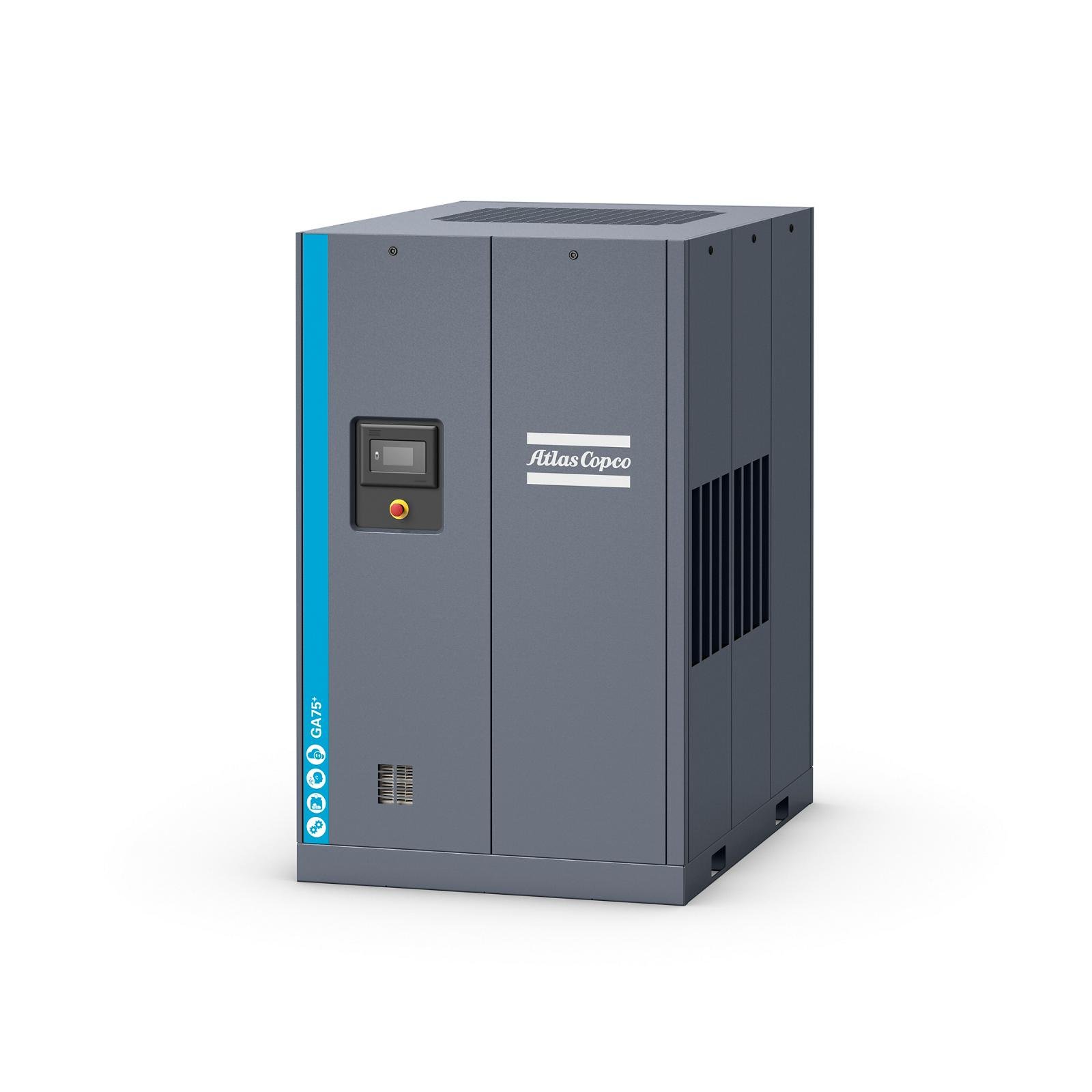
Shown as a configuration reference. Availability and the equipment offered for your project are confirmed separately.
To size a screw air compressor for multiple factory machines, map simultaneous use and the pressure needed at each point of use. Ask for delivered airflow at the stated working pressure and reference conditions. A motor rating or the sum of every installed machine does not establish the demand that occurs together.
Download equipment RFQ checklist ↗ · Discuss this application on WhatsApp ↗
Shown as a configuration reference. Availability and the equipment offered for your project are confirmed separately.
Size a factory compressor from required airflow and pressure under representative simultaneous operation, then review air quality, demand variation and the distribution system. Do not select a motor size by adding machine counts or choosing an arbitrary extra percentage. The manufacturer or air-system designer should validate the final capacity.
List every air user
Create one line per tool, machine or process. Record the equipment supplier’s air consumption, its units and the pressure at which it applies. Identify continuous users, intermittent cycles and short peaks. Note which machines run together and which are alternatives. If the consumption basis is unclear, ask before combining values.
| Input | What to record |
|---|---|
| Air user | Machine, tool or process and quantity |
| Consumption | Flow, units, reference conditions and operating pressure |
| Operating pattern | Cycle duration, frequency and simultaneous use |
| Quality | Moisture, particle and oil requirement at the point of use |
| Priority | Minimum pressure and consequence of a supply interruption |
Keep free-air flow, compressed volume and other reported flow bases distinct until an appropriately qualified person confirms conversions. Record whether figures describe average consumption, continuous use or a peak. This avoids building a neat-looking total from incompatible numbers.
Measure an existing installation
Where possible, log pressure, flow and package electricity across normal production, peak activity and low-demand periods. Record the current compressor’s load or control status. Include the pressure near important equipment, rather than only at the compressor. The Australian Government recommends developing demand profiles across operating conditions and addressing leaks and maintenance.
Use your equipment list to explain the measured pattern. For example, note when a process starts, pauses or runs with another line. Keep uncertain readings flagged. If the peak cannot be measured, agree a provisional assumption with the designer and a method to verify it before final acceptance.
Review the complete air system
Ask the designer to evaluate storage, piping, dryers, filters and pressure loss alongside capacity. Distinguish a short peak that may be addressed by system design from continuous demand that requires sustained supply. Specify future equipment individually instead of applying a broad growth margin with no supporting plan.
Include ventilation, ambient temperature, altitude where relevant, available electrical supply and backup expectations. An offer should identify the site conditions used in its performance selection. Ask how the system behaves at both minimum and maximum demand.
Request comparable proposals
Ask each supplier to state delivered flow at the selected pressure, performance basis, package power and control range. CAGI’s data-sheet framework provides useful fields for comparing documented compressor performance. Confirm that the quoted model and electrical version match the sheet. Include receiver, treatment, drains, installation and maintenance in the cost comparison.
Questions to ask suppliers
- Which measured demand and simultaneous-use assumptions determine your recommendation?
- How much pressure reaches the critical equipment after system losses?
- How are short peaks, minimum demand and future users accommodated?
- What air-treatment specification and backup arrangement are included?
- What site measurements will verify the selection after installation?
Send these inquiry fields
- Air-user table, demand logs and existing compressor details.
- Required pressure, quality and shift pattern; planned additions.
- Site utilities, ambient conditions, layout and destination.
- Budget, procurement date and responsibility for system installation.
IndustryApex supplies industrial equipment with professional engineering support. Share your measurements and site information with our engineers so we can assess the air-system requirements and develop the proposed equipment configuration.
Download equipment RFQ checklist ↗ · Discuss this application on WhatsApp ↗
Explore the Screw air compressor buying guide and RFQ checklist ↗
Frequently asked questions
How much spare compressor capacity should I add?
There is no suitable universal percentage. Document future users, simultaneous operation, uncertainty and backup needs, then have the air-system designer validate the capacity.
Should I use peak or average airflow to size a compressor?
Record both and their duration. The designer should evaluate continuous demand, intermittent peaks, storage and controls as a complete system.
What if I do not know my factory’s airflow?
Prepare an equipment consumption table with units and usage patterns. For an existing system, obtain representative pressure, flow and power measurements before final selection.
Reference information
- Australian Government: Compressed Air Demand and System Management
- CAGI: Performance Data Sheet Framework
- Kaishan USA: Rotary Screw Compressor Product Range
Reference data and images explain equipment configurations. IndustryApex engineers confirm the offered model, specification and commercial scope in your project quotation.