
Choose a two-wheel tractor as a matched power unit and attachment system for the farm’s actual tasks. Compare transmission, controls, implement interfaces and terrain suitability, then specify the exact engine, wheels and accessories required for a usable working package. Prioritize task list, interfaces, control. Use the checkpoints to build a consistent equipment scope and confirm the intended trial or installation evidence. The official image is a product reference; it does not establish availability or an authorized supplier relationship. Submit OEM/ODM changes for application-specific feasibility review.
Choose a two-wheel tractor as a matched power unit and attachment system for the farm’s actual tasks. Compare transmission, controls, implement interfaces and terrain suitability, then specify the exact engine, wheels and accessories required for a usable working package.
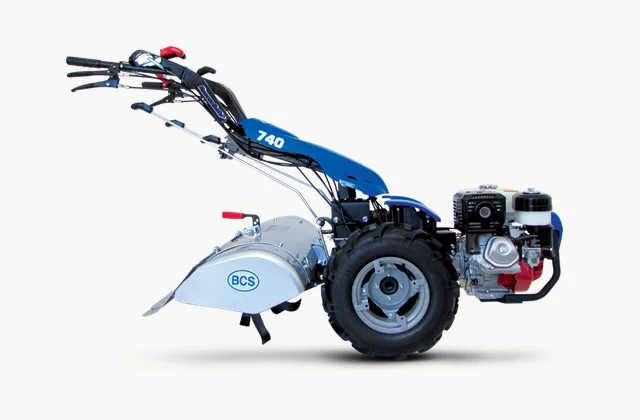
Shown as a configuration reference. Availability and the equipment offered for your project are confirmed separately.
Start with tasks and attachments
A two-wheel tractor supports compatible implements and is operated from its control position rather than selected as a smaller version of every four-wheel tractor task. List tilling, mowing or other intended operations and identify the attachments needed. Check each attachment’s permitted combination with the selected power unit. A versatile catalogue description does not establish that every accessory fits every machine or that one configuration suits all of the farm’s work.
Confirm PTO and mechanical compatibility
Identify the coupling, PTO arrangement, attachment orientation and any required adapters for the exact system. Reversible controls or different implement positions may affect the appropriate setup. The BCS 740 PowerSafe reference illustrates a professional two-wheel-tractor platform, but the offer must identify the actual attachment package. Similar connector appearance does not establish compatible rotation, drive requirements or structural fit. Request the manufacturer’s supported combinations rather than an improvised cross-brand connection.
Match transmission and operator control
Working speeds, maneuvering and control layout should suit the task and the people who will operate the machine. Assess clutch, stopping and other protective features according to the selected equipment’s instructions. Powered attachments and reversals require a compatible operating arrangement, not assumptions based on a previous model. A demonstration should include the intended implement and practical turns and positioning, using trained operation, so control effort and access can be assessed in context.
| Selection issue | Information to specify |
|---|---|
| Task list | Actual farm operations and required attachment package. |
| Interfaces | Coupling, PTO, orientation and documented supported combinations. |
| Control | Transmission, stopping and operator requirements with each implement. |
| Terrain | Slopes, access, soil and permitted wheel or ballast arrangement. |
| Variant | Exact engine, starting equipment and destination documentation. |
| Trial | Representative work with the complete delivered combination. |
Describe terrain and available access
Provide slopes, soil, path width, gates and surface conditions. Wheel, track or ballast choices must remain within the system’s documented combinations. A compact size can help access but does not prove suitability for every slope or ground condition. Discuss the intended site with the supplier and responsible operator. Keep the actual implement width and turning needs in the assessment rather than compare the power-unit dimensions alone.
Choose the engine and destination configuration
Engine options, starting arrangements and services can differ by market and model. State the destination and confirm the exact supplied variant and relevant documentation. Include fuel availability, routine consumables and local service support. Where electrical starting or other accessories are needed, itemize them with the battery and connection scope as applicable. A family photograph should not be used to infer an engine, emissions configuration or included starting equipment.
Evaluate the complete working combination
A useful trial demonstrates the intended task on representative ground with the offered implement, wheels and settings. Inspect the result, maneuvering, adjustment and routine servicing rather than engine operation alone. Confirm delivery includes guards, coupling components and accessories needed by the supported configuration. Obtain implement and power-unit instructions and part identification. Acceptance should leave the buyer with a documented system that can be maintained and reconfigured only within its permitted combinations.
Bound OEM/ODM around supported attachments
Identification, storage, selected interfaces and purpose-designed attachment work can be submitted for review. Changes to PTO, controls, stability or protective arrangements need engineering and an assessment of the complete combination. Provide the work task, terrain and operator requirements with the brief. A customized attachment needs its own evidence and instructions. Private labeling should not imply compatibility with another manufacturer’s system or obscure the identity of the parts used.
What should your two-wheel walking tractor RFQ include?
- Task list: Actual farm operations and required attachment package.
- Interfaces: Coupling, PTO, orientation and documented supported combinations.
- Control: Transmission, stopping and operator requirements with each implement.
- Terrain: Slopes, access, soil and permitted wheel or ballast arrangement.
- Variant: Exact engine, starting equipment and destination documentation.
- Trial: Representative work with the complete delivered combination.
- Destination, site conditions and delivery access
- Installation boundary, utilities and connection drawings
- Acceptance procedure, documentation and training scope
- OEM/ODM changes: interface, material, branding or new design; written engineering feasibility required
Need OEM / ODM customization?
Submit branding, packaging, configuration or engineering requirements for this equipment. Include the target market, initial and annual quantities, required changes and acceptance criteria.
Customization feasibility, permitted branding, development responsibilities, minimum quantity, cost and lead time are reviewed for the proposed supplier and configuration before a quotation is confirmed.
Frequently asked questions
Can any attachment fit a two-wheel tractor?
No. Coupling, PTO, orientation, drive demand and protective arrangements must match the supported system. Identify the exact power unit and implement and obtain compatibility confirmation. A similar-looking mechanical connection does not establish that an attachment can be operated appropriately in the proposed combination.
Should a walking tractor be selected by engine power alone?
Power is only part of the match. Transmission, attachment requirements, terrain, controls and operator use also matter. Describe the actual tasks and compare a complete documented package, including wheels and implements, rather than treating the engine rating as proof of suitability for every operation.
What should be checked for narrow or sloping sites?
Provide route widths, turns, gradients and surface conditions and assess the intended attachment as well as the power unit. Use the manufacturer’s permitted combinations and operating limits. Compact dimensions help access but do not by themselves establish terrain or slope suitability.
Are engine and electric-start options identical in every market?
No. Confirm the exact engine, starting arrangement and destination variant in the offer. Itemize any required battery or accessories and check relevant documentation and local service support. A product-family photograph does not establish what is included or appropriate for the destination.
How should the tractor-and-attachment package be demonstrated?
Use the actual task and representative ground with the proposed wheels, implement and settings. Assess work quality, maneuvering, adjustment and service access using the relevant instructions. An engine-only demonstration does not establish the performance or compatibility of a complete working attachment arrangement.
Can two-wheel-tractor attachments be developed through OEM/ODM?
Purpose-designed attachment or interface work can be reviewed, but PTO, controls, stability and protection need assessment as a complete system. Provide the task, terrain and power-unit details and agree evidence and instructions for the final combination rather than assume cross-brand compatibility.
Reference information
- 740 PowerSafe - BCS reversible two-wheel tractor
- Two-wheel tractors - Bcs
Reference data and images explain equipment configurations. IndustryApex engineers confirm the offered model, specification and commercial scope in your project quotation.