
Select a PTO-driven rotary tiller around soil condition, intended mixing and the required finish. Match the rotor, working width and rear equipment to the tractor, then compare driveline, wearing parts and field results for the actual cultivation task. Prioritize cultivation, working parts, tractor. Use the checkpoints to build a consistent equipment scope and confirm the intended trial or installation evidence. The official image is a product reference; it does not establish availability or an authorized supplier relationship. Submit OEM/ODM changes for application-specific feasibility review.
Select a PTO-driven rotary tiller around soil condition, intended mixing and the required finish. Match the rotor, working width and rear equipment to the tractor, then compare driveline, wearing parts and field results for the actual cultivation task.
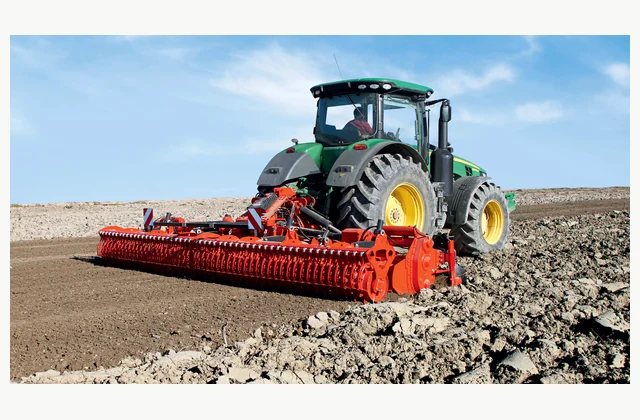
Shown as a configuration reference. Availability and the equipment offered for your project are confirmed separately.
Define the soil-work objective
A rotary tiller uses a powered horizontal rotor to work soil, but the intended result must be stated. Describe previous cultivation, crop residue, soil texture and the next operation. Mixing residue, preparing a seedbed and inter-row work can present different requirements. The correct level of disturbance depends on the farm’s agronomic plan and conditions. Do not select a machine simply because a demonstration produces very fine soil on an unrelated field.
Distinguish the rotor and blade arrangement
Rotor construction, blade geometry and working settings influence disturbance, material movement and the finish. Ask which arrangement is proposed for the intended soil and residue. Stones and abrasive conditions affect protection and wear requirements. The KUHN EL reference describes a rotary-tiller range; specifications and accessories should be checked for the exact variant. A family image does not establish that every model uses the same rotor, transmission or rear equipment.
Match PTO, transmission and tractor loads
Check PTO connection and operating requirements, driveline protection and the proposed transmission arrangement. Working width and depth affect demand, while machine and attachment mass affect lifting and transport. Provide the actual tractor, not just an engine-power figure. A compatible PTO connection does not alone prove that the whole combination suits the task. Include hydraulic or other services needed by the selected configuration and maintain the manufacturer’s operating limits.
| Selection issue | Information to specify |
|---|---|
| Cultivation | Soil, residue, intended mixing and following operation. |
| Working parts | Rotor, blades, protection and abrasive or stony conditions. |
| Tractor | PTO, driveline, linkage and complete lifting assessment. |
| Depth and finish | Control arrangement, rear hood and optional attachments. |
| Access | Rows, gates, turning and road-transport needs. |
| Trial | Representative mixing, depth and final soil condition. |
Choose depth control and rear equipment
The arrangement for controlling depth and the rear hood or other finishing equipment affects soil movement and the condition left behind. Discuss the following field operation and the required level of residue incorporation or finish. Check adjustments, cleaning and access where sticky soil or residue may accumulate. If a roller or combination tool is offered, assess the revised mass and tractor match rather than treating it as a cosmetic accessory.
Consider work pattern and transport
Orchard, vineyard and open-field work can impose different width, access and clearance constraints. Describe rows, turning space, slopes and travel between fields. Check the machine’s actual dimensions and any offered offset arrangement for the intended job. Transport lighting, parking and lifting clearance should be defined for the destination. A nominal working width does not show whether the tiller can pass the farm’s gates or operate without contacting crop or infrastructure.
Verify results and maintain the working geometry
A field trial should use representative soil and the intended tractor and settings. Assess depth consistency, mixing, finish and the condition needed for the next operation. Record the configuration so later comparisons are meaningful. Obtain blade and fastener identification, replacement guidance and routine transmission or lubrication information. Wearing parts influence the working shape; a parts-support plan is therefore relevant to field performance as well as maintenance cost.
Specify OEM/ODM with the cultivation task
Potential requests include hitch interfaces, rotor options, wear materials or application-specific identification. Changes to width, drive, blades or structural loads require engineering and a revised tractor assessment. Provide soil, crop and intended depth with the brief. Agree drawings and field evidence for any modified design. Private labeling cannot establish process suitability or transfer a reference manufacturer’s claims; the delivered configuration needs identifiable components and its own supporting documentation.
What should your rotary tiller RFQ include?
- Cultivation: Soil, residue, intended mixing and following operation.
- Working parts: Rotor, blades, protection and abrasive or stony conditions.
- Tractor: PTO, driveline, linkage and complete lifting assessment.
- Depth and finish: Control arrangement, rear hood and optional attachments.
- Access: Rows, gates, turning and road-transport needs.
- Trial: Representative mixing, depth and final soil condition.
- Destination, site conditions and delivery access
- Installation boundary, utilities and connection drawings
- Acceptance procedure, documentation and training scope
- OEM/ODM changes: interface, material, branding or new design; written engineering feasibility required
Need OEM / ODM customization?
Submit branding, packaging, configuration or engineering requirements for this equipment. Include the target market, initial and annual quantities, required changes and acceptance criteria.
Customization feasibility, permitted branding, development responsibilities, minimum quantity, cost and lead time are reviewed for the proposed supplier and configuration before a quotation is confirmed.
Frequently asked questions
How is a rotary tiller different from a power harrow?
The working mechanism and soil action differ, so the intended mixing and seedbed result should guide selection. A rotary tiller commonly uses a powered horizontal rotor. Describe soil, residue and the next operation and assess the offered design rather than treating both implement names as interchangeable.
What tractor details are needed for a rotary tiller?
Provide PTO requirements and connection, linkage information, lifting capacity through the relevant geometry and available services. Include the intended machine and rear equipment. Engine power alone does not establish that the tractor can drive, lift and transport the proposed tiller combination suitably.
Does a finer soil finish always mean better tillage?
No. The suitable finish depends on soil, moisture, crop and the next field operation. Define the agronomic objective before comparing settings or machines. A demonstration that produces fine soil under convenient conditions may not represent the desired result or workability on the buyer’s fields.
Which wear parts should be included in the inquiry?
Identify blades, fasteners and other working or transmission service components for the exact model. Ask how wear affects working geometry and replacement intervals under the intended conditions. Clear part identification helps prevent an incompatible substitute from changing the field result or maintenance procedure.
What should a rotary-tiller field trial assess?
Use representative soil, the intended tractor and the proposed rear equipment. Observe depth, mixing, residue flow and finish, and record settings. Include practical access and adjustment tasks so acceptance addresses the actual cultivation job rather than merely showing the rotor can turn.
Can a rotary tiller be customized for a crop system?
Hitch, working arrangement and selected wear options can be reviewed. Rotor, driveline, width or structural changes require engineering and field evaluation. Supply row layout, soil and tractor information in the OEM/ODM brief and agree evidence for the final configured design.
Reference information
- Rotary tillers EL 122 - 402 R | KUHN
- EL 62 - 82 - 92 power tillers | KUHN
Reference data and images explain equipment configurations. IndustryApex engineers confirm the offered model, specification and commercial scope in your project quotation.