
Select a reversible moldboard plough for the intended soil inversion, residue handling and tractor combination. Compare bodies, clearance, working width and protection, then define transport, wearing parts and field evidence for the proposed mounted or other arrangement. Prioritize soil task, bodies, tractor. Use the checkpoints to build a consistent equipment scope and confirm the intended trial or installation evidence. The official image is a product reference; it does not establish availability or an authorized supplier relationship. Submit OEM/ODM changes for application-specific feasibility review.
Select a reversible moldboard plough for the intended soil inversion, residue handling and tractor combination. Compare bodies, clearance, working width and protection, then define transport, wearing parts and field evidence for the proposed mounted or other arrangement.
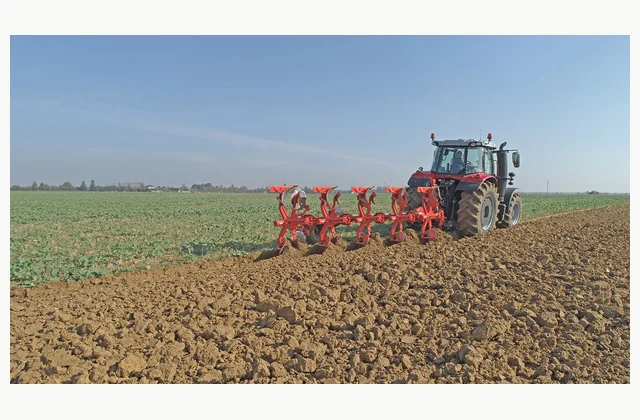
Shown as a configuration reference. Availability and the equipment offered for your project are confirmed separately.
Define the ploughing objective and conditions
A reversible moldboard plough turns soil in alternating directions to support a planned field-working pattern. State the soil, crop residue, intended depth and agronomic objective. Inversion is a specific cultivation choice and should fit the farm’s soil-management plan. Include slopes, stones and moisture conditions. The right plough is the one that performs the required work with the tractor and field constraints, not necessarily the one with the greatest body count.
Choose bodies and residue clearance
Body type and geometry affect soil flow and inversion. Describe soil texture, stickiness, residue volume and any need for skimmers or related equipment. Clearance between bodies and under the beam matters where material could block the machine. Ask which body and wearing-part arrangement is proposed and why it suits the field conditions. A model family may offer alternatives; do not assume the configuration in a reference photograph is the quoted standard.
Match the complete tractor combination
Check linkage category, lifting geometry, hydraulic connections, permissible loads and tractor setup. Tractor track width and tires can influence the working arrangement. Draft depends on soil, depth, body count and width, while transport creates a separate lifting and stability assessment. Supply the actual tractor details. A recommendation based only on engine output leaves unresolved whether the mounted plough can be lifted, turned and transported in its proposed configuration.
| Selection issue | Information to specify |
|---|---|
| Soil task | Texture, residue, stones, intended depth and inversion objective. |
| Bodies | Geometry, count, clearance and auxiliary residue equipment. |
| Tractor | Linkage, track, tires, hydraulics and complete lifting assessment. |
| Adjustment | Working-width arrangement and obstacle protection. |
| Movement | Headland clearance, wheel setup and road transport needs. |
| Evidence | Field finish, depth consistency and identified wearing parts. |
Select width and obstacle protection
Fixed or adjustable working-width arrangements support different requirements and introduce configuration choices. Identify the desired range and how adjustments are made. In stony ground, discuss the release or protection system and its maintenance. Protection should suit the expected obstacles without being confused with permission to work beyond the machine’s limits. Request component and setting information for the selected variant rather than borrowing details from a related model with different equipment.
Plan headlands and transport
A reversible arrangement needs space and a workable sequence at headlands. Review turning clearance, depth-wheel arrangement and the transition between work and transport using the manufacturer’s instructions. Road width, lighting, parking and access to fields should be checked for the destination. The KUHN MASTER 123 reference illustrates a mounted reversible range; the offered body count, wheel and protection options should be listed explicitly with the associated tractor requirements.
Assess field quality and wear support
A representative trial should show inversion, residue handling, depth consistency and the surface left for the next operation. Record soil and tractor setup so the result can be interpreted. Inspect access to shares, points, landsides and other wearing components and request their identification. Wear changes geometry and can affect work quality. Include service guidance and a practical replacement-parts plan rather than comparing only the delivered frame and purchase price.
Submit OEM/ODM against soil and load requirements
Body arrangement, hitch interfaces, protection and wear-material requests can be reviewed within an engineered design. Frame, width or structural changes require reassessment of draft, lifting and loads. Supply soil conditions and tractor information with the customization brief and agree the field acceptance method. Reference-brand photographs do not establish permission to copy a plough or inherit its documented performance. The modified design needs identifiable parts and its own supporting evidence.
What should your reversible moldboard plough RFQ include?
- Soil task: Texture, residue, stones, intended depth and inversion objective.
- Bodies: Geometry, count, clearance and auxiliary residue equipment.
- Tractor: Linkage, track, tires, hydraulics and complete lifting assessment.
- Adjustment: Working-width arrangement and obstacle protection.
- Movement: Headland clearance, wheel setup and road transport needs.
- Evidence: Field finish, depth consistency and identified wearing parts.
- Destination, site conditions and delivery access
- Installation boundary, utilities and connection drawings
- Acceptance procedure, documentation and training scope
- OEM/ODM changes: interface, material, branding or new design; written engineering feasibility required
Need OEM / ODM customization?
Submit branding, packaging, configuration or engineering requirements for this equipment. Include the target market, initial and annual quantities, required changes and acceptance criteria.
Customization feasibility, permitted branding, development responsibilities, minimum quantity, cost and lead time are reviewed for the proposed supplier and configuration before a quotation is confirmed.
Frequently asked questions
Does more plough bodies always mean better productivity?
Body count must fit soil, depth, tractor draft and the mounted or trailed arrangement. More bodies can exceed traction or lifting capability or complicate field access. Describe the actual conditions and compare usable field work with a matched tractor rather than body count alone.
How should moldboard body type be selected?
Provide soil texture, moisture behavior, residue and the required inversion result. Body geometry and associated wearing equipment affect flow and finish. Ask the supplier to identify the exact arrangement proposed and assess it in representative conditions instead of assuming all bodies in a range are equivalent.
Why does tractor lifting geometry matter?
A mounted plough imposes loads through the linkage that change with geometry and movement. Maximum published lift at one point may not describe the complete assembly. Check the actual tractor, plough and wheel arrangement for work, reversal and transport with the relevant documentation.
Which stone-protection system should be requested?
The selection depends on obstacle conditions, draft and the offered release or protection design. Clarify adjustment, reset and maintenance needs. Provide the field’s stone conditions and assess the exact variant rather than assuming protection features are identical across every model or body configuration.
What should a plough field trial include?
Observe inversion, residue flow, depth consistency and the condition left for the next operation on representative soil. Record tractor setup and the body or width configuration. Include headland and transport practicality, because acceptable soil work alone does not establish that the complete combination suits the farm.
Can plough bodies or frames be customized?
Body options and interfaces can be submitted for review, but structural or width changes affect loads and tractor matching. Provide soil and intended working depth with the OEM/ODM request. Agree drawings and field evidence for the modified design rather than relying on a reference model’s performance claims.
Reference information
- Mounted reversible ploughs MASTER 123 | KUHN
- Ploughs | KUHN
Reference data and images explain equipment configurations. IndustryApex engineers confirm the offered model, specification and commercial scope in your project quotation.