
Tea bag packaging machines dose tea or herbs into filter material and create a defined bag presentation. Thread, tag, knot or other closure, outer envelope and cartoning can form separate modules, so a bag-style specification must precede equipment comparison. Provide tea blend, particle-size distribution, bulk behavior and dose, with filter paper and bag drawings. Define thread, tag, closure and outer-envelope requirements. Large herb pieces and fine dusty tea may need different feeding and handling responses despite an identical nominal dose.
Tea bag packaging machines dose tea or herbs into filter material and create a defined bag presentation. Thread, tag, knot or other closure, outer envelope and cartoning can form separate modules, so a bag-style specification must precede equipment comparison. Compare application fit, configuration and OEM/ODM scope through the buyer checklist below.
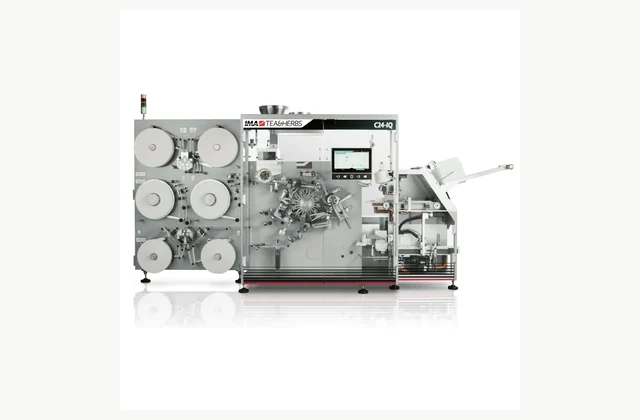
Shown as a configuration reference. Availability and the equipment offered for your project are confirmed separately.
Blend: application and input specification
Tea bag packaging machines dose tea or herbs into filter material and create a defined bag presentation. Thread, tag, knot or other closure, outer envelope and cartoning can form separate modules, so a bag-style specification must precede equipment comparison.
Provide tea blend, particle-size distribution, bulk behavior and dose, with filter paper and bag drawings. Define thread, tag, closure and outer-envelope requirements. Large herb pieces and fine dusty tea may need different feeding and handling responses despite an identical nominal dose.
Tea is not a uniform powder. Leaf size, fibers and fine fractions influence dosing and the cleanliness of the closure area. Submit representative batches and observe ordinary variation, including the material left near the end of a hopper charge.
Bag construction: configuration tradeoffs
Compare bag construction, closing method, tag attachment and envelope concept against the intended presentation. A knotted double-chamber bag and a heat-sealed format need different process parts. Confirm exact modules, materials and changeovers rather than treating every tea bag style as interchangeable.
Filter material is a functional component. It must form and close correctly while providing the desired infusion behavior. Obtain an actual-material response and retain its specification rather than substituting another paper solely because its width and appearance match.
| Decision | What to resolve | Useful evidence |
|---|---|---|
| Blend | Leaf, fiber and dust handling | Representative-batch dose trial |
| Bag construction | Filter and closure compatibility | Actual-material finished bags |
| Presentation | Tags, envelopes and carton counts | Consumer handling and packing checks |
Process integration and handover points
Assign blend supply, dosing, filter feed, thread and tag handling, envelope production, counting and cartoning. Define individual-bag rejection and how counts remain correct after a defect. Coordinate carton supply and discharge rather than leaving finished bags for manual regrouping.
Thread and tag reliability should be tested through ordinary consumer handling. Check attachment, tangling and the way bags separate from the collected group. A visually complete tag at discharge is not enough if stacking or cartoning disturbs the assembly.
Installation and maintainable operating arrangements
Review dust control, access to dosing and bag-forming parts, and cleaning between blends. Confirm material-reel handling, utilities and maintenance clearance. Include the handling of aromatic ingredients and the method for preventing remnants from a previous tea or herb recipe.
Outer envelopes can change protection and opening but add material and tooling interfaces. Specify whether they are required and how they close. Test finished enveloped bags after cartoning, checking print registration, easy opening and the condition of the inner bag.
Acceptance evidence for presentation
Pack the intended blends with production filter, thread, tags and envelope material. Check dose, bag shape, closure, attachment and counts, including startup and replenishment. Evaluate infusion and opening with the product owner where relevant instead of judging only a dry machine cycle.
Counting must account for rejected bags. Challenge the defined detection functions and verify the final carton quantity. Record manual interventions during a sustained run so a favorable bag-forming speed does not conceal frequent regrouping or packing corrections.
OEM/ODM scope and future changes
ODM may cover special tea blends, bag geometry, tag attachment and cartoning integration. Approve material and product trials with tool ownership defined. OEM artwork is separately agreed and cannot establish that an untested filter or closure system is qualified for the buyer's product.
Preserve approved blend, filter, attachment and pack revisions. A new herb, tag stock or envelope sealant can affect a different station. Reassess the changed material before applying an existing recipe to an expanded tea product range.
Image reference: IMA Tea & Herbs C24-IQ tea bag packaging machine. The illustrated manufacturer configuration does not establish stock, an agency appointment or permission to relabel it. OEM/ODM requests require a written feasibility response for the actual proposed equipment.
Include these application details in your quotation request:
- Tea or herb blend and particle distribution
- Dose and hopper-flow behavior
- Filter material and bag construction
- Thread, tag and closure requirements
- Outer-envelope material and opening style
- Blend supply and dust-control interfaces
- Individual-bag reject and count logic
- Carton format, supply and discharge
- Production-material bag and infusion acceptance
- OEM/ODM tooling, artwork and sample approvals
What should your tea bag packaging machine RFQ include?
- Tea or herb blend and particle distribution
- Dose and hopper-flow behavior
- Filter material and bag construction
- Thread, tag and closure requirements
- Outer-envelope material and opening style
- Blend supply and dust-control interfaces
- Individual-bag reject and count logic
- Carton format, supply and discharge
- Production-material bag and infusion acceptance
- OEM/ODM tooling, artwork and sample approvals
Need OEM / ODM customization?
Submit branding, packaging, configuration or engineering requirements for this equipment. Include the target market, initial and annual quantities, required changes and acceptance criteria.
Customization feasibility, permitted branding, development responsibilities, minimum quantity, cost and lead time are reviewed for the proposed supplier and configuration before a quotation is confirmed.
Frequently asked questions
What inputs determine selection of tea bag packaging machine?
Provide tea blend, particle-size distribution, bulk behavior and dose, with filter paper and bag drawings. Define thread, tag, closure and outer-envelope requirements. Large herb pieces and fine dusty tea may need different feeding and handling responses despite an identical nominal dose.
How should I compare bag construction options?
Compare bag construction, closing method, tag attachment and envelope concept against the intended presentation. A knotted double-chamber bag and a heat-sealed format need different process parts. Confirm exact modules, materials and changeovers rather than treating every tea bag style as interchangeable.
Which adjoining operations need to be specified?
Assign blend supply, dosing, filter feed, thread and tag handling, envelope production, counting and cartoning. Define individual-bag rejection and how counts remain correct after a defect. Coordinate carton supply and discharge rather than leaving finished bags for manual regrouping.
What is a useful acceptance trial for tea bag packaging machine?
Pack the intended blends with production filter, thread, tags and envelope material. Check dose, bag shape, closure, attachment and counts, including startup and replenishment. Evaluate infusion and opening with the product owner where relevant instead of judging only a dry machine cycle.
Which OEM/ODM changes can I request?
ODM may cover special tea blends, bag geometry, tag attachment and cartoning integration. Approve material and product trials with tool ownership defined. OEM artwork is separately agreed and cannot establish that an untested filter or closure system is qualified for the buyer's product.
What application boundary is easy to overlook?
Tea is not a uniform powder. Leaf size, fibers and fine fractions influence dosing and the cleanliness of the closure area. Submit representative batches and observe ordinary variation, including the material left near the end of a hopper charge.
Reference information
- IMA Tea & Herbs C24-IQ tea bag packaging machine official reference
- IMA Tea & Herbs related technology or portfolio reference
Reference data and images explain equipment configurations. IndustryApex engineers confirm the offered model, specification and commercial scope in your project quotation.