
A shrink packaging machine creates a sealed film envelope and shrinks it around a product or grouped pack using controlled heat. It should be selected from the product dimensions, grouping method, presentation standard and heat sensitivity. A carton multipack and a delicate cosmetic item can require very different film and tunnel conditions. Identify handles, sharp edges, loose parts and labels that could distort. Confirm whether the objective is retail presentation, protection or bundle restraint.
Define the pack and the permitted heat exposure
A shrink packaging machine creates a sealed film envelope and shrinks it around a product or grouped pack using controlled heat. It should be selected from the product dimensions, grouping method, presentation standard and heat sensitivity. A carton multipack and a delicate cosmetic item can require very different film and tunnel conditions. Identify handles, sharp edges, loose parts and labels that could distort. Confirm whether the objective is retail presentation, protection or bundle restraint. Pallet stretch wrapping usually relies on tension rather than shrink heating and should be evaluated as a different packaging method.
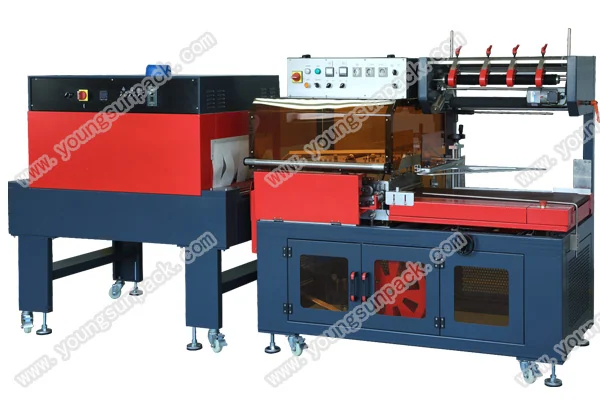
Shown as a configuration reference. Availability and the equipment offered for your project are confirmed separately.
Match sealing, film and tunnel configuration
L-sealers, side-sealing arrangements and other film-handling formats should be compared against the entire product range. Request compatible film types, thicknesses, winding details and reel dimensions. Define whether perforation, side vents or another means of removing trapped air is included. The tunnel opening must allow the pack and the chosen conveyor support, while dwell and airflow need to suit the film and product. A maximum product size is not a guarantee that every shape within that envelope seals well. Ask for setup records for each approved format rather than a universal temperature setting.
Design the infeed and utility boundary
Show how products are grouped and presented, including guides that prevent a multipack from separating before sealing. Establish the communication between sealer and tunnel during a jam or downstream stop so heated packs do not remain in an uncontrolled condition. State available electrical supply, air and room ventilation, and reserve access around hot areas for maintenance. Conveyor materials and transfer gaps should be reviewed with the sample pack. Include cooling or discharge handling where needed. The installation drawing should show real supply and ventilation connections, not only the machine outline published in a brochure.
Compare film use and installed operating cost
Separate the sealer, tunnel, grouping conveyors, trim collection, ventilation and guarding within the quotation. Include spare sealing elements, knives, belts and temperature-control parts, along with consumable film and startup scrap. Assess electrical use against a defined production pattern that includes warmup, short batches and idle time. A faster nominal conveyor can increase rework if sealing or shrinking is not complete, so compare cost per usable pack. Budget for format trials, installation and operator training. Agree who approves alternative films before a lower-cost reel is substituted during later operation.
Test finished packs through the planned route
Use the intended product, film and label materials in an acceptance run. Inspect seal strength, holes, wrinkles, corner damage, distortion and product temperature where relevant to the application. Include the largest and smallest approved packs, normal orientation variation, startup and restart after a line interruption. Measure usable output and film scrap over a documented period. Allow packs to cool before the agreed handling or transport test. If a product is sensitive to heat, define the measurement method and acceptable condition before the trial. A polished demonstration video cannot replace those product-specific criteria.
Request a controlled custom packaging design
Provide product drawings, film samples, photographs of the desired finish and an infeed layout with the inquiry. OEM branding and interface-language changes should be distinguished from ODM modifications to sealing geometry, grouping or tunnel airflow. Require sample approval and a change-control process for custom pack formats. Identify who owns format parts and the validated settings. Ask suppliers to quote the same delivered scope, destination and training requirements. Manufacturer examples show one possible equipment family; operating temperatures, usable speed and film consumption should come from the actual offer and acceptance trial.
Manufacturer configuration references
Review the linked manufacturer information as configuration references. Request the current sheet, included scope and relevant evidence for the exact proposed equipment; these references do not establish an IndustryApex supply relationship.
What should you include in your RFQ?
- Product dimensions and samples
- Individual wrap or multipack
- Film resin thickness and reel details
- Heat sensitivity and ventilation
- Seal appearance and strength
- Required accepted packs per shift
- Infeed grouping and orientation
- Tunnel opening conveyor and dwell
- Ventilation and site temperature
- Power air and available footprint
- Consumables maintenance and format parts
- OEM configuration and trial requirements
For OEM / ODM requests, include the branding, packaging, configuration or engineering changes you need, initial and annual quantities, target market, sample approval and acceptance requirements. Feasibility and commercial scope are confirmed for the specific project.
Need OEM / ODM customization?
Submit branding, packaging, configuration or engineering requirements for this equipment. Include the target market, initial and annual quantities, required changes and acceptance criteria.
Customization feasibility, permitted branding, development responsibilities, minimum quantity, cost and lead time are reviewed for the proposed supplier and configuration before a quotation is confirmed.
Frequently asked questions
Is shrink packaging the same as pallet stretch wrapping?
No. Shrink packaging uses controlled heat to contract film around a pack; pallet stretch wrapping normally uses film tension around a load. Choose from the packaging objective, product heat tolerance and required handling performance.
How do I choose film and sealing style?
Choose film and sealing style through trials with the product geometry, grouping and desired finish. Specify resin, thickness, reel details, vents and seal requirements; compare complete sealer-and-tunnel results rather than the sealing machine alone.
What utilities and ventilation are needed?
Provide the required electrical supply and any air for the offered equipment, plus room ventilation and heat-removal conditions. Review tunnel access, hot-pack handling and stop/restart behavior so a jam does not leave product heating without control.
Which items belong in the complete shrink-line cost?
Include sealing, tunnel, grouping conveyors, trim collection, ventilation, guarding, format parts and consumables. Add installation, trials, training and spare sealing or conveyor parts. Compare film waste and energy under the same warmup and production pattern.
How do I test heat-sensitive products?
Test the real product, labels and film through the complete cycle, including an interruption and restart. Define allowable product temperature and condition before testing, then inspect distortion, seal quality and appearance after cooling and handling.
Can the shrink line support custom pack formats?
Yes. Submit pack drawings, film and finish samples for custom grouping, sealing, conveyors or controls. ODM feasibility depends on product trials and reviewed thermal behavior; agree tooling ownership and which future film or size changes require revalidation.
Reference information
- YOUNGSUN: YS-ZB-5AY L-sealer and shrink tunnel
Reference data and images explain equipment configurations. IndustryApex engineers confirm the offered model, specification and commercial scope in your project quotation.