
Choose a mobile crusher from the material, incoming size distribution and required finished aggregate, then define its place in the crushing and screening circuit. Compare jaw, impact or cone arrangements by the job rather than a universal preference. Include feeding, metal removal, screening, recirculation and stockpile handling. Acceptance should document feed condition, finished grading and accepted output. Review wear parts, transport, site access and the complete delivered operating scope before ordering.
Applications and production fit
Define whether the project handles quarried rock, demolition concrete or a changing mixture of materials. Provide feed size, moisture, fines, hardness information where available and likely contaminants. Specify the aggregate products the customer will buy. A primary mobile crusher may still need screening or additional crushing to achieve the final grading. Planning starts with the material route and product requirement rather than the track-mounted machine alone.
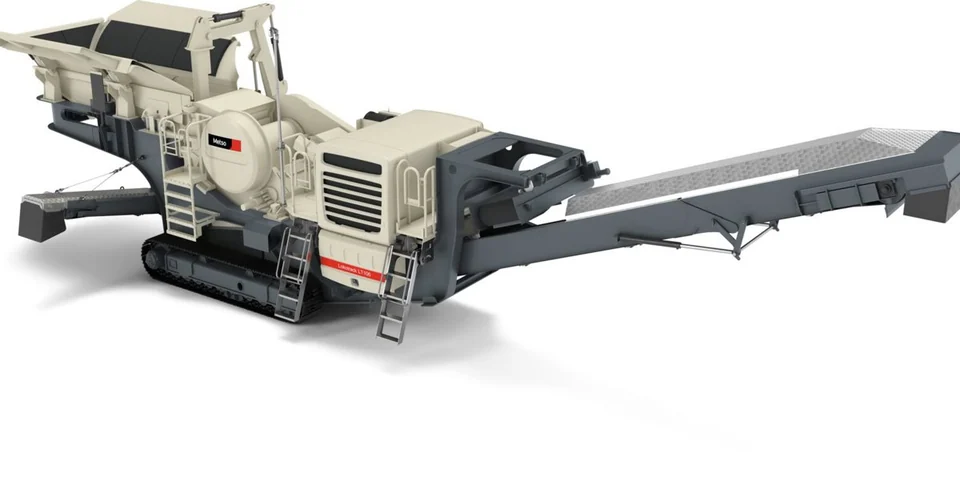
Shown as a configuration reference. Availability and the equipment offered for your project are confirmed separately.
Configuration choices to compare
Compare jaw, impact and cone options according to their proposed process role, feed characteristics and the required product. Review the feeder, hopper, crusher setting, metal removal and conveyor arrangement of the exact unit. Ask how blockages and uncrushable material are managed under the approved operating procedure. Include any optional screen or recirculation module explicitly. The word mobile does not describe what the unit will accept or produce.
Utilities, layout and site compatibility
Survey the route into the site and the working area for feeding equipment, stockpiles, conveyors and maintenance access. Verify ground conditions, gradients and the transport arrangement against the exact machine dimensions and mass. Establish dust, noise and water-management provisions for the local operation. Review engine or electrical versions with the destination requirements and available support. A track-mounted configuration still requires a properly planned operating site.
Delivered project cost and scope
Compare delivered project cost with wear liners, jaw or impact components, belts, screens, transport and setup included. Add the feeding excavator or loader and finished-material movement if they are not already available. Ask for consumption and wear assumptions tied to your material. Site relocation frequency and local spare availability influence operating economics, so a low purchase price should not be separated from the actual job pattern.
Representative acceptance testing
An acceptance trial should document the feed material and size distribution, moisture and the selected operating settings. Measure finished grading and accepted output within an agreed circuit boundary, including recirculated material. Record stoppages and contamination handling. A demonstration using clean uniform feed does not establish performance on variable demolition waste. Judge the specified saleable aggregate and normal operating conditions rather than only the discharge of the first crushing stage.
Maintenance and operating handover
Prepare a service plan for wear-component replacement, conveyors, hydraulic or electrical systems and routine inspections. Ask how maintenance access is provided and what lifting tools are required for heavy parts. Identify order codes and supply routes for the wear set appropriate to your material. Keep operating records linked to feed and settings. Responsible operation, inspection and training are part of the handover and should follow the manufacturer’s exact instructions.
OEM/ODM and project customization
Define customization as a separate scope in the quotation. Configuration choices concern the equipment arrangement and operating requirements; OEM requests can include permitted branding, labels, manuals and packaging; ODM requests may involve engineering changes. Identify the party responsible for design, documentation and verification before agreeing to a change. A manufacturer reference photograph demonstrates a category or model family and does not establish that IndustryApex represents that brand or can relabel its product. Ask which changes are feasible for the proposed supplier, what sample or drawing approval is needed and how the change affects service parts, testing and delivery.
RFQ checklist for a comparable proposal
Send a concise project brief with the specific items below and attach drawings, samples or site information where available. Distinguish essential requirements from preferences so alternative offers remain comparable. Ask each bidder to return a configuration list, utility and installation boundary, relevant model documentation, acceptance plan and an itemized quotation. State the destination and who will review applicable local requirements for the exact offered configuration. Identify exclusions, recurring consumables, training, warranty conditions and after-sales responsibilities before comparing totals. If important data is unavailable, mark it as an assumption to verify instead of allowing different bidders to silently solve different projects.
- Quarry rock or demolition material description
- Feed size distribution and maximum pieces
- Moisture, fines and contamination conditions
- Required finished aggregate sizes and grading
- Primary, secondary or complete-circuit role
- Target accepted output and operating hours
- Feeder, metal-removal and recirculation scope
- Existing excavator, loader and screens
- Site ground, access and stockpile drawing
- Engine or electrical version requirements
- Relocation route and transport constraints
- Destination and wear-part support plan
Manufacturer configuration references
Review the linked manufacturer information as configuration references. Request the current sheet, included scope and relevant evidence for the exact proposed equipment; these references do not establish an IndustryApex supply relationship.
What should you include in your RFQ?
- Quarry rock or demolition material description
- Feed size distribution and maximum pieces
- Moisture, fines and contamination conditions
- Required finished aggregate sizes and grading
- Primary, secondary or complete-circuit role
- Target accepted output and operating hours
- Feeder, metal-removal and recirculation scope
- Existing excavator, loader and screens
- Site ground, access and stockpile drawing
- Engine or electrical version requirements
- Relocation route and transport constraints
- Destination and wear-part support plan
For OEM / ODM requests, include the branding, packaging, configuration or engineering changes you need, initial and annual quantities, target market, sample approval and acceptance requirements. Feasibility and commercial scope are confirmed for the specific project.
Need OEM / ODM customization?
Submit branding, packaging, configuration or engineering requirements for this equipment. Include the target market, initial and annual quantities, required changes and acceptance criteria.
Customization feasibility, permitted branding, development responsibilities, minimum quantity, cost and lead time are reviewed for the proposed supplier and configuration before a quotation is confirmed.
Frequently asked questions
Should I choose a jaw, impact or cone mobile crusher?
Choose by feed material, circuit position and final product. Ask the supplier to explain the proposed process using your size and material data. A single crusher type is not universally best for both hard quarry rock and variable demolition recycling.
Does a mobile crusher produce finished aggregate on its own?
Only if its configuration and process can meet the required product. Screening, further crushing or recirculation may be necessary. Define finished grading and compare the complete circuit rather than assuming that crusher discharge is immediately saleable.
What affects stated crushing output?
Feed size, material behavior, moisture, fines, crusher setting and surrounding handling equipment all matter. Require the conditions behind any figure and measure accepted output through an agreed trial boundary. Avoid transferring results from unrelated demonstration material.
What should be checked before transporting a mobile crusher?
Use the exact transport dimensions, mass and preparation instructions to review trailers, access, bridge or route constraints and required local arrangements. Confirm the setup and relocation scope with the responsible transport provider before ordering.
Can I request OEM or ODM customization for a mobile crusher?
Yes, include the requested configuration, branding or engineering changes in your project inquiry. Feasibility, ownership of the design, validation, documentation, minimum quantities and delivery terms need confirmation with the proposed supplier. The referenced manufacturer model is an example, not an OEM commitment from that brand.
What information is needed to request a mobile crusher quotation?
Send the category-specific checklist on this page, the destination, your operating conditions and available drawings or samples. Ask for an itemized complete project scope and a representative acceptance plan. Flag missing input data so quotations state the same assumptions rather than appearing comparable while covering different configurations.
Reference information
- Metso Lokotrack LT106 mobile jaw crusher
- Metso official supporting product documentation
Reference data and images explain equipment configurations. IndustryApex engineers confirm the offered model, specification and commercial scope in your project quotation.