
Choose a wheel loader from the material and work cycle: pile penetration, travel, loading height and discharge. Compare bucket geometry and actual material mass, then check tires, attachments, visibility and environmental conditions. Review the exact engine or electric configuration for the destination and support route. A representative loading trial is more useful than a bucket-volume comparison alone. Include transport, commissioning, tires, wear parts and any charging infrastructure in project cost.
Applications and production fit
Describe what the loader moves and where it places the material. Quarry aggregate, light bulk material and mixed construction debris create different bucket and wear needs. Provide a sketch of stockpiles, travel routes and the truck or hopper to be loaded. Include typical cycle length, ramps and ground condition. Buying from a bucket volume alone can overlook material mass, access and the actual loading objective.
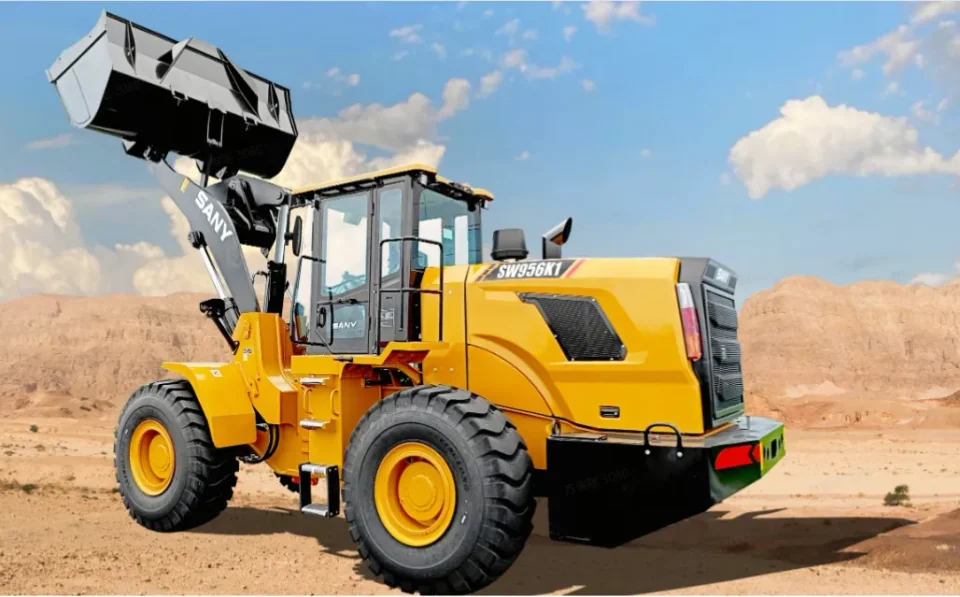
Shown as a configuration reference. Availability and the equipment offered for your project are confirmed separately.
Configuration choices to compare
Match bucket geometry, teeth or cutting edge and any attachment to the material and machine configuration. Review lift and discharge dimensions against the truck or hopper, including access at the approach angle used on site. Compare tire selection, driveline and cooling options with the duty cycle. Ask for the relevant loading limits and attachment documentation for the exact offered version rather than transferring figures from a different bucket or model.
Utilities, layout and site compatibility
Survey travel paths, gradients, loading surfaces and the space available around stockpiles. State heat, dust, altitude and other operating conditions that the supplier must consider. Check fuel and maintenance availability for engine models, or charging power and schedule for electric versions. Destination-specific requirements and operator provisions need review for the exact machine. A familiar model name does not ensure identical regional configuration or support.
Delivered project cost and scope
Build cost comparisons around delivery, attachment, tires, wear edges, startup service and local maintenance. If an electric machine is proposed, include charger and electrical-site work as a separate budget item. Compare operating assumptions using the same material and cycle, including idle and travel time. Identify who supplies engine, hydraulic and driveline parts after delivery. Initial price should remain connected to the loader’s intended shifts and local service access.
Representative acceptance testing
Arrange a trial or documented assessment using representative material and the loading target. Observe pile penetration, repeated loading, approach space, discharge clearance and cycle behavior under an agreed method. Confirm the offered tire, bucket and attachment configuration during the review. Qualified personnel should conduct any loading-limit or system checks. A demonstration moving a light material across flat ground does not establish suitability for a different quarry duty.
Maintenance and operating handover
Handover should cover the manufacturer’s inspections, maintenance intervals, attachment identification and service documentation. Keep order codes for tires, cutting edges and routine filters accessible. Review how the site will arrange support when the loader feeds a plant that cannot operate without it. Changes in material density or attachment require a fresh capacity and process review instead of assuming that the original bucket selection remains adequate.
OEM/ODM and project customization
Define customization as a separate scope in the quotation. Configuration choices concern the equipment arrangement and operating requirements; OEM requests can include permitted branding, labels, manuals and packaging; ODM requests may involve engineering changes. Identify the party responsible for design, documentation and verification before agreeing to a change. A manufacturer reference photograph demonstrates a category or model family and does not establish that IndustryApex represents that brand or can relabel its product. Ask which changes are feasible for the proposed supplier, what sample or drawing approval is needed and how the change affects service parts, testing and delivery.
RFQ checklist for a comparable proposal
Send a concise project brief with the specific items below and attach drawings, samples or site information where available. Distinguish essential requirements from preferences so alternative offers remain comparable. Ask each bidder to return a configuration list, utility and installation boundary, relevant model documentation, acceptance plan and an itemized quotation. State the destination and who will review applicable local requirements for the exact offered configuration. Identify exclusions, recurring consumables, training, warranty conditions and after-sales responsibilities before comparing totals. If important data is unavailable, mark it as an assumption to verify instead of allowing different bidders to silently solve different projects.
- Material type and bulk-density range
- Required bucket and attachment duties
- Typical travel distance and loading cycle
- Truck or hopper loading heights
- Site gradients and ground condition
- Accepted material movement per shift
- Dust, ambient temperature and altitude
- Engine or electric version preference
- Fuel or charging power and schedule
- Tire and wear protection requirements
- Transport access and unloading arrangement
- Destination and local service requirements
Manufacturer configuration references
Review the linked manufacturer information as configuration references. Request the current sheet, included scope and relevant evidence for the exact proposed equipment; these references do not establish an IndustryApex supply relationship.
What should you include in your RFQ?
- Material type and bulk-density range
- Required bucket and attachment duties
- Typical travel distance and loading cycle
- Truck or hopper loading heights
- Site gradients and ground condition
- Accepted material movement per shift
- Dust, ambient temperature and altitude
- Engine or electric version preference
- Fuel or charging power and schedule
- Tire and wear protection requirements
- Transport access and unloading arrangement
- Destination and local service requirements
For OEM / ODM requests, include the branding, packaging, configuration or engineering changes you need, initial and annual quantities, target market, sample approval and acceptance requirements. Feasibility and commercial scope are confirmed for the specific project.
Need OEM / ODM customization?
Submit branding, packaging, configuration or engineering requirements for this equipment. Include the target market, initial and annual quantities, required changes and acceptance criteria.
Customization feasibility, permitted branding, development responsibilities, minimum quantity, cost and lead time are reviewed for the proposed supplier and configuration before a quotation is confirmed.
Frequently asked questions
Can bucket volume determine wheel loader size?
It is only one input. Include material density, loading limits, duty cycle and discharge geometry. Ask for the bucket and machine configuration matched to the material rather than assuming equal bucket volumes move equal safe loads.
When should an electric wheel loader be considered?
Evaluate it when the work cycle and charging opportunities can be matched to the offered battery and charger. Include electrical-site capacity, shift pattern and local support in the comparison. Do not assume an electric version shares every operating condition of the diesel model.
How do I check loader suitability for a batching plant?
Provide aggregate types, hopper heights, approach space, travel paths and the required feed pattern. Review bucket selection and a representative loading cycle. The loader must fit the plant's material flow as well as the stockpile work.
Does the same loader model have the same specification in every country?
Regional engine, controls, equipment and documentation can differ. Request the exact configuration and destination review, then confirm service and parts availability. A photograph or general family brochure is only a reference.
Can I request OEM or ODM customization for a wheel loader?
Yes, include the requested configuration, branding or engineering changes in your project inquiry. Feasibility, ownership of the design, validation, documentation, minimum quantities and delivery terms need confirmation with the proposed supplier. The referenced manufacturer model is an example, not an OEM commitment from that brand.
What information is needed to request a wheel loader quotation?
Send the category-specific checklist on this page, the destination, your operating conditions and available drawings or samples. Ask for an itemized complete project scope and a representative acceptance plan. Flag missing input data so quotations state the same assumptions rather than appearing comparable while covering different configurations.
Reference information
- SANY SW956K1 wheel loader
- SANY official supporting product documentation
Reference data and images explain equipment configurations. IndustryApex engineers confirm the offered model, specification and commercial scope in your project quotation.