
Select an overlock machine by the required edge finish, seam security and fabric feed behavior. Confirm the stitch construction, trimming width and differential feed on production material, including curves and seam crossings, with all gauge and accessory kits itemized. Run representative straight edges, curves and seam crossings at agreed working settings. Assess coverage, seam elasticity, cut consistency and garment dimensions after relaxation. Measure good assemblies per full operator cycle and repeat a knife or gauge adjustment using the supplied procedure. Submit the intended configuration and any OEM/ODM changes for project-specific feasibility review.
Select an overlock machine by the required edge finish, seam security and fabric feed behavior. Confirm the stitch construction, trimming width and differential feed on production material, including curves and seam crossings, with all gauge and accessory kits itemized.
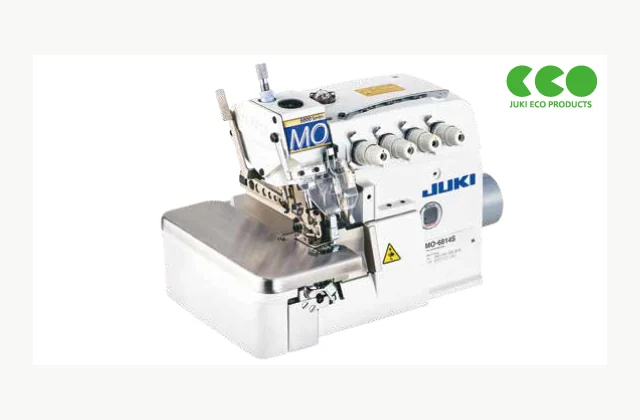
Shown as a configuration reference. Availability and the equipment offered for your project are confirmed separately.
Distinguish edge finishing from joining
An overedge finish and a safety-stitch joining seam are different constructions. Show the required needle and looper arrangement and the appearance on both faces. Clarify whether the operation only covers a raw edge or must also carry the garment's joining load.
Match differential feed to the fabric
Knitted and woven materials react differently to feed ratio and pressure. Test the intended stretch, slippery or bulky fabrics on actual curves. Examine waviness, gathering and layer creep after relaxation; one universal differential setting cannot demonstrate the entire production range.
Coordinate cutting width and seam allowance
The knife setting, needle position and looper coverage must produce the required remaining edge. Supply cut allowance and finished seam width. Inspect excessive trimming, uncovered edges and material rolling, particularly at concave curves or irregularly cut incoming pieces.
Trial thickness transitions and handling
Cross-seams and elastic insertions can interrupt feeding or stitch formation. Include the worst intended step in the demonstration. Where pullers, elastic devices or top feed are proposed, identify their adjustment range and effect on the full operator loading and guiding cycle.
Specify lint removal and oil control
Trimming generates lint near the knife and loopers. Agree cleaning access and waste collection, with suction where appropriate to the selected package. Confirm lubrication responsibilities and stain acceptance on the actual fabric; a semi-dry description must be checked against the exact offered variant.
Identify gauge and knife consumables
Needles, loopers, knives, presser feet and plates define the seam configuration. Obtain an illustrated list and the replacement procedure for each required gauge. Replacing a worn knife without restoring alignment can change edge quality even when the drive still runs normally.
Compare a complete industrial overlock sewing machine scope
| Decision | Information to compare |
|---|---|
| Distinguish edge finishing from joining | Required overedge/safety stitch, needle count and seam function |
| Match differential feed to the fabric | Fabric families, stretch direction, differential feed and relaxation limits |
| Coordinate cutting width and seam allowance | Knife width, finished seam allowance, curves and incoming-cut tolerances |
| Trial thickness transitions and handling | Thickness transitions, elastic insertion and auxiliary feed attachments |
| Specify lint removal and oil control | Trimming waste collection, cleaning interval and lubrication variant |
| Identify gauge and knife consumables | Gauge kits, knives, loopers and setup records for replacement |
Plan installation and access
Set the table height and operator access for guiding small or tubular components. Include power, any suction connection and waste bags or collectors. Verify that added guides permit safe knife guarding and do not obstruct routine threading or access to the feed mechanism.
Agree acceptance evidence before ordering
Run representative straight edges, curves and seam crossings at agreed working settings. Assess coverage, seam elasticity, cut consistency and garment dimensions after relaxation. Measure good assemblies per full operator cycle and repeat a knife or gauge adjustment using the supplied procedure.
Define OEM/ODM engineering boundaries
OEM folders, waste collection and garment-specific guides can be reviewed. ODM changes to stitch geometry, knives, feed or guarding need engineering and sample validation. A manufacturer's reference photo does not imply permission to copy its machine or transfer its performance claims.
What should your industrial overlock sewing machine RFQ include?
- Required overedge/safety stitch, needle count and seam function
- Fabric families, stretch direction, differential feed and relaxation limits
- Knife width, finished seam allowance, curves and incoming-cut tolerances
- Thickness transitions, elastic insertion and auxiliary feed attachments
- Trimming waste collection, cleaning interval and lubrication variant
- Gauge kits, knives, loopers and setup records for replacement
- Destination, working environment, access and delivery constraints
- Installation responsibility, utilities and connection drawings
- Acceptance samples, documented test method, operator training and maintenance scope
- OEM/ODM changes requested: identification, tooling, interfaces or new design; engineering feasibility to be confirmed
Need OEM / ODM customization?
Submit branding, packaging, configuration or engineering requirements for this equipment. Include the target market, initial and annual quantities, required changes and acceptance criteria.
Customization feasibility, permitted branding, development responsibilities, minimum quantity, cost and lead time are reviewed for the proposed supplier and configuration before a quotation is confirmed.
Frequently asked questions
How do I distinguish edge finishing from joining?
An overedge finish and a safety-stitch joining seam are different constructions. Show the required needle and looper arrangement and the appearance on both faces. Clarify whether the operation only covers a raw edge or must also carry the garment's joining load.
How do I match differential feed to the fabric?
Knitted and woven materials react differently to feed ratio and pressure. Test the intended stretch, slippery or bulky fabrics on actual curves. Examine waviness, gathering and layer creep after relaxation; one universal differential setting cannot demonstrate the entire production range.
How do I coordinate cutting width and seam allowance?
The knife setting, needle position and looper coverage must produce the required remaining edge. Supply cut allowance and finished seam width. Inspect excessive trimming, uncovered edges and material rolling, particularly at concave curves or irregularly cut incoming pieces.
How do I trial thickness transitions and handling?
Cross-seams and elastic insertions can interrupt feeding or stitch formation. Include the worst intended step in the demonstration. Where pullers, elastic devices or top feed are proposed, identify their adjustment range and effect on the full operator loading and guiding cycle.
How do I specify lint removal and oil control?
Trimming generates lint near the knife and loopers. Agree cleaning access and waste collection, with suction where appropriate to the selected package. Confirm lubrication responsibilities and stain acceptance on the actual fabric; a semi-dry description must be checked against the exact offered variant.
How do I identify gauge and knife consumables?
Needles, loopers, knives, presser feet and plates define the seam configuration. Obtain an illustrated list and the replacement procedure for each required gauge. Replacing a worn knife without restoring alignment can change edge quality even when the drive still runs normally.
Reference information
- JUKI MO-6800S official product reference
- JUKI industrial overlock sewing machine official family or technical reference
Reference data and images explain equipment configurations. IndustryApex engineers confirm the offered model, specification and commercial scope in your project quotation.