
Choose an industrial lockstitch machine from the material stack, seam appearance and feeding task. Test the actual garments at usable operator output, then define needle and hook configuration, trimming, lubrication and workstation accessories as one documented sewing package. Sew approved materials through thin and thick sections using documented settings. Judge stitch length, lock point, puckering, trimming tails and full-cycle good output. Repeat bobbin replacement and a material change, then check that operators can restore the accepted seam without undocumented adjustment. Submit the intended configuration and any OEM/ODM changes for project-specific feasibility review.
Choose an industrial lockstitch machine from the material stack, seam appearance and feeding task. Test the actual garments at usable operator output, then define needle and hook configuration, trimming, lubrication and workstation accessories as one documented sewing package.
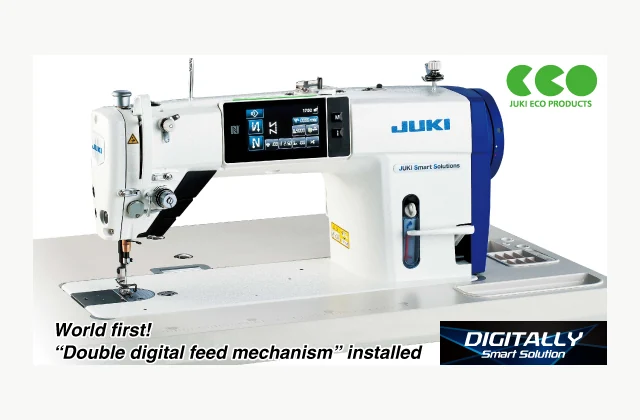
Shown as a configuration reference. Availability and the equipment offered for your project are confirmed separately.
Define material and seam duty
A general lockstitch head cannot be assumed to handle every garment or technical textile. Supply fabric weights, coatings, ply transitions and seam drawings. Separate light apparel from heavy assemblies and state whether the offered feed and hook variant is intended for those materials.
Match feed and presser behavior
Unequal layers may creep even when the stitch itself forms correctly. Trial feed-dog geometry, presser pressure and any special feeding arrangement on full panels. Inspect layer alignment and puckering after release rather than judging only a short straight seam sewn on easy fabric.
Select needle, hook and thread
Needle system, thread size and hook configuration must form a consistent lock point through the intended stack. Check skipped stitches, broken fibers and thread tension across transitions. A nominal motor rating or maximum speed does not establish the workable needle/thread combination.
Define trimming and backtack behavior
Specify seam starts, ends, backtack patterns and thread-tail expectations. Electronic settings or automatic trimming can change the operator sequence. Demonstrate starts after a stop, short seams and repeated trimming so the proposed automation supports the actual assembly rather than adding manual correction.
Control oil and contamination exposure
Confirm the offered lubrication arrangement and the tasks still required by the operator. Clean or pale fabrics may reveal stains not visible on demonstration material. Include a representative run and inspection procedure, while avoiding an unsupported assumption that every model variant is oil-free.
Measure complete sewing output
Loading, turning, repositioning and bobbin replacement affect saleable output. Observe the full garment operation and classify rework. List folders, lights, table, stand, motor and control panel separately, since a bare head quotation and a ready workstation are different procurement scopes.
Compare a complete industrial lockstitch sewing machine scope
| Decision | Information to compare |
|---|---|
| Define material and seam duty | Material composition, coatings, ply thickness and seam operation |
| Match feed and presser behavior | Feed arrangement, presser settings, panel length and alignment limits |
| Select needle, hook and thread | Needle system, thread range, hook variant and stitch-quality criteria |
| Define trimming and backtack behavior | Backtack program, thread-tail limits, trimmer and restart sequence |
| Control oil and contamination exposure | Lubrication type, fabric staining limits and maintenance instructions |
| Measure complete sewing output | Operator cycle, bobbin changes, accessories and ready-workstation boundary |
Plan installation and access
Confirm table cutout, stand stability, local supply voltage, grounding and pedal position. Support large garment panels at the chosen working height. Allocate clear access to the hook, oil service points and control box so maintenance does not require dismantling a dedicated guide assembly.
Agree acceptance evidence before ordering
Sew approved materials through thin and thick sections using documented settings. Judge stitch length, lock point, puckering, trimming tails and full-cycle good output. Repeat bobbin replacement and a material change, then check that operators can restore the accepted seam without undocumented adjustment.
Define OEM/ODM engineering boundaries
OEM workstation layouts, guides and branding may be considered. ODM changes to the feed, hook or controller require engineering and new material trials. The reference head's published capability does not certify a customized alternative or establish an authorized distributor relationship.
Prepare comparable quotations
Use the industrial lockstitch sewing machine inquiry to identify the duty described above, the included configuration and the evidence that will demonstrate it. Separate base equipment from required accessories, commissioning and operator training. Record deviations against the requested material composition, coatings, ply thickness and seam operation before price comparison. The illustrated reference establishes a discussion point; the offered unit still needs its own identifiable configuration and written commercial scope.
What should your industrial lockstitch sewing machine RFQ include?
- Material composition, coatings, ply thickness and seam operation
- Feed arrangement, presser settings, panel length and alignment limits
- Needle system, thread range, hook variant and stitch-quality criteria
- Backtack program, thread-tail limits, trimmer and restart sequence
- Lubrication type, fabric staining limits and maintenance instructions
- Operator cycle, bobbin changes, accessories and ready-workstation boundary
- Destination, working environment, access and delivery constraints
- Installation responsibility, utilities and connection drawings
- Acceptance samples, documented test method, operator training and maintenance scope
- OEM/ODM changes requested: identification, tooling, interfaces or new design; engineering feasibility to be confirmed
Need OEM / ODM customization?
Submit branding, packaging, configuration or engineering requirements for this equipment. Include the target market, initial and annual quantities, required changes and acceptance criteria.
Customization feasibility, permitted branding, development responsibilities, minimum quantity, cost and lead time are reviewed for the proposed supplier and configuration before a quotation is confirmed.
Frequently asked questions
How do I define material and seam duty?
A general lockstitch head cannot be assumed to handle every garment or technical textile. Supply fabric weights, coatings, ply transitions and seam drawings. Separate light apparel from heavy assemblies and state whether the offered feed and hook variant is intended for those materials.
How do I match feed and presser behavior?
Unequal layers may creep even when the stitch itself forms correctly. Trial feed-dog geometry, presser pressure and any special feeding arrangement on full panels. Inspect layer alignment and puckering after release rather than judging only a short straight seam sewn on easy fabric.
How do I select needle, hook and thread?
Needle system, thread size and hook configuration must form a consistent lock point through the intended stack. Check skipped stitches, broken fibers and thread tension across transitions. A nominal motor rating or maximum speed does not establish the workable needle/thread combination.
How do I define trimming and backtack behavior?
Specify seam starts, ends, backtack patterns and thread-tail expectations. Electronic settings or automatic trimming can change the operator sequence. Demonstrate starts after a stop, short seams and repeated trimming so the proposed automation supports the actual assembly rather than adding manual correction.
How do I control oil and contamination exposure?
Confirm the offered lubrication arrangement and the tasks still required by the operator. Clean or pale fabrics may reveal stains not visible on demonstration material. Include a representative run and inspection procedure, while avoiding an unsupported assumption that every model variant is oil-free.
How do I measure complete sewing output?
Loading, turning, repositioning and bobbin replacement affect saleable output. Observe the full garment operation and classify rework. List folders, lights, table, stand, motor and control panel separately, since a bare head quotation and a ready workstation are different procurement scopes.
Reference information
- JUKI DDL-9000CF official product reference
- JUKI industrial lockstitch sewing machine official family or technical reference
Reference data and images explain equipment configurations. IndustryApex engineers confirm the offered model, specification and commercial scope in your project quotation.