
Specify coverstitch equipment from the garment hem or binding operation, required seam elasticity and access around tubular parts. Match the needle gauge, bed shape, differential feed and attachments, then assess the finished seam after the fabric has relaxed. Assess representative hems and bindings through straight sections, cross-seams and tubular turns. Measure finished width and seam elasticity with agreed methods after relaxation and any required wash. Log needle gauge, thread and guide settings and demonstrate a repeatable size or material changeover. Submit the intended configuration and any OEM/ODM changes for project-specific feasibility review.
Specify coverstitch equipment from the garment hem or binding operation, required seam elasticity and access around tubular parts. Match the needle gauge, bed shape, differential feed and attachments, then assess the finished seam after the fabric has relaxed.
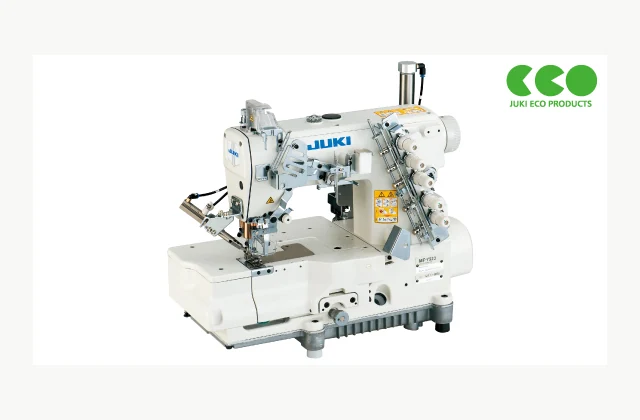
Shown as a configuration reference. Availability and the equipment offered for your project are confirmed separately.
Identify the exact coverstitch operation
A T-shirt hem, elastic attachment and collarette require different guides and material presentation. State whether top covering is required and show the desired stitch on both faces. Needle count alone does not describe the complete seam or the attachment package.
Choose bed shape for garment access
Flat beds suit panels while small tubular openings can demand a cylinder-bed arrangement. Send the smallest opening and seam location, including cuffs and children's garments. Check that the operator can guide the entire circumference without stretching or catching the assembly.
Set needle gauge and material folding
Needle spacing, hem width and the folder must work together. Verify cutting or folding allowances before comparing gauges. Ask whether changing width needs new plates, presser feet, feed components or guides, and itemize these as a usable changeover kit.
Evaluate differential feed and stretch recovery
Knit behavior varies with construction, finish and spandex content. Use production fabric to adjust differential feed and presser pressure. Inspect rippling, tunneling, seam stretch and recovery after relaxation; settings that improve one knit may distort another fabric family.
Assess seam crossing and thread trimming
Existing seams create local thickness changes and can upset loop formation or feed. Include cross-seams in trials and inspect both faces. Define how thread chains are ended and trimmed, including any air-assisted device, without assuming the base machine includes every finishing accessory.
Keep looper access serviceable
Coverstitch mechanisms need clear threading and lint-cleaning access. Check the proposed folder does not hide adjustment points. Identify needles, loopers, spreaders and gauge components and record the approved threading path so a maintenance change can restore the same seam construction.
Compare a complete industrial coverstitch machine scope
| Decision | Information to compare |
|---|---|
| Identify the exact coverstitch operation | Hem/binding operation, stitch face requirements and garment drawings |
| Choose bed shape for garment access | Flat/tubular work, minimum opening, access direction and bed requirement |
| Set needle gauge and material folding | Needle gauge, finished hem width, fold allowance and gauge kits |
| Evaluate differential feed and stretch recovery | Knit composition, stretch recovery, feed settings and pucker limits |
| Assess seam crossing and thread trimming | Cross-seam samples, end treatment, trimmer and optional accessory scope |
| Keep looper access serviceable | Threading access, lint cleaning, loopers/spreaders and replacement gauge parts |
Plan installation and access
Lay out the sewing table, garment support and discarded thread collection for the actual operation. Confirm voltage and accessories needing air or suction. The workstation must let the operator feed stretch garments without unsupported weight pulling the hem away from the guide.
Agree acceptance evidence before ordering
Assess representative hems and bindings through straight sections, cross-seams and tubular turns. Measure finished width and seam elasticity with agreed methods after relaxation and any required wash. Log needle gauge, thread and guide settings and demonstrate a repeatable size or material changeover.
Define OEM/ODM engineering boundaries
OEM folders, dedicated guides, tables and identification can be reviewed. ODM changes affecting feed, loop formation or trimming require new seam trials and engineering. A reference machine image is for configuration discussion and establishes neither stock nor permission to reproduce its protected design.
Prepare comparable quotations
Use the industrial coverstitch machine inquiry to identify the duty described above, the included configuration and the evidence that will demonstrate it. Separate base equipment from required accessories, commissioning and operator training. Record deviations against the requested hem/binding operation, stitch face requirements and garment drawings before price comparison. The illustrated reference establishes a discussion point; the offered unit still needs its own identifiable configuration and written commercial scope.
What should your industrial coverstitch machine RFQ include?
- Hem/binding operation, stitch face requirements and garment drawings
- Flat/tubular work, minimum opening, access direction and bed requirement
- Needle gauge, finished hem width, fold allowance and gauge kits
- Knit composition, stretch recovery, feed settings and pucker limits
- Cross-seam samples, end treatment, trimmer and optional accessory scope
- Threading access, lint cleaning, loopers/spreaders and replacement gauge parts
- Destination, working environment, access and delivery constraints
- Installation responsibility, utilities and connection drawings
- Acceptance samples, documented test method, operator training and maintenance scope
- OEM/ODM changes requested: identification, tooling, interfaces or new design; engineering feasibility to be confirmed
Need OEM / ODM customization?
Submit branding, packaging, configuration or engineering requirements for this equipment. Include the target market, initial and annual quantities, required changes and acceptance criteria.
Customization feasibility, permitted branding, development responsibilities, minimum quantity, cost and lead time are reviewed for the proposed supplier and configuration before a quotation is confirmed.
Frequently asked questions
How do I identify the exact coverstitch operation?
A T-shirt hem, elastic attachment and collarette require different guides and material presentation. State whether top covering is required and show the desired stitch on both faces. Needle count alone does not describe the complete seam or the attachment package.
How do I choose bed shape for garment access?
Flat beds suit panels while small tubular openings can demand a cylinder-bed arrangement. Send the smallest opening and seam location, including cuffs and children's garments. Check that the operator can guide the entire circumference without stretching or catching the assembly.
How do I set needle gauge and material folding?
Needle spacing, hem width and the folder must work together. Verify cutting or folding allowances before comparing gauges. Ask whether changing width needs new plates, presser feet, feed components or guides, and itemize these as a usable changeover kit.
How do I evaluate differential feed and stretch recovery?
Knit behavior varies with construction, finish and spandex content. Use production fabric to adjust differential feed and presser pressure. Inspect rippling, tunneling, seam stretch and recovery after relaxation; settings that improve one knit may distort another fabric family.
How do I assess seam crossing and thread trimming?
Existing seams create local thickness changes and can upset loop formation or feed. Include cross-seams in trials and inspect both faces. Define how thread chains are ended and trimmed, including any air-assisted device, without assuming the base machine includes every finishing accessory.
How do I keep looper access serviceable?
Coverstitch mechanisms need clear threading and lint-cleaning access. Check the proposed folder does not hide adjustment points. Identify needles, loopers, spreaders and gauge components and record the approved threading path so a maintenance change can restore the same seam construction.
Reference information
- JUKI MF-7500 U11 official product reference
- JUKI industrial coverstitch machine official family or technical reference
Reference data and images explain equipment configurations. IndustryApex engineers confirm the offered model, specification and commercial scope in your project quotation.