
Select a bartacking machine around the reinforcement pattern, actual garment stack and loading method. Validate stitch placement and seam strength on belt loops, pocket corners or other intended stress points before comparing quoted cycle output. Approve samples from each critical stack thickness, then measure pattern dimensions, seam strength by the agreed method and good assemblies per complete operator cycle. Record needle, thread, program and clamp revisions. Repeat after a size change and restart so setup repeatability is visible. Submit the intended configuration and any OEM/ODM changes for project-specific feasibility review.
Select a bartacking machine around the reinforcement pattern, actual garment stack and loading method. Validate stitch placement and seam strength on belt loops, pocket corners or other intended stress points before comparing quoted cycle output.
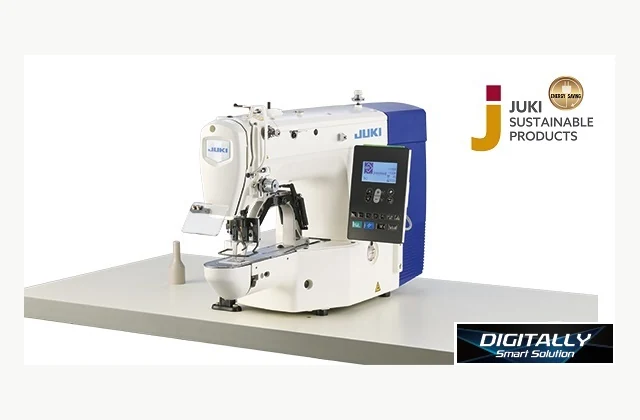
Shown as a configuration reference. Availability and the equipment offered for your project are confirmed separately.
Define the reinforcement pattern
Bartacking reinforces localized stress points rather than joining a long garment seam. Supply drawings showing tack length, width, stitch layout and orientation on the finished assembly. Distinguish a standard stored pattern from a genuinely new programmed shape.
Test thick transitions and clamp grip
Belt loops and pocket corners can present unequal stack heights. Trial the thickest and thinnest intended assemblies in the proposed work clamp. Watch for movement, clamp marking, needle deflection and inaccessible corners rather than judging an unloaded sewing demonstration.
Match needle, thread and stitch formation
Choose needle system, thread size and tension with the fabric specialist. A stronger-looking dense pattern can damage a delicate substrate. Examine skipped stitches, thread breakage and seam appearance with the actual reinforcement material after sewing and the buyer's relevant treatment.
Separate sewing time from operator cycle
Advertised sewing speed does not include aligning small pieces, operating clamps or removing work. Measure representative load-sew-unload cycles and rework. Where fixtures are proposed, identify who positions the part and how size changes are controlled without obstructing the needle area.
Control pattern files and adjustment access
Record the approved pattern revision, available memory and means of loading programs for the exact controller. Define user permissions for editing stitch geometry. A backup must include the working pattern and machine settings so replacement controls can reproduce the accepted reinforcement.
Inspect clamps and wear components
Obtain identification for work clamps, needle plates, hooks and other task-specific parts. Check access for lint removal and lubrication using the supplied instructions. A fixture unique to one belt-loop width may require another kit when garment dimensions change.
Compare a complete industrial bartacking machine scope
| Decision | Information to compare |
|---|---|
| Define the reinforcement pattern | Pattern drawing, tack dimensions, stitch count and reinforcement location |
| Test thick transitions and clamp grip | Garment materials, layer stack, thickness transitions and clamp-mark limits |
| Match needle, thread and stitch formation | Needle/thread combination, seam appearance and strength-test method |
| Separate sewing time from operator cycle | Loading method, operator sequence, fixtures and acceptable complete-cycle output |
| Control pattern files and adjustment access | Pattern-transfer format, backup procedure, operator permissions and controller variant |
| Inspect clamps and wear components | Clamp/gauge kits, wear parts, cleaning access and changeover scope |
Plan installation and access
Plan a stable workstation with the offered table, power supply, foot control and clear loading area. Confirm whether pneumatic clamping is included and, if so, specify air quality and connections. Guarding must suit the actual loading method and workholding arrangement.
Agree acceptance evidence before ordering
Approve samples from each critical stack thickness, then measure pattern dimensions, seam strength by the agreed method and good assemblies per complete operator cycle. Record needle, thread, program and clamp revisions. Repeat after a size change and restart so setup repeatability is visible.
Define OEM/ODM engineering boundaries
OEM labeling, dedicated clamps and approved pattern programming can be reviewed. ODM changes to the sewing head, clamp drive or safety functions require engineering and new validation. A reference photograph does not establish authorization to reproduce JUKI technology or an IndustryApex supply relationship.
Prepare comparable quotations
Use the industrial bartacking machine inquiry to identify the duty described above, the included configuration and the evidence that will demonstrate it. Separate base equipment from required accessories, commissioning and operator training. Record deviations against the requested pattern drawing, tack dimensions, stitch count and reinforcement location before price comparison. The illustrated reference establishes a discussion point; the offered unit still needs its own identifiable configuration and written commercial scope.
What should your industrial bartacking machine RFQ include?
- Pattern drawing, tack dimensions, stitch count and reinforcement location
- Garment materials, layer stack, thickness transitions and clamp-mark limits
- Needle/thread combination, seam appearance and strength-test method
- Loading method, operator sequence, fixtures and acceptable complete-cycle output
- Pattern-transfer format, backup procedure, operator permissions and controller variant
- Clamp/gauge kits, wear parts, cleaning access and changeover scope
- Destination, working environment, access and delivery constraints
- Installation responsibility, utilities and connection drawings
- Acceptance samples, documented test method, operator training and maintenance scope
- OEM/ODM changes requested: identification, tooling, interfaces or new design; engineering feasibility to be confirmed
Need OEM / ODM customization?
Submit branding, packaging, configuration or engineering requirements for this equipment. Include the target market, initial and annual quantities, required changes and acceptance criteria.
Customization feasibility, permitted branding, development responsibilities, minimum quantity, cost and lead time are reviewed for the proposed supplier and configuration before a quotation is confirmed.
Frequently asked questions
How do I define the reinforcement pattern?
Bartacking reinforces localized stress points rather than joining a long garment seam. Supply drawings showing tack length, width, stitch layout and orientation on the finished assembly. Distinguish a standard stored pattern from a genuinely new programmed shape.
How do I test thick transitions and clamp grip?
Belt loops and pocket corners can present unequal stack heights. Trial the thickest and thinnest intended assemblies in the proposed work clamp. Watch for movement, clamp marking, needle deflection and inaccessible corners rather than judging an unloaded sewing demonstration.
How do I match needle, thread and stitch formation?
Choose needle system, thread size and tension with the fabric specialist. A stronger-looking dense pattern can damage a delicate substrate. Examine skipped stitches, thread breakage and seam appearance with the actual reinforcement material after sewing and the buyer's relevant treatment.
How do I separate sewing time from operator cycle?
Advertised sewing speed does not include aligning small pieces, operating clamps or removing work. Measure representative load-sew-unload cycles and rework. Where fixtures are proposed, identify who positions the part and how size changes are controlled without obstructing the needle area.
How do I control pattern files and adjustment access?
Record the approved pattern revision, available memory and means of loading programs for the exact controller. Define user permissions for editing stitch geometry. A backup must include the working pattern and machine settings so replacement controls can reproduce the accepted reinforcement.
How do I inspect clamps and wear components?
Obtain identification for work clamps, needle plates, hooks and other task-specific parts. Check access for lint removal and lubrication using the supplied instructions. A fixture unique to one belt-loop width may require another kit when garment dimensions change.
Reference information
- JUKI LK-1900C official product reference
- JUKI industrial bartacking machine official family or technical reference
Reference data and images explain equipment configurations. IndustryApex engineers confirm the offered model, specification and commercial scope in your project quotation.