
Connect remote industrial assets over a cellular network with a gateway selected for local coverage, field interfaces and controlled remote access. Define the network and application before comparing hardware, then include antennas, data services and commissioning responsibilities in the inquiry. Prioritize radio compatibility, field interfaces, remote access. Use the checkpoints to build a consistent equipment scope and confirm the intended trial or installation evidence. The official image is a product reference; it does not establish availability or an authorized supplier relationship. Submit OEM/ODM changes for application-specific feasibility review.
Connect remote industrial assets over a cellular network with a gateway selected for local coverage, field interfaces and controlled remote access. Define the network and application before comparing hardware, then include antennas, data services and commissioning responsibilities in the inquiry.
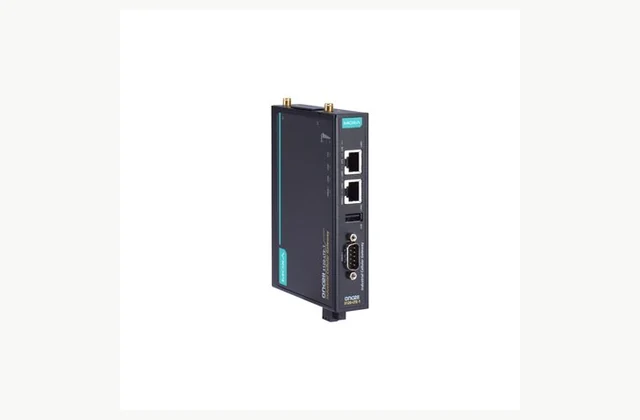
Shown as a configuration reference. Availability and the equipment offered for your project are confirmed separately.
Match the modem to the destination
A cellular gateway needs radio bands and a carrier arrangement suitable for its destination. A product described as global should not be assumed compatible with every operator. The OnCell 3120-LTE-1 family, for example, has market-specific variants. Identify countries, intended networks and service availability before selecting a model. Check the operator acceptance requirements and whether roaming is permitted for the deployment rather than relying on a generic LTE label.
Separate cellular connection from application support
A working mobile-data connection does not prove that the field application can communicate. List Ethernet devices, serial equipment and required application protocols. Decide whether the gateway only transports IP traffic or must provide a particular device interface. Cellular service commonly affects addressing and inbound reachability, so remote access should be designed with the IT team. Document the endpoint and server arrangement instead of assuming a public reachable address is included.
Plan antennas and the installation
Antenna selection and location can determine whether a technically compatible gateway works at the site. Record indoor or outdoor placement, cabinet construction, cable route and available mounting positions. Include suitable antenna connections, cable losses, grounding and environmental exposure in the installation design. A strong signal in an open-area demonstration may not represent a gateway installed inside a metal cabinet or behind a building structure.
| Selection issue | Information to specify |
|---|---|
| Radio compatibility | Destination countries, operator and required bands for the exact variant. |
| Field interfaces | Ethernet and serial devices with required communication behavior. |
| Remote access | Approved access method, authentication and server arrangement. |
| Antenna installation | Cabinet, mounting position, cable route and environmental exposure. |
| Service continuity | Data plan, outage behavior and recovery test conditions. |
| Maintenance | Firmware, configuration backup and replacement responsibilities. |
Define remote access and device management
Identify who may connect, how authentication is controlled and how remote sessions are logged or disabled. Clarify VPN, routing and management capabilities for the exact firmware. The gateway is one part of the security architecture; it should not give uncontrolled access to the whole plant network. Establish software-update ownership, credential handling and a replacement process so unattended sites remain maintainable after the first commissioning visit.
Budget for data, outages and recovery
Estimate normal telemetry, remote-support traffic and software updates, then choose a suitable data arrangement. Discuss what the application does when service is unavailable. Local buffering may belong in the application or another device and must not be assumed a gateway feature. Check monitoring and reconnection behavior under representative interruptions. A cellular link has service dependencies outside the hardware supplier, so record carrier and equipment responsibilities separately.
Test at the actual deployment location
Commission with the intended SIM, antennas, connected equipment and server. Verify application communication, approved remote access and recovery after a controlled service interruption. Retain the selected radio variant, firmware, network settings and antenna details. Compare cabinet power requirements and environmental limits with site conditions. The trial should establish a repeatable deployment package rather than a successful connection on the supplier’s desk.
Scope OEM/ODM for the deployment package
Useful requests include preconfiguration, cabinet integration, labels and antenna or mounting kits. Changes to radio hardware, firmware or enclosure design can require new engineering and destination-specific assessment. Provide country coverage, interfaces and lifecycle expectations with the brief. Do not assume a reference-brand gateway can be relabeled. A customized package should preserve traceable model identification and a defined update and replacement process.
What should your industrial cellular gateway RFQ include?
- Radio compatibility: Destination countries, operator and required bands for the exact variant.
- Field interfaces: Ethernet and serial devices with required communication behavior.
- Remote access: Approved access method, authentication and server arrangement.
- Antenna installation: Cabinet, mounting position, cable route and environmental exposure.
- Service continuity: Data plan, outage behavior and recovery test conditions.
- Maintenance: Firmware, configuration backup and replacement responsibilities.
- Destination, site conditions and delivery access
- Installation boundary, utilities and connection drawings
- Acceptance procedure, documentation and training scope
- OEM/ODM changes: interface, material, branding or new design; written engineering feasibility required
Need OEM / ODM customization?
Submit branding, packaging, configuration or engineering requirements for this equipment. Include the target market, initial and annual quantities, required changes and acceptance criteria.
Customization feasibility, permitted branding, development responsibilities, minimum quantity, cost and lead time are reviewed for the proposed supplier and configuration before a quotation is confirmed.
Frequently asked questions
Will one cellular gateway work in every country?
Not necessarily. Radio bands, carrier acceptance and market-specific variants matter. Give the intended countries and operators and ask for confirmation of the exact hardware variant. A global product description does not replace checking the service and approval conditions for each deployment.
Can a cellular SIM always provide inbound remote access?
No. Carrier addressing and network policies can affect inbound reachability. Design the remote-access arrangement with the network team and identify any VPN or managed-service dependency. Test using the actual SIM and server instead of assuming a public reachable address is supplied.
Why must antennas be part of the quotation?
Antenna placement, cable losses and cabinet construction affect field reception. Specify the installation location and include the required antenna, cable and mounting hardware. A gateway that connects well on an open bench may perform differently inside a metal enclosure at the final site.
Does a cellular gateway replace a protocol converter?
Only if the selected device explicitly supports the required conversion. Many gateways primarily provide network connectivity. List serial and Ethernet devices and the protocols involved, then distinguish transport from application translation so essential mapping or conversion functions are not omitted.
What should a cellular gateway acceptance test include?
Use the intended carrier, SIM, antennas and field devices. Check application communication, authorized remote access and recovery after interruptions. Record the settings and hardware variant so the site can be maintained or repeated elsewhere without depending on an undocumented demonstration setup.
What OEM/ODM work is realistic for cellular gateways?
Preconfiguration, mounting, labels and deployment kits can be reviewed. Radio, firmware and enclosure changes need engineering and may affect destination requirements. Specify countries, interfaces and update responsibilities so the customization has a defined support plan and does not obscure model identification.
Reference information
- OnCell 3120-LTE-1 Series - Cellular Gateways | Moxa
- Industrial Network Infrastructure | Moxa
Reference data and images explain equipment configurations. IndustryApex engineers confirm the offered model, specification and commercial scope in your project quotation.