
Compare large square hay balers by the crop windrow, bale handling system and reliable knot formation. This guide covers rectangular bales for stacking and transport, distinct from round-bale machines. Confirm tractor compatibility, density objectives and field acceptance before selecting a chamber family. Run the representative crop through pickup, formation, knotting and discharge. Record moisture, bale dimensions, mass, knot failures and complete-cycle usable output. Handle and stack sample bales with the intended equipment. Repeat through variable windrows and document settings rather than extrapolating from a single ideal bale. Submit the intended configuration and any OEM/ODM changes for project-specific feasibility review.
Compare large square hay balers by the crop windrow, bale handling system and reliable knot formation. This guide covers rectangular bales for stacking and transport, distinct from round-bale machines. Confirm tractor compatibility, density objectives and field acceptance before selecting a chamber family.
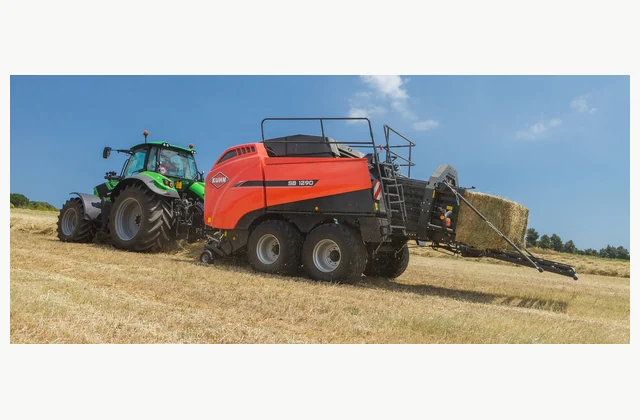
Shown as a configuration reference. Availability and the equipment offered for your project are confirmed separately.
Choose the rectangular bale format
Bale cross-section and length must fit transport, sheds, stackers and the receiving buyer. Discuss finished bale handling before choosing a chamber. Do not infer a safe bale mass from dimensions alone because crop moisture, density settings and the actual material all affect weight.
Characterize crop and windrow conditions
Specify grass, alfalfa, straw or mixed crops, moisture condition and windrow size. Include uneven or heavy patches representative of the farm. Pickup and feeding arrangements must handle that variability without assuming the maximum published throughput will be achieved throughout the field.
Assess precompression and cutting scope
Decide whether the system needs crop cutting and specify the desired handling outcome. Knife arrangement and feed/precompression behavior affect material presentation, power demand and service. Compare like-for-like configurations; a cutter-equipped reference and an uncut package have different operating and maintenance boundaries.
Validate density and knot consistency
Useful density is linked to secure knots and handling, not simply a pressure setting. Evaluate bales across changing windrows, inspect twine paths and document knot failures. Define the weighing and moisture method so density comparisons relate to comparable material rather than appearance alone.
Confirm tractor and driveline compatibility
Match the offered PTO arrangement, required hydraulic services, drawbar and electrical control system to the named tractor. Include ballast, tires and transport conditions in the review. A larger tractor rating alone cannot establish compatibility with the baler's driveline, braking or control interface.
Prepare knotter and wear-part support
Harvest downtime depends on prompt access to knotter, pickup, knife and driveline parts. Obtain identification and maintenance instructions for the exact model. Provide safe access and lockout procedures for clearing blockages rather than building the daily work plan around improvised intervention.
Compare a complete large square hay baler scope
| Decision | Information to compare |
|---|---|
| Choose the rectangular bale format | Required rectangular bale dimensions, handling equipment and storage geometry |
| Characterize crop and windrow conditions | Crop types, moisture range, windrow variability and pickup conditions |
| Assess precompression and cutting scope | Cut/uncut configuration, knife package, precompression and crop-length objective |
| Validate density and knot consistency | Density assessment, twine specification, knot failures and weighing method |
| Confirm tractor and driveline compatibility | Tractor model, PTO, hydraulics, drawbar, brakes and electrical interface |
| Prepare knotter and wear-part support | Knotter/twine supplies, pickup wear parts, knives and seasonal service plan |
Plan installation and access
Plan delivery access, field entrances, workshop clearance and the means of safely attaching the machine to the tractor. Confirm transport width, lighting and braking requirements for the intended destination. Storage must allow inspection, cleaning and protected twine supplies before the harvest period.
Agree acceptance evidence before ordering
Run the representative crop through pickup, formation, knotting and discharge. Record moisture, bale dimensions, mass, knot failures and complete-cycle usable output. Handle and stack sample bales with the intended equipment. Repeat through variable windrows and document settings rather than extrapolating from a single ideal bale.
Define OEM/ODM engineering boundaries
OEM identification and selected tractor/control interfaces can be assessed. ODM changes to chamber, knotters, drive or load-bearing structures need engineering and field validation. Reference imagery establishes only the equipment family and does not authorize copying KUHN technology or claim an IndustryApex supply relationship.
What should your large square hay baler RFQ include?
- Required rectangular bale dimensions, handling equipment and storage geometry
- Crop types, moisture range, windrow variability and pickup conditions
- Cut/uncut configuration, knife package, precompression and crop-length objective
- Density assessment, twine specification, knot failures and weighing method
- Tractor model, PTO, hydraulics, drawbar, brakes and electrical interface
- Knotter/twine supplies, pickup wear parts, knives and seasonal service plan
- Destination, working environment, access and delivery constraints
- Installation responsibility, utilities and connection drawings
- Acceptance samples, documented test method, operator training and maintenance scope
- OEM/ODM changes requested: identification, tooling, interfaces or new design; engineering feasibility to be confirmed
Need OEM / ODM customization?
Submit branding, packaging, configuration or engineering requirements for this equipment. Include the target market, initial and annual quantities, required changes and acceptance criteria.
Customization feasibility, permitted branding, development responsibilities, minimum quantity, cost and lead time are reviewed for the proposed supplier and configuration before a quotation is confirmed.
Frequently asked questions
How do I choose the rectangular bale format?
Bale cross-section and length must fit transport, sheds, stackers and the receiving buyer. Discuss finished bale handling before choosing a chamber. Do not infer a safe bale mass from dimensions alone because crop moisture, density settings and the actual material all affect weight.
How do I characterize crop and windrow conditions?
Specify grass, alfalfa, straw or mixed crops, moisture condition and windrow size. Include uneven or heavy patches representative of the farm. Pickup and feeding arrangements must handle that variability without assuming the maximum published throughput will be achieved throughout the field.
How do I assess precompression and cutting scope?
Decide whether the system needs crop cutting and specify the desired handling outcome. Knife arrangement and feed/precompression behavior affect material presentation, power demand and service. Compare like-for-like configurations; a cutter-equipped reference and an uncut package have different operating and maintenance boundaries.
How do I validate density and knot consistency?
Useful density is linked to secure knots and handling, not simply a pressure setting. Evaluate bales across changing windrows, inspect twine paths and document knot failures. Define the weighing and moisture method so density comparisons relate to comparable material rather than appearance alone.
How do I confirm tractor and driveline compatibility?
Match the offered PTO arrangement, required hydraulic services, drawbar and electrical control system to the named tractor. Include ballast, tires and transport conditions in the review. A larger tractor rating alone cannot establish compatibility with the baler's driveline, braking or control interface.
How do I prepare knotter and wear-part support?
Harvest downtime depends on prompt access to knotter, pickup, knife and driveline parts. Obtain identification and maintenance instructions for the exact model. Provide safe access and lockout procedures for clearing blockages rather than building the daily work plan around improvised intervention.
Reference information
- KUHN SB 1290 official product reference
- KUHN large square hay baler official family or technical reference
Reference data and images explain equipment configurations. IndustryApex engineers confirm the offered model, specification and commercial scope in your project quotation.