
Harvest and chop forage with a machine selected for crops, feed-quality requirements and receiving logistics. Compare front attachments, chopping and any crop-processing equipment as one system, then validate the delivered material and useful field cycle under representative conditions. Prioritize objective, front attachment, processing. Use the checkpoints to build a consistent equipment scope and confirm the intended trial or installation evidence. The official image is a product reference; it does not establish availability or an authorized supplier relationship. Submit OEM/ODM changes for application-specific feasibility review.
Harvest and chop forage with a machine selected for crops, feed-quality requirements and receiving logistics. Compare front attachments, chopping and any crop-processing equipment as one system, then validate the delivered material and useful field cycle under representative conditions.
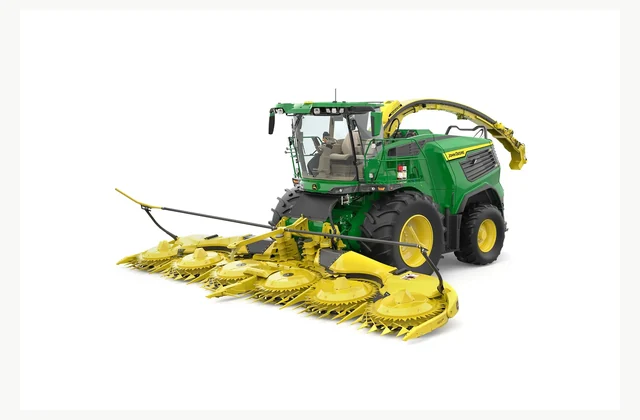
Shown as a configuration reference. Availability and the equipment offered for your project are confirmed separately.
Define the forage and feeding objective
A forage harvester prepares chopped crop for the intended agricultural handling and feeding route. State maize, grass or other crops, their condition and the required delivered material. Dry matter, contamination and crop variability belong in the discussion with the responsible forage adviser. A combine and a forage harvester perform different process roles. Select the route and output objective first rather than assume engine power or a broad harvesting label establishes the right machine.
Match front attachments to crop and machine
Pickup and standing-crop attachments can serve different tasks and need compatible interfaces. Identify crop presentation, row or swath arrangement, terrain and the exact receiving machine. The John Deere F9 900 reference illustrates a forage-harvester platform; the front attachment shown in a photograph should not be assumed included. Confirm mechanical, drive and control compatibility and any required adapter. A nominal attachment width is not enough to establish the complete harvesting combination.
Specify chopping and crop-processing requirements
Describe the desired chop and the assessment method used for the final forage. Where kernel or other crop processing is required, specify the intended result and exact included arrangement rather than assume it is universal equipment for all crops. Knife and processing configurations need to suit the material and system. A setpoint or catalogue range does not prove the delivered particle distribution. Representative crop trials should connect settings with the actual material produced.
| Selection issue | Information to specify |
|---|---|
| Objective | Crops, condition and required forage or feeding result. |
| Front attachment | Pickup or standing crop with exact machine interfaces. |
| Processing | Chop and any crop-processing arrangement and assessment. |
| Logistics | Receiving vehicles, discharge position and field routes. |
| Support | Wear components, cleaning and harvest-season service. |
| Acceptance | Representative crop through the complete supplied system. |
Balance crop flow and receiving transport
The machine must transfer harvested material into a workable receiving system. Provide trailer or truck arrangements, loading position, routes and the team available to move forage. Discharge reach, positioning and any assistance functions should be checked for the exact configuration. A powerful harvester can spend time waiting if receiving logistics are unsuitable. Assess the complete field cycle rather than compare a momentary high-flow demonstration with the output of an organized harvesting operation.
Plan wearing parts, cleaning and service
Knives, processing elements and crop-path components require identification and maintenance appropriate to the actual machine. Discuss inspection, cleaning and adjustment using the manufacturer’s instructions and the expected material. Soil or foreign material can affect both the forage and equipment, so include crop condition in the service discussion. Obtain a concrete harvest-season support plan, consumables and relevant training. A generic promise of parts support does not show what the operating team can obtain when needed.
Confirm destination variant and crop acceptance
Check engine, travel arrangement, tires and documentation for the exact market variant offered. Include movement between farms and front-attachment transport. Trial representative crop with the supplied configuration and agree measurements for chop, processing where applicable, contamination and usable output. Record material and settings with the results. For used machines, inspect the particular unit’s service history and condition separately from the reference model’s general capabilities and photographs.
Bound OEM/ODM to a complete harvesting system
Identification, selected interfaces and receiving-system integration may be reviewed. Changes to front attachments, chopping, processing, drives or controls require engineering and crop trials. Provide the crop range and output objective with the brief and clarify documentation and parts responsibilities. A customized alternative needs evidence for its own delivered forage and operating arrangement. Reference-brand imagery does not establish availability, agency or permission to transfer another manufacturer’s design and performance claims.
What should your forage harvester RFQ include?
- Objective: Crops, condition and required forage or feeding result.
- Front attachment: Pickup or standing crop with exact machine interfaces.
- Processing: Chop and any crop-processing arrangement and assessment.
- Logistics: Receiving vehicles, discharge position and field routes.
- Support: Wear components, cleaning and harvest-season service.
- Acceptance: Representative crop through the complete supplied system.
- Destination, site conditions and delivery access
- Installation boundary, utilities and connection drawings
- Acceptance procedure, documentation and training scope
- OEM/ODM changes: interface, material, branding or new design; written engineering feasibility required
Need OEM / ODM customization?
Submit branding, packaging, configuration or engineering requirements for this equipment. Include the target market, initial and annual quantities, required changes and acceptance criteria.
Customization feasibility, permitted branding, development responsibilities, minimum quantity, cost and lead time are reviewed for the proposed supplier and configuration before a quotation is confirmed.
Frequently asked questions
Is a forage harvester interchangeable with a combine?
They serve different process roles. A forage harvester prepares chopped crop for a forage route, while a combine serves its specified grain-harvesting process. Define the intended output and crop system before choosing equipment rather than treat both machine names as equivalent harvesting-capacity options.
Are pickup and standing-crop attachments universal?
No. The crop task and mechanical, drive and control interfaces must match the exact machine. Provide swath or row conditions and the intended attachment. A familiar width or a photograph of a connected example does not establish compatibility or inclusion in another proposed package.
Does the chop-length setting prove the final particle distribution?
No. Material condition, configuration and operation affect the delivered forage. Define the required result and use an agreed assessment on representative crop. Record settings and any processing equipment so the evidence describes useful output rather than only a value selected on the control display.
Is crop-processing equipment included on every forage harvester?
Inclusion and arrangement depend on the model, configuration and intended crops. Specify the required processing result and request an itemized package. Equipment suitable for one crop route should not be assumed universal or included because a related machine or demonstration used it.
Why should receiving trailers be part of the selection?
Useful harvesting depends on the flow of receiving vehicles and workable discharge positions and routes. Underspecified transport creates waiting time even with a capable harvester. Assess representative complete cycles and identify the actual discharge and assistance equipment rather than compare engine power or temporary crop flow alone.
Can a forage-harvester package be customized?
Selected interfaces, identification and logistics integration can be reviewed. Chopping, processing, drive or control changes require engineering and crop trials. Provide the forage objective and receiving system and define acceptance and parts documentation so a modified OEM/ODM package has evidence for its own complete arrangement.
Reference information
- John Deere F9 900 official product reference
- John Deere F9 900 official technical or family reference
Reference data and images explain equipment configurations. IndustryApex engineers confirm the offered model, specification and commercial scope in your project quotation.