
Pick cotton with equipment selected for the crop, planted geometry and the receiving logistics. Compare harvesting units, crop quality and onboard handling with field support and service needs, then define the exact market configuration and representative trial conditions. Prioritize route, crop geometry, quality. Use the checkpoints to build a consistent equipment scope and confirm the intended trial or installation evidence. The official image is a product reference; it does not establish availability or an authorized supplier relationship. Submit OEM/ODM changes for application-specific feasibility review.
Pick cotton with equipment selected for the crop, planted geometry and the receiving logistics. Compare harvesting units, crop quality and onboard handling with field support and service needs, then define the exact market configuration and representative trial conditions.
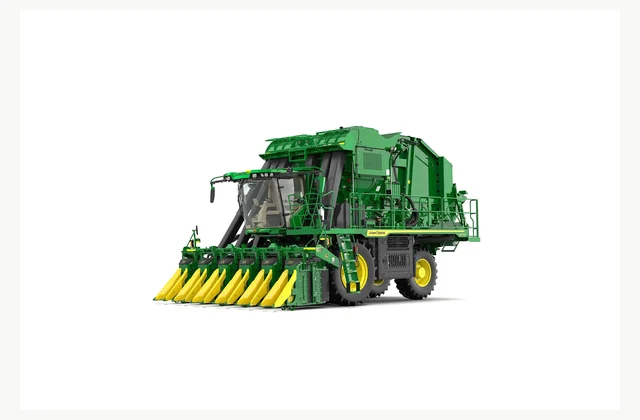
Shown as a configuration reference. Availability and the equipment offered for your project are confirmed separately.
Confirm the intended cotton-harvesting route
A cotton picker and a cotton stripper use different harvesting approaches and should not be treated as interchangeable names. Describe variety, crop preparation, field condition and the required harvested material. The John Deere CP770 reference illustrates a cotton-picker platform. Its suitability still depends on the crop and operating system. Ask the responsible crop and equipment specialists to assess the planned route rather than choose a machine only from a capacity class or a familiar model name.
Match rows, crop and field geometry
Provide row spacing, plant height, expected crop variability and field access. Include headlands, turns, soil and any difficult standing or lodged crop. The harvesting-unit arrangement must match the planted system and documented machine configuration. A demonstration in a uniform well-prepared field cannot establish the result in every crop. State the intended harvest window and conditions so the selection can address actual cotton availability and the farm’s work plan.
Evaluate picking units and material quality
Discuss the proposed harvesting-unit arrangement, its wearing components and the maintenance needed to sustain the intended action. Assess recovery, unwanted material and crop quality using agreed methods and representative conditions. A high flow of material into the machine is not itself evidence of an acceptable harvested product. Record the crop state and settings used in trials so quality and output claims remain connected to the conditions under which they were observed.
| Selection issue | Information to specify |
|---|---|
| Route | Picker application, cotton variety and harvest objective. |
| Crop geometry | Rows, plant condition, headlands and field access. |
| Quality | Recovery, unwanted material and agreed crop assessment. |
| Handling | Onboard configuration, consumables and receiving logistics. |
| Support | Wear parts, cleaning or moistening scope and seasonal service. |
| Evidence | Exact destination variant and representative full-cycle trial. |
Define onboard handling and module logistics
The machine’s cotton-handling arrangement must fit the receiving and transport system. Where module formation or wrapping is included, identify the exact configuration, consumables, discharge process and downstream handling requirements. Do not assume every pictured attachment or supply item is part of the base package. Plan storage and transport of harvested cotton with the farm team. A capable picker can lose useful time if receiving equipment, consumables or field routes are unavailable when needed.
Plan services and harvest-season maintenance
Cotton harvesting depends on timely cleaning, adjustment and service using the specific machine instructions. Ask for consumables, wearing-part identification and access to specialist support for the proposed unit. Include relevant cleaning or moistening arrangements and the supplied equipment without treating family-level illustrations as a complete parts list. Maintenance staffing and parts access matter during a limited harvest window, so the service plan should be concrete rather than a generic statement that support is available.
Confirm destination variant and field evidence
Check engine, travel, tires and documentation for the exact configuration offered to the destination. Include transport dimensions and movement between farms. A useful trial assesses the full cycle on representative cotton, including handling and interruptions relevant to the work plan. Agree quality and usable-output methods instead of extrapolating from a brochure maximum. For used machines, inspect the particular unit’s history and condition separately from the reference model’s general specification.
Scope OEM/ODM without transferring performance claims
Identification, selected handling interfaces or integration may be considered. Changes to harvesting units, drives, module systems or controls need engineering, crop trials and supporting documentation. Provide crop and row details and the intended receiving system with the brief. A customized alternative requires its own evidence and identifiable parts. The official reference photograph does not establish agency, availability or permission to reproduce the machine or apply its claims to another design.
What should your cotton picker RFQ include?
- Route: Picker application, cotton variety and harvest objective.
- Crop geometry: Rows, plant condition, headlands and field access.
- Quality: Recovery, unwanted material and agreed crop assessment.
- Handling: Onboard configuration, consumables and receiving logistics.
- Support: Wear parts, cleaning or moistening scope and seasonal service.
- Evidence: Exact destination variant and representative full-cycle trial.
- Destination, site conditions and delivery access
- Installation boundary, utilities and connection drawings
- Acceptance procedure, documentation and training scope
- OEM/ODM changes: interface, material, branding or new design; written engineering feasibility required
Need OEM / ODM customization?
Submit branding, packaging, configuration or engineering requirements for this equipment. Include the target market, initial and annual quantities, required changes and acceptance criteria.
Customization feasibility, permitted branding, development responsibilities, minimum quantity, cost and lead time are reviewed for the proposed supplier and configuration before a quotation is confirmed.
Frequently asked questions
Is a cotton picker the same as a cotton stripper?
No. They describe different harvesting approaches and the appropriate route depends on crop and management requirements. Identify variety, preparation and desired harvested material and obtain a crop-specific assessment. A product name or capacity class alone does not establish suitability for the farm’s intended cotton-harvesting system.
What planting information should accompany a picker inquiry?
Provide row spacing, crop height and variability, field access and expected difficult conditions. Include headlands and the intended harvest window. The harvesting-unit arrangement must match the actual planted system; a demonstration on a different row or crop condition does not prove equivalent performance.
How should cotton-picker quality be assessed?
Agree recovery, unwanted-material and crop-quality methods and evaluate representative cotton through the complete machine. Record crop condition and settings. A large volume entering the machine or a high nominal output does not by itself establish an acceptable harvested product for the buyer’s process.
Does a cotton-picker quotation include all module supplies?
Not necessarily. Where module handling is included, itemize consumables, formation or wrapping equipment, discharge and receiving requirements. Confirm the exact configuration. A photograph of an onboard arrangement does not establish that every accessory or harvest-season supply needed for useful operation is included.
Why is the service package particularly important?
The harvest window can make delayed cleaning, wear-part replacement or specialist repairs costly in time. Obtain component identification, consumables and a concrete support plan for the offered machine. Generic model information cannot establish the condition of a used unit or local access to needed parts.
Can a cotton picker be customized for an operating system?
Selected interfaces or identification can be reviewed, while harvesting, drive, module or control changes require engineering and crop trials. Provide row, crop and receiving details and define evidence for the final configuration. A customized design does not inherit a reference manufacturer’s performance or supply relationship.
Reference information
- John Deere CP770 official product reference
- John Deere CP770 official technical or family reference
Reference data and images explain equipment configurations. IndustryApex engineers confirm the offered model, specification and commercial scope in your project quotation.