
A food metal detector addresses defined metal contamination risks within the specified product and inspection point. It should not be presented as detection of every foreign material. Agree ferrous, nonferrous and stainless-steel challenge materials with the quality team and choose the point where detection and removal can be controlled. Recipe moisture, salt, temperature and packaging can change the detector response. Provide the full product range, including the difficult recipes and their normal variation.
Establish what contamination must be detected
A food metal detector addresses defined metal contamination risks within the specified product and inspection point. It should not be presented as detection of every foreign material. Agree ferrous, nonferrous and stainless-steel challenge materials with the quality team and choose the point where detection and removal can be controlled. Recipe moisture, salt, temperature and packaging can change the detector response. Provide the full product range, including the difficult recipes and their normal variation. Set detection and false-reject criteria before requesting sensitivity claims, then evaluate the complete conveyor and reject arrangement using representative food samples.
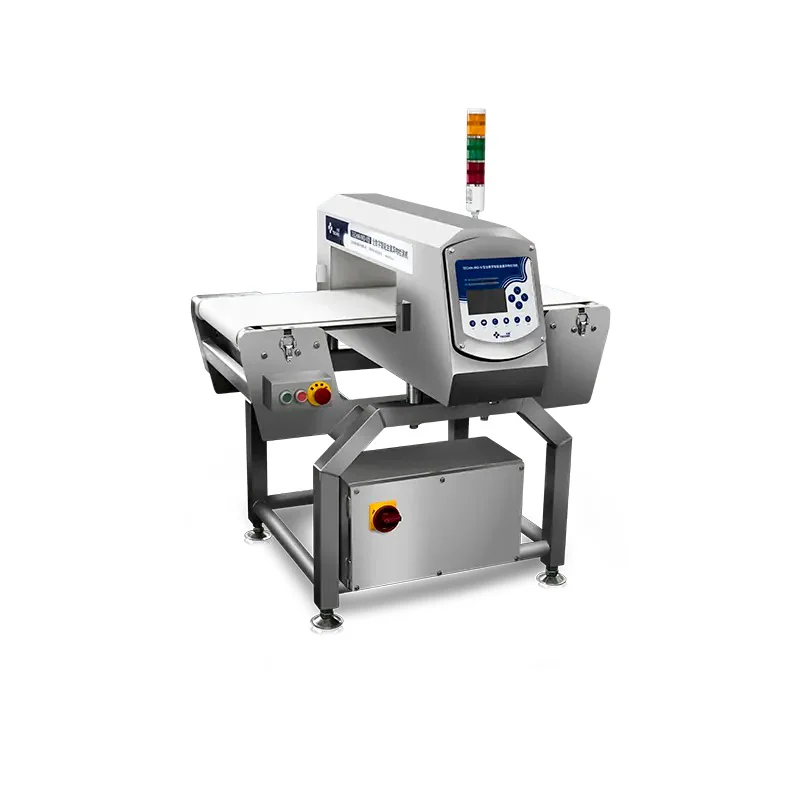
Shown as a configuration reference. Availability and the equipment offered for your project are confirmed separately.
Size the aperture and handle product effect
Choose the inspection aperture from the largest pack with sufficient handling clearance, and ask how that choice affects achievable detection in the actual product. Do not compare sensitivity numbers from different apertures or test conditions. Wet or conductive foods may require a different detector setup from dry snack packs. Metalized packaging deserves a specific assessment and may change the suitable inspection technology or inspection point. Request recipe management and retest requirements when product conditions change. The supplier should demonstrate the proposed detector with challenge pieces in different pack positions rather than only passing a test piece through an empty opening.
Integrate reliable rejection and hygienic handling
The reject device, collection point and confirmation signals form part of the inspection system. Show pack spacing, conveyor elevation and where a diverted product is secured for quality-team review. Define behavior during low air pressure, a full reject bin, failed detection electronics or blocked discharge. Cleaning methods, access and belt removal must fit the production sanitation plan. Electrical noise, neighboring metal structures and movement should be reviewed before installation. Reserve access for routine challenges without bypassing guarding. Assign responsibility for investigation and controlled return of rejected product; the machine cannot establish that operating procedure on its own.
Budget the complete detection station
Compare the detector head, conveyor, reject system, confirmation, guarding, recipes and recordkeeping functions at equal scope. Include sample trials, calibration or verification tools, installation and operator training. Ask for spare belts, reject-actuator parts and local service response arrangements. False rejects have production and investigation costs that should be assessed during the trial, without inventing a universal payback. Identify maintenance tasks requiring a specialist and the method for verifying performance after service. A certificate attached to a manufacturer family does not remove the need to review destination requirements and the exact installation for the intended food process.
Agree challenges before buying the detector
The acceptance protocol should specify challenge materials, sizes, placement, product temperature, speed and spacing. Run the difficult recipes and position test pieces at the agreed leading, central and trailing locations. Verify successful removal and confirmation for individual and consecutive challenged packs. Record false rejects on unchallenged production as well as detection results. Include loss of air supply, recipe selection and restart behavior through the commissioning team. Keep a controlled record of challenge materials and detector settings. Empty-belt detection provides useful commissioning evidence, but does not substitute for passing representative food through the complete installed system.
Define line-specific OEM and ODM requirements
Send the RFQ with product recipes, pack material, layout and the quality team’s challenge procedure. OEM changes can cover documented branding and languages while keeping controls and inspection identification traceable. ODM integration may require special conveyors, free-fall inspection, pipeline handling or centralized data and should be quoted as an engineered project. Agree recipe ownership, password levels, backup access and changes that trigger revalidation. Manufacturer examples explain possible equipment arrangements; selection and any detection commitment must be confirmed through the offered configuration and your product trials, including the rejection system.
Manufacturer configuration references
Review the linked manufacturer information as configuration references. Request the current sheet, included scope and relevant evidence for the exact proposed equipment; these references do not establish an IndustryApex supply relationship.
What should you include in your RFQ?
- Product recipes temperature and moisture
- Salt content and product variation
- Pack materials including metalized film
- Maximum pack dimensions and aperture
- Line speed and pack spacing
- Ferrous nonferrous stainless test pieces
- Required detection and false-reject criteria
- Reject device confirmation and bin
- Washdown and hygiene process
- Power air and electrical noise
- Data recipes and challenge procedure
- OEM configuration and destination review
For OEM / ODM requests, include the branding, packaging, configuration or engineering changes you need, initial and annual quantities, target market, sample approval and acceptance requirements. Feasibility and commercial scope are confirmed for the specific project.
Need OEM / ODM customization?
Submit branding, packaging, configuration or engineering requirements for this equipment. Include the target market, initial and annual quantities, required changes and acceptance criteria.
Customization feasibility, permitted branding, development responsibilities, minimum quantity, cost and lead time are reviewed for the proposed supplier and configuration before a quotation is confirmed.
Frequently asked questions
Can a metal detector find every foreign object?
No. Metal detection addresses specified metal contaminants and operating conditions; it does not detect every foreign object. Agree challenge materials and performance with the quality team and assess the complete detector, conveyor and rejection arrangement.
Why can wet or salty foods be difficult to inspect?
Wet or salty foods can create a product signal that complicates separation from the metal response. Trial difficult recipes at normal temperature and moisture variation, using challenge pieces in several positions rather than an empty-belt sensitivity claim.
How does packaging material affect detector selection?
Metalized or conductive packaging can change detection performance and the suitable inspection point or technology. Submit real packaging samples with the food and ask for demonstrated results before selecting an aperture and detector configuration.
What is included in the total inspection project?
Include detector, conveyor, reject confirmation, collection bin, guarding, recipes and records. Add product trials, verification tools, installation, training and local service. Assign quality-team procedures for challenges, rejected-product control and performance checks after maintenance.
What should a metal-detector acceptance test cover?
Test specified metal types, sizes and positions in representative products at the agreed speed and spacing. Verify rejection and confirmation, false rejects, recipe selection and fault response, retaining product conditions and settings in the acceptance record.
Can metal detection be integrated with custom lines?
Yes. Custom conveyors, free-fall or pipeline handling and factory-data interfaces can be requested, subject to application review. Provide product, packaging, hygiene and challenge requirements so OEM or ODM changes preserve the validated inspection and rejection process.
Reference information
- Techik: IMD conveyor-belt metal detector family
- Techik: Food inspection product families
Reference data and images explain equipment configurations. IndustryApex engineers confirm the offered model, specification and commercial scope in your project quotation.