Choose an automatic calf feeder from the herd's approved feeding programme, milk source and stall layout. Match preparation, identification, feeding stations and cleaning, then verify portion delivery and actionable records with the farm's calf-care team.
Specify a barn manure scraper from alley geometry, floor condition and the farm's manure-handling route. Match blade, drive, cable or chain system and controls with animal traffic, then verify cleaning and fault behavior under representative barn conditions.
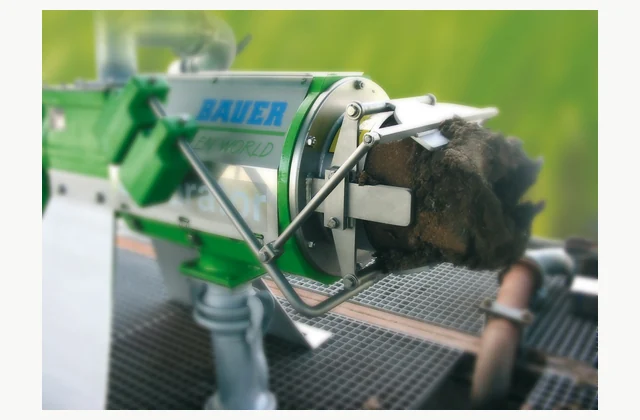
Select a farm manure separator from feed slurry properties and the intended use of the solid and liquid fractions. Match screening or pressing, feed control and storage interfaces, then test actual recovery and solids content instead of treating separator size as a performance guarantee.
Choose a farm slurry agitator from storage geometry, slurry characteristics and the required pumping or processing consistency. Match propeller or mixing arrangement, positioning and drive with the store, including qualified assessment of hazardous gases, access and maintenance.
Choose a livestock sorting gate from animal identification, sorting destinations and the barn's traffic pattern. Match gate mechanics, recognition and herd-management interfaces, then validate correct routing and safe fault recovery with the farm's approved handling procedure.
Select a manure spreader from material consistency, nutrient application objectives and the field operation. Match loading, conveying, discharge and tractor interfaces, then assess spread pattern and useful application with representative manure rather than choosing by body volume alone.
Plan a milking parlor system from herd size, animal traffic and the farm's milking and hygiene procedure. Match stalls, milk and vacuum pathways, controls and cleaning with the building, then assess the complete routine under qualified dairy and veterinary responsibility.
Choose a silage block cutter from clamp access, face geometry and the loader's capacity at the real load center. Match cutting edges, gripping and discharge with ration handling, then verify clean removal and attachment compatibility on representative silage.
Specify a straw bedding spreader from bale form, material condition and the barn's distribution layout. Match bale loading, separation, discharge and tractor services, then assess useful coverage and dust with the real bedding process rather than comparing throwing distance alone.
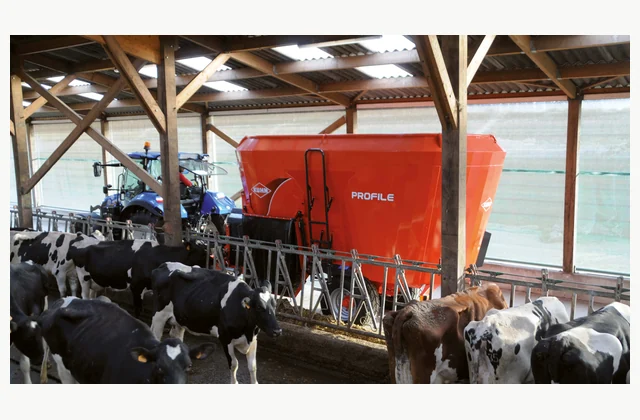
Choose a total mixed ration feeder by ration ingredients, batch size and the barn's delivery route. Assess mixing uniformity, particle handling and discharge to the feed barrier as one cycle, then match tractor services or stationary utilities to the offered configuration.
Share the application, required output, destination, utilities, quantities and planned timing. For OEM / ODM projects, include the branding, configuration or engineering changes, sample approval and acceptance requirements.
A comparable total mixed ration feeder quotation starts with ingredient forms, moisture, loading order and ration objective, minimum/maximum batch mass, bulk density, herd groups and usable fill, knife arrangement, forage particle objective and sampling method. Record the required result, site interfaces and acceptance evidence in…
A comparable straw bedding spreader quotation starts with bale form/dimensions, mass, moisture, wrapping and contamination, aisles, pen depth, gates, roof height and protected areas, loading method, chamber/separator, wrap removal and full-cycle handling. Record the required result, site interfaces and acceptance evidence in one revision-controlled RFQ.…
A comparable silage block cutter quotation starts with clamp face, access, crop, compaction and moisture conditions, block dimensions/mass, load center and receiving mixer/feeder interface, loader/coupler, hydraulic pressure/flow, connections and retained attachment. Record the required result, site interfaces and acceptance evidence in one revision-controlled RFQ. IndustryApex…