
Select a farm manure separator from feed slurry properties and the intended use of the solid and liquid fractions. Match screening or pressing, feed control and storage interfaces, then test actual recovery and solids content instead of treating separator size as a performance guarantee. Process representative slurry across the agreed solids range and measure feed, solid and liquid streams with the defined methods. Record screen, adjustment, pump and material conditions and observe overflow, cleanout and restart. Keep reuse or hygiene approval separate from a mechanical separation demonstration. Submit the intended configuration and any OEM/ODM changes for project-specific feasibility review.
Select a farm manure separator from feed slurry properties and the intended use of the solid and liquid fractions. Match screening or pressing, feed control and storage interfaces, then test actual recovery and solids content instead of treating separator size as a performance guarantee.
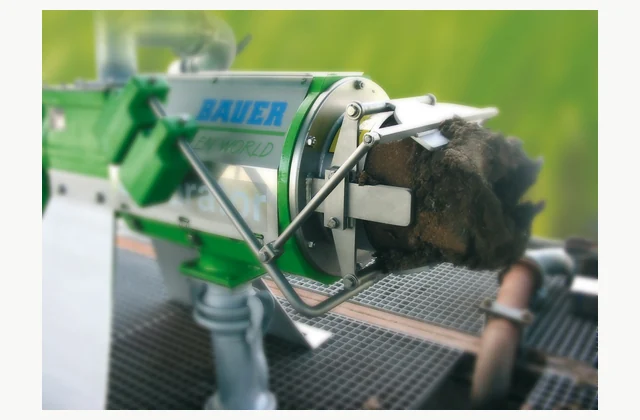
Shown as a configuration reference. Availability and the equipment offered for your project are confirmed separately.
Characterize the incoming slurry
Provide source, dry-matter content, bedding, grit, fibers and the variability expected between storage batches. Include foreign-material screening. A nominal flow capacity cannot establish performance when the farm's slurry differs in solids or fiber from the reference test, so representative sampling is essential.
Define the recovered fractions
State the intended solid handling and liquid storage or application route with the farm's nutrient and hygiene specialists. Separation is not automatically pathogen removal or complete nutrient treatment. Assess the actual fractions against their intended use rather than infer suitability from a dry-looking sample.
Match screen and pressing configuration
Compare screen opening, screw or press arrangement and adjustable discharge behavior for the feed. Different configurations trade flow, capture and solid condition. The exact offered screen and wearing parts need identification so a family photograph or body size does not obscure the real separation setup.
Control feed and overflow routes
Define feed pump, level control, agitation and how excess material returns safely. Include variations as the store is emptied. A separator without a controlled feed arrangement may flood, starve or change its output, so the full hydraulic and material route belongs in the quotation.
Measure recovery with a mass balance
Agree feed and output sampling, dry-matter testing and the measurement of flow or mass. Solid-fraction dryness alone does not establish capture efficiency. Evaluate both outputs at stable representative conditions so comparisons reflect actual material recovery rather than a selected handful of separated fiber.
Plan abrasive wear and cleaning
Grit and fibers can affect screen, screw and sealing service. Obtain inspection limits, replacement access and safe cleaning instructions for the exact unit. Manure systems can involve hazardous atmospheres and stored energy, so qualified farm procedures must govern work near tanks and isolated equipment.
Compare a complete farm manure separator scope
| Decision | Information to compare |
|---|---|
| Characterize the incoming slurry | Slurry source, dry matter, bedding/fiber, grit and variability |
| Define the recovered fractions | Solid/liquid destinations, required quality, storage and nutrient/hygiene assessment |
| Match screen and pressing configuration | Screen opening, press/screw configuration, adjustment and wear-part identification |
| Control feed and overflow routes | Feed pump/agitation, level control, overflow return and flow variation |
| Measure recovery with a mass balance | Sampling, dry-matter test, stream measurements and recovery calculation |
| Plan abrasive wear and cleaning | Screen/screw wear, seals, cleaning access and tank/service safety procedure |
Plan installation and access
Coordinate support structure, feed piping, solid discharge, drainage and liquid storage with the responsible engineers. Provide safe platforms and isolation without requiring tank entry for routine service. Confirm electrical supply, containment and the process boundary between separator equipment and the farm's nutrient-management plan.
Agree acceptance evidence before ordering
Process representative slurry across the agreed solids range and measure feed, solid and liquid streams with the defined methods. Record screen, adjustment, pump and material conditions and observe overflow, cleanout and restart. Keep reuse or hygiene approval separate from a mechanical separation demonstration.
Define OEM/ODM engineering boundaries
OEM screens, feed skids and discharge interfaces can be assessed. ODM screw, pressure, material or structural changes require engineering and slurry trials. Reference imagery does not establish stock, manufacturer agency or a universal dry-matter, nutrient or sanitation outcome.
What should your farm manure separator RFQ include?
- Slurry source, dry matter, bedding/fiber, grit and variability
- Solid/liquid destinations, required quality, storage and nutrient/hygiene assessment
- Screen opening, press/screw configuration, adjustment and wear-part identification
- Feed pump/agitation, level control, overflow return and flow variation
- Sampling, dry-matter test, stream measurements and recovery calculation
- Screen/screw wear, seals, cleaning access and tank/service safety procedure
- Destination, working environment, access and delivery constraints
- Installation responsibility, utilities and connection drawings
- Acceptance samples, documented test method, operator training and maintenance scope
- OEM/ODM changes requested: identification, tooling, interfaces or new design; engineering feasibility to be confirmed
Need OEM / ODM customization?
Submit branding, packaging, configuration or engineering requirements for this equipment. Include the target market, initial and annual quantities, required changes and acceptance criteria.
Customization feasibility, permitted branding, development responsibilities, minimum quantity, cost and lead time are reviewed for the proposed supplier and configuration before a quotation is confirmed.
Frequently asked questions
How do I characterize the incoming slurry?
Provide source, dry-matter content, bedding, grit, fibers and the variability expected between storage batches. Include foreign-material screening. A nominal flow capacity cannot establish performance when the farm's slurry differs in solids or fiber from the reference test, so representative sampling is essential.
How do I define the recovered fractions?
State the intended solid handling and liquid storage or application route with the farm's nutrient and hygiene specialists. Separation is not automatically pathogen removal or complete nutrient treatment. Assess the actual fractions against their intended use rather than infer suitability from a dry-looking sample.
How do I match screen and pressing configuration?
Compare screen opening, screw or press arrangement and adjustable discharge behavior for the feed. Different configurations trade flow, capture and solid condition. The exact offered screen and wearing parts need identification so a family photograph or body size does not obscure the real separation setup.
How do I control feed and overflow routes?
Define feed pump, level control, agitation and how excess material returns safely. Include variations as the store is emptied. A separator without a controlled feed arrangement may flood, starve or change its output, so the full hydraulic and material route belongs in the quotation.
How do I measure recovery with a mass balance?
Agree feed and output sampling, dry-matter testing and the measurement of flow or mass. Solid-fraction dryness alone does not establish capture efficiency. Evaluate both outputs at stable representative conditions so comparisons reflect actual material recovery rather than a selected handful of separated fiber.
How do I plan abrasive wear and cleaning?
Grit and fibers can affect screen, screw and sealing service. Obtain inspection limits, replacement access and safe cleaning instructions for the exact unit. Manure systems can involve hazardous atmospheres and stored energy, so qualified farm procedures must govern work near tanks and isolated equipment.
Reference information
- BAUER S655/S855 official product reference
- BAUER farm manure separator official family or technical reference
Reference data and images explain equipment configurations. IndustryApex engineers confirm the offered model, specification and commercial scope in your project quotation.