
A pasta extrusion line mixes and conditions food dough before forcing it through a shaped die. Raw material, vacuum conditions where used, die construction and downstream drying all influence the final cooked texture and shape. A well-shaped fresh extrudate does not establish dried pasta quality; the thermal route and cooked-product assessment are part of acceptance. Check shape stability, dimensional variation, drying defects and cooking behavior with production ingredients; keep die and conditioning settings linked to results. OEM/ODM requests are assessed against the intended application, site interfaces and documented acceptance evidence; the reference photograph identifies a product family and does not confirm supply availability or an authorized brand relationship.
A pasta extrusion line mixes and conditions food dough before forcing it through a shaped die. Raw material, vacuum conditions where used, die construction and downstream drying all influence the final cooked texture and shape.
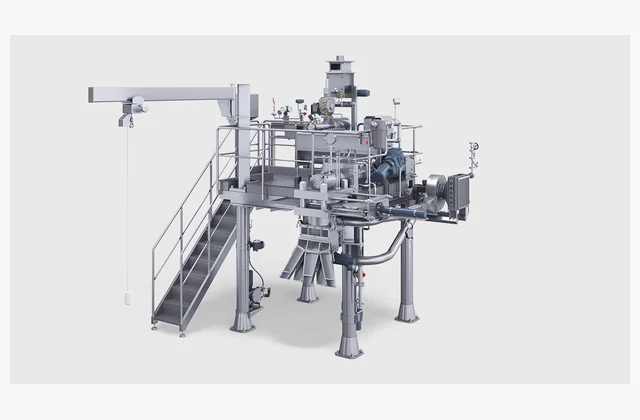
Shown as a configuration reference. Availability and the equipment offered for your project are confirmed separately.
What task does the pasta extrusion line need to perform?
A pasta extrusion line mixes and conditions food dough before forcing it through a shaped die. Raw material, vacuum conditions where used, die construction and downstream drying all influence the final cooked texture and shape.
A well-shaped fresh extrudate does not establish dried pasta quality; the thermal route and cooked-product assessment are part of acceptance.
How should recipe and conditioning be specified?
Specify flour or semolina properties, hydration, additions and product type. Gluten-free mixtures require their own trials rather than assumptions derived from durum pasta.
State the required outcome and the operating cases that matter most to the project. Ask for written configuration limits and test conditions so alternative proposals can be compared without assuming that a shared product name means equivalent capability.
Which configuration choices affect die and drying interface?
Define cross-section, wall thickness, surface and cutting. Extrusion pressure and temperature must be coordinated with spreading, predrying and drying to avoid deformation or cracking.
| Decision | Evidence to compare | What the offer should clarify |
|---|---|---|
| Recipe and conditioning | Specify flour or semolina properties, hydration, additions and product type. Gluten-free mixtures require their own trials rather than assumptions derived from durum pasta. | Included tools, input limits and the configuration needed for the stated duty. |
| Die and drying interface | Define cross-section, wall thickness, surface and cutting. Extrusion pressure and temperature must be coordinated with spreading, predrying and drying to avoid deformation or cracking. | Supporting services, process interfaces and any excluded development work. |
| Application acceptance | Check shape stability, dimensional variation, drying defects and cooking behavior with production ingredients; keep die and conditioning settings linked to results. | Test method, inspection records, responsibility and treatment of deviations. |
What should be prepared before installation?
Provide ingredient handling, hygienic water, vacuum services where applicable, drying utilities and the full product-transfer layout.
Resolve supporting services and access early enough to affect the design. Keep a responsibility matrix with the layout so auxiliary equipment, local preparations and commissioning checks have clear owners before shipment.
What evidence should establish application acceptance?
Check shape stability, dimensional variation, drying defects and cooking behavior with production ingredients; keep die and conditioning settings linked to results.
Retain the accepted configuration and a signed results record. If tools, inputs or controls change after the trial, review the affected evidence rather than assuming that the earlier result automatically covers the revised scope.
How should service and repeatability be planned?
Review screw, barrel, seals, dies and cutting wear; specify die washing and storage procedures to protect consistent shaping.
Review support in the destination market, including documentation language, service access and critical spare availability. Record warranty terms separately from ordinary consumables and the maintenance actions needed to preserve the accepted condition.
What can be customized through OEM or ODM?
Dies, feeding, recipe controls and drying interfaces can be reviewed; new formulations require development trials and validated process limits.
Submit the requested changes with the pasta extrusion line application, drawings and acceptance requirements. Distinguish standard options from new engineering and agree design ownership, validation, documentation and spare-part support before release. The illustrated manufacturer example is a technical reference; it does not establish stock, agency or permission to reproduce protected designs.
How should the quotation boundary be recorded?
Use the pasta extrusion line inquiry to list base equipment, tooling, auxiliary services, commissioning and training separately. Record unresolved assumptions about recipe and conditioning and die and drying interface before comparing prices. Keep the final configuration and accepted evidence together so later changes can be reviewed against a clear scope.
What should your pasta extrusion line RFQ include?
- Pasta extrusion line application and required finished result
- Recipe and conditioning: Specify flour or semolina properties, hydration, additions and product type. Gluten-free mixtures require their own trials rather than assumptions derived from durum pasta.
- Die and drying interface: Define cross-section, wall thickness, surface and cutting. Extrusion pressure and temperature must be coordinated with spreading, predrying and drying to avoid deformation or cracking.
- Representative input variation and difficult operating conditions
- Application risks and exclusions: A well-shaped fresh extrudate does not establish dried pasta quality; the thermal route and cooked-product assessment are part of acceptance.
- Site and supporting services: Provide ingredient handling, hygienic water, vacuum services where applicable, drying utilities and the full product-transfer layout.
- Acceptance method and retained evidence: Check shape stability, dimensional variation, drying defects and cooking behavior with production ingredients; keep die and conditioning settings linked to results.
- Maintenance and support scope: Review screw, barrel, seals, dies and cutting wear; specify die washing and storage procedures to protect consistent shaping.
- OEM/ODM changes requested: Dies, feeding, recipe controls and drying interfaces can be reviewed; new formulations require development trials and validated process limits.
- Destination, local installation conditions and documentation language
- Drawings, samples, tooling ownership and revision control
- Operating sequence, changeovers, training and commissioning responsibilities
Need OEM / ODM customization?
Submit branding, packaging, configuration or engineering requirements for this equipment. Include the target market, initial and annual quantities, required changes and acceptance criteria.
Customization feasibility, permitted branding, development responsibilities, minimum quantity, cost and lead time are reviewed for the proposed supplier and configuration before a quotation is confirmed.
Frequently asked questions
What defines a suitable application for pasta extrusion line?
A pasta extrusion line mixes and conditions food dough before forcing it through a shaped die. Raw material, vacuum conditions where used, die construction and downstream drying all influence the final cooked texture and shape. A well-shaped fresh extrudate does not establish dried pasta quality; the thermal route and cooked-product assessment are part of acceptance.
What should the buyer specify about recipe and conditioning?
Specify flour or semolina properties, hydration, additions and product type. Gluten-free mixtures require their own trials rather than assumptions derived from durum pasta. Include representative variation and ask the bidder to identify restrictions before selecting the offered configuration.
How should die and drying interface be compared?
Define cross-section, wall thickness, surface and cutting. Extrusion pressure and temperature must be coordinated with spreading, predrying and drying to avoid deformation or cracking. Confirm which tools, supporting services and operating conditions are included; require evidence for the actual application rather than an unloaded demonstration.
What acceptance test should be agreed for pasta extrusion line?
Check shape stability, dimensional variation, drying defects and cooking behavior with production ingredients; keep die and conditioning settings linked to results. Agree the method, records and decision criteria before ordering, then retain the setup and results for repeatability checks after installation.
Which installation and service provisions need confirmation?
Provide ingredient handling, hygienic water, vacuum services where applicable, drying utilities and the full product-transfer layout. Review screw, barrel, seals, dies and cutting wear; specify die washing and storage procedures to protect consistent shaping. Allocate local preparations and specialist service to named parties before delivery.
Can the pasta extrusion line be customized through OEM or ODM?
Dies, feeding, recipe controls and drying interfaces can be reviewed; new formulations require development trials and validated process limits. Submit the requested changes and drawings for feasibility review. New engineering requires agreed validation and documentation; the reference image does not establish a supply or brand relationship.
Reference information
- GEA xTru Former - Continuous automatic press
- Sheet Preparation Machines | Fresh Pasta
Reference data and images explain equipment configurations. IndustryApex engineers confirm the offered model, specification and commercial scope in your project quotation.