
Select an electric linear actuator by the complete force, speed, stroke and duty profile. Match mounting, guidance, motor and controller to the machine, then verify thermal behavior, stopping and repeatable movement under the real load rather than comparing thrust alone. Run the actual duty profile with representative loads, measuring position at the agreed workpiece point. Observe temperature, settling and repeatability through a realistic operating period. Verify homing, limit responses and the approved stop/recovery sequence, recording the complete drive and mechanical configuration rather than the actuator label alone. Submit the intended configuration and any OEM/ODM changes for project-specific feasibility review.
Select an electric linear actuator by the complete force, speed, stroke and duty profile. Match mounting, guidance, motor and controller to the machine, then verify thermal behavior, stopping and repeatable movement under the real load rather than comparing thrust alone.
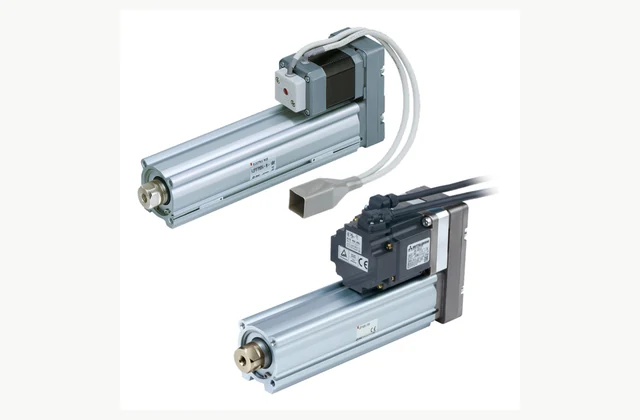
Shown as a configuration reference. Availability and the equipment offered for your project are confirmed separately.
Describe the entire motion profile
Provide every stroke segment, acceleration, dwell and cycle frequency with the load direction. Peak push force and continuous duty are different requirements. The engineer needs the time history to assess the motor, transmission and heat load instead of sizing from one maximum-force figure.
Separate axial force from side loading
A rod-style actuator is not automatically a suitable linear guide. Include overhung masses, side forces and mounting misalignment in the review. Specify external guidance or an appropriate guided arrangement where needed so the rod and screw are not used to resist unintended bending.
Match transmission to positioning needs
Screw choice, lead, guide stiffness and control settings affect speed, resolution and load behavior. State required positioning tolerance at the workpiece and how it will be measured. Encoder increments or a catalog repeatability value do not establish accuracy in the assembled mechanism.
Plan vertical and power-off loads
Vertical movement may need a specific holding brake or other risk-assessed support. Determine the state during power loss, emergency stop and maintenance. A motor's commanded hold cannot replace a documented mechanical and control strategy for preventing unintended movement of a suspended load.
Define controller and machine interfaces
Itemize actuator, motor, drive, cables and configuration tools. Confirm supply, command protocol, homing method and limit monitoring with the host control system. A motorless mechanical axis and a ready-to-run controlled actuator are different quotation scopes requiring different integration responsibilities.
Assess environment and maintenance access
Dust, chips, washdown and temperature can change seal, lubrication and protection requirements. Confirm access to service points through the full stroke. Ask for model-specific replacement and re-homing procedures so a motor or screw repair can restore the accepted machine reference.
Compare a complete electric linear actuator scope
| Decision | Information to compare |
|---|---|
| Describe the entire motion profile | Stroke segments, speed, acceleration, dwell, cycles and force-time profile |
| Separate axial force from side loading | Axial force, side load, moments, external guidance and alignment |
| Match transmission to positioning needs | Workpiece positioning tolerance, measurement point, screw/lead and stiffness |
| Plan vertical and power-off loads | Orientation, suspended load, brake/support and power-off behavior |
| Define controller and machine interfaces | Drive/controller, supply, protocol, homing, limits and supplied cables |
| Assess environment and maintenance access | Contamination, temperature, protective covers, lubrication and re-homing method |
Plan installation and access
Check mounting stiffness, rod-end articulation and alignment before commissioning. Provide safe travel clearances, cable support and accessible disconnects. Locate end limits and stops as required by the engineered design, and prevent commissioning moves from loading an unaligned machine fixture.
Agree acceptance evidence before ordering
Run the actual duty profile with representative loads, measuring position at the agreed workpiece point. Observe temperature, settling and repeatability through a realistic operating period. Verify homing, limit responses and the approved stop/recovery sequence, recording the complete drive and mechanical configuration rather than the actuator label alone.
Define OEM/ODM engineering boundaries
OEM brackets, stroke options and controller integration can be assessed within the maker's permitted scope. ODM screw, housing, motor or retention changes require engineering and endurance evidence. A reference photo does not authorize copying or transfer the original family's performance to a customized actuator.
What should your electric linear actuator RFQ include?
- Stroke segments, speed, acceleration, dwell, cycles and force-time profile
- Axial force, side load, moments, external guidance and alignment
- Workpiece positioning tolerance, measurement point, screw/lead and stiffness
- Orientation, suspended load, brake/support and power-off behavior
- Drive/controller, supply, protocol, homing, limits and supplied cables
- Contamination, temperature, protective covers, lubrication and re-homing method
- Destination, working environment, access and delivery constraints
- Installation responsibility, utilities and connection drawings
- Acceptance samples, documented test method, operator training and maintenance scope
- OEM/ODM changes requested: identification, tooling, interfaces or new design; engineering feasibility to be confirmed
Need OEM / ODM customization?
Submit branding, packaging, configuration or engineering requirements for this equipment. Include the target market, initial and annual quantities, required changes and acceptance criteria.
Customization feasibility, permitted branding, development responsibilities, minimum quantity, cost and lead time are reviewed for the proposed supplier and configuration before a quotation is confirmed.
Frequently asked questions
How do I describe the entire motion profile?
Provide every stroke segment, acceleration, dwell and cycle frequency with the load direction. Peak push force and continuous duty are different requirements. The engineer needs the time history to assess the motor, transmission and heat load instead of sizing from one maximum-force figure.
How do I separate axial force from side loading?
A rod-style actuator is not automatically a suitable linear guide. Include overhung masses, side forces and mounting misalignment in the review. Specify external guidance or an appropriate guided arrangement where needed so the rod and screw are not used to resist unintended bending.
How do I match transmission to positioning needs?
Screw choice, lead, guide stiffness and control settings affect speed, resolution and load behavior. State required positioning tolerance at the workpiece and how it will be measured. Encoder increments or a catalog repeatability value do not establish accuracy in the assembled mechanism.
How do I plan vertical and power-off loads?
Vertical movement may need a specific holding brake or other risk-assessed support. Determine the state during power loss, emergency stop and maintenance. A motor's commanded hold cannot replace a documented mechanical and control strategy for preventing unintended movement of a suspended load.
How do I define controller and machine interfaces?
Itemize actuator, motor, drive, cables and configuration tools. Confirm supply, command protocol, homing method and limit monitoring with the host control system. A motorless mechanical axis and a ready-to-run controlled actuator are different quotation scopes requiring different integration responsibilities.
How do I assess environment and maintenance access?
Dust, chips, washdown and temperature can change seal, lubrication and protection requirements. Confirm access to service points through the full stroke. Ask for model-specific replacement and re-homing procedures so a motor or screw repair can restore the accepted machine reference.
Reference information
- SMC LEY official product reference
- SMC electric linear actuator official family or technical reference
Reference data and images explain equipment configurations. IndustryApex engineers confirm the offered model, specification and commercial scope in your project quotation.