
Control a thermal process with a controller selected for the sensor, output interface and application dynamics. Compare input compatibility, control functions and alarm requirements, then define panel installation and verification without treating the controller as the complete heater or protective system. Prioritize process, input, output. Use the checkpoints to build a consistent equipment scope and confirm the intended trial or installation evidence. The official image is a product reference; it does not establish availability or an authorized supplier relationship. Submit OEM/ODM changes for application-specific feasibility review.
Control a thermal process with a controller selected for the sensor, output interface and application dynamics. Compare input compatibility, control functions and alarm requirements, then define panel installation and verification without treating the controller as the complete heater or protective system.
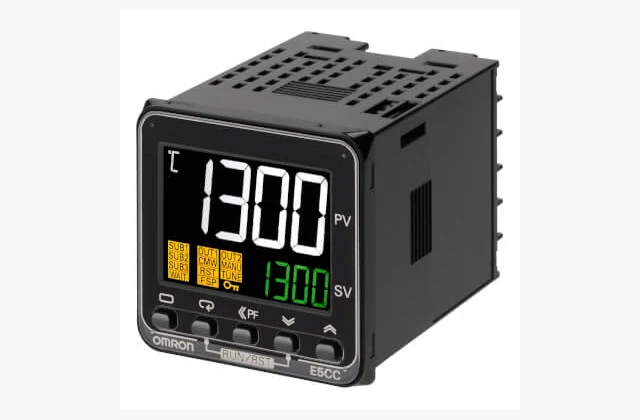
Shown as a configuration reference. Availability and the equipment offered for your project are confirmed separately.
Define the thermal process and control task
A temperature controller compares a measured temperature with a target and drives an appropriate control output. Describe the process, sensor location, operating range and the consequence of temperature deviation. Heating, cooling and combined duties need different arrangements. The controller cannot compensate for every poor sensor location or unsuitable heater. A useful inquiry connects the instrument to the actual process and actuator rather than asks for a generic PID device with a familiar display.
Match the sensor and measurement input
Identify the exact thermocouple, resistance thermometer or other supported signal and its wiring. Input type, configured range and compensation requirements need to suit the sensor and installation. A family offering universal inputs may still have model or configuration differences. The OMRON E5CC reference is a panel-controller family; select the exact variant using its model information. Similar terminal counts do not establish that another version accepts the same measurement or connection arrangement.
Select an output for the actuator interface
Relay, voltage-pulse and current outputs serve different actuator arrangements and must not be treated as equivalent power connections. Identify the heater-control device, contactor, SSR or other equipment and the interface it requires. Confirm output ratings and the complete switching design with the responsible engineer. A control signal for an SSR is not the same as supplying heater power. Itemize external switching equipment so the instrument price is not mistaken for a complete control package.
| Selection issue | Information to specify |
|---|---|
| Process | Thermal duty, range, sensor location and required response. |
| Input | Exact sensor or signal and connection arrangement. |
| Output | Actuator interface and external power-switching equipment. |
| Functions | Setpoints, communications, tuning and recipe scope. |
| Protection | Alarm and protective-system requirements defined by the engineer. |
| Verification | Installed measurement, regulation and alarm test records. |
Define control and recipe behavior
State setpoint needs, heating and cooling behavior and any required operating sequence. Discuss how tuning and process dynamics will be evaluated on the actual equipment. An automatic-tuning feature does not establish satisfactory performance for every thermal system without validation. If remote settings or communications are required, identify protocols, data and the exact option. A control-panel display alone does not prove that recipe management or plant-network integration is included.
Separate alarms and protective functions
Define process alarms and how operators or the wider control system respond. Overtemperature or other protective functions need an appropriate system design, including independence where the risk assessment requires it. Do not infer a complete protective function from the presence of an alarm contact. The responsible engineer should specify the actuator response, sensor-failure handling and restart conditions. Keep those requirements distinct from ordinary regulation when comparing the supplied controller and accessories.
Check panel installation and commissioning
Provide cut-out, panel thickness, rear space, supply and the cabinet environment. Check the installed protection conditions and access to terminals. Acceptance should verify sensor indication, output interface, control response and required alarms using an appropriate controlled procedure. Retain wiring, model suffix, configuration and relevant test records. A stable number on the display does not establish the accuracy or behavior of the entire sensor-controller-actuator chain under the intended process conditions.
Scope OEM/ODM around traceable controls
Labels, presets, connectors and panel integration can be reviewed. Changes to measurement electronics, firmware, outputs or protection-related behavior require engineering and validation. Provide the sensor, process and actuator schedule with the brief. A customized assembly should preserve component identity and configuration records. Reference photographs do not confer private-label authorization or allow a modified design to inherit another manufacturer’s performance evidence; acceptance must address the final installed control chain.
What should your electronic temperature controller RFQ include?
- Process: Thermal duty, range, sensor location and required response.
- Input: Exact sensor or signal and connection arrangement.
- Output: Actuator interface and external power-switching equipment.
- Functions: Setpoints, communications, tuning and recipe scope.
- Protection: Alarm and protective-system requirements defined by the engineer.
- Verification: Installed measurement, regulation and alarm test records.
- Destination, site conditions and delivery access
- Installation boundary, utilities and connection drawings
- Acceptance procedure, documentation and training scope
- OEM/ODM changes: interface, material, branding or new design; written engineering feasibility required
Need OEM / ODM customization?
Submit branding, packaging, configuration or engineering requirements for this equipment. Include the target market, initial and annual quantities, required changes and acceptance criteria.
Customization feasibility, permitted branding, development responsibilities, minimum quantity, cost and lead time are reviewed for the proposed supplier and configuration before a quotation is confirmed.
Frequently asked questions
Can any thermocouple or RTD connect to a controller?
The exact sensor type, wiring and supported input configuration must match. Provide the sensor specification and required range and select the correct controller variant. A family-level universal-input description or similar terminal arrangement does not establish compatibility with every temperature sensor or connection method.
Is an SSR-drive output a heater power output?
No assumption of direct heater power should be made. Identify the external switching device and required control interface and have the complete design checked. Relay, pulse and current outputs serve different arrangements, so controller output selection must follow the actuator rather than the display size.
Does automatic tuning eliminate commissioning?
No. Control behavior must be assessed on the actual process, sensor and actuator arrangement. Define the required response and operating conditions and validate settings through an appropriate procedure. A tuning feature cannot establish satisfactory results for every thermal system without application-specific evidence.
Does an alarm contact provide complete overtemperature protection?
Not by itself. A protective function depends on the system design and risk requirements, including sensor and actuator behavior. Have the responsible engineer define the required arrangement and assess it separately from normal temperature regulation rather than infer protection from an available alarm output.
What should temperature-controller acceptance verify?
Check measurement indication, configured input, actuator interface, control response and required alarms through an appropriate controlled test. Retain model, wiring and settings. A plausible display value alone does not demonstrate the complete sensor-controller-actuator chain or its behavior under the actual operating conditions.
Can controllers be customized for OEM panels?
Presets, labels, connections and panel integration may be reviewed. Measurement, output or firmware changes require validation and support commitments. Provide sensor and actuator schedules and retain exact component and configuration identity so a customized panel remains reproducible and distinguishable from an unmodified reference instrument.
Reference information
- OMRON E5CC family official product reference
- OMRON E5CC family official technical or family reference
Reference data and images explain equipment configurations. IndustryApex engineers confirm the offered model, specification and commercial scope in your project quotation.