
A plastic blow molding machine should be chosen for the hollow product and material, with the molding method fixed early. Extrusion blow molding and preform-based stretch blow molding use different feedstock and tooling routes; they should not be combined into one generic machine promise. Provide part drawings, volume, target mass, neck finish and functional requirements. Bottles, jerrycans and open-top drums can demand different control and handling arrangements. Identify recycled content and the intended resin grade for trials.
Separate hollow-product processes before selection
A plastic blow molding machine should be chosen for the hollow product and material, with the molding method fixed early. Extrusion blow molding and preform-based stretch blow molding use different feedstock and tooling routes; they should not be combined into one generic machine promise. Provide part drawings, volume, target mass, neck finish and functional requirements. Bottles, jerrycans and open-top drums can demand different control and handling arrangements. Identify recycled content and the intended resin grade for trials. Compare good finished parts rather than mold movements, because trimming, cooling and product tests can govern usable output.
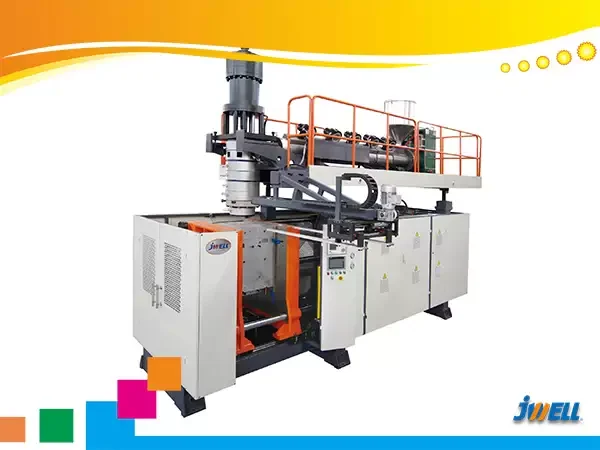
Shown as a configuration reference. Availability and the equipment offered for your project are confirmed separately.
Review mold fit and wall distribution
Ask the machine supplier and tool designer to match cavity count, clamp arrangement, mold dimensions and cooling to the part. For extrusion blow molding, define the parison and wall-distribution requirements and any multilayer structure as a reviewed process scope. Reinforced corners, handles and neck areas should be checked on product samples rather than inferred from average part weight. Record change parts and the range of approved volumes. A machine advertised for a nominal container volume may not handle every geometry within it. Require tooling drawings, material assumptions and a plan to test the difficult sections of the actual hollow product.
Coordinate air, cooling and finishing
Define compressed-air quality and demand at the proposed molding process, along with cooling-water conditions and heat-removal needs. Include material feeding, trimming, scrap collection, leak testing and discharge in the cell layout. Reserve access for tool changes and handling large finished parts. Establish the control sequence for downstream stations so a stopped trimmer or tester does not create uncontrolled accumulation. State the electrical supply and any extraction requirements for the actual resin and process. A standalone molding-machine outline cannot establish the floor space or utilities for a complete hollow-product manufacturing cell.
Budget tooling, accepted yield and downstream operations
Include the machine, molds, auxiliaries, trimming, handling, testing and controls in each quote. Ask whether new neck finishes or part sizes require additional heads, pins, tooling or transfer fixtures. Budget commissioning resin, rejected parts, training and replacement wear components. Compare cost per accepted part with the agreed material mass and quality criteria, and make assumptions for scrap recovery explicit. Include local technical support and tool maintenance. A higher cycle rate can offer little value if wall distribution or finishing rejects rise, so machine price and nominal output should remain only parts of the commercial comparison.
Test the part’s function, not just its appearance
Acceptance should use approved resin and tooling and verify mass, dimensions, wall distribution and the agreed functional checks. Leak, top-load, drop or other tests should be defined for the intended container rather than claimed universally. Record sustained accepted output, trimming quality and scrap handling over a representative run. Include startup, restart and an important format change. Inspect the neck and hard-to-fill geometry as well as the broad walls. Retain samples with process settings and material identifiers. A successful mold opening or a visually attractive bottle does not establish performance of a new drum or asymmetric hollow part.
Make custom tooling and product changes controlled
Send CAD files, resin information, product tests and production targets with the RFQ. OEM requirements can cover branding, documentation and supported user languages. ODM work may include hollow-product development, custom molds, wall-distribution control and finishing integration, with design and sample-approval milestones. Agree ownership of the molds and process recipes and who approves changes to resin or recycled content. The manufacturer’s family shown is an engineering reference; the final offer must identify the exact process, tool and auxiliaries needed to produce your accepted hollow part.
Manufacturer configuration references
Review the linked manufacturer information as configuration references. Request the current sheet, included scope and relevant evidence for the exact proposed equipment; these references do not establish an IndustryApex supply relationship.
What should you include in your RFQ?
- Part drawings volume and mass
- Resin grade color and recycled content
- Neck finish and wall distribution
- Mold dimensions mass and cavity count
- Extrusion blow or preform process
- Layer structure and parison control
- Trimming leak testing and handling
- Accepted parts per shift
- Air quality pressure and consumption
- Cooling power extraction and floor layout
- Tool ownership wear parts and local service
- OEM product design and acceptance scope
For OEM / ODM requests, include the branding, packaging, configuration or engineering changes you need, initial and annual quantities, target market, sample approval and acceptance requirements. Feasibility and commercial scope are confirmed for the specific project.
Need OEM / ODM customization?
Submit branding, packaging, configuration or engineering requirements for this equipment. Include the target market, initial and annual quantities, required changes and acceptance criteria.
Customization feasibility, permitted branding, development responsibilities, minimum quantity, cost and lead time are reviewed for the proposed supplier and configuration before a quotation is confirmed.
Frequently asked questions
What determines the appropriate blow-molding process?
The hollow part, resin and feedstock route determine the process. Confirm extrusion blow molding or preform-based stretch blow molding before selection, then define volume, geometry, neck finish, material mass and required functional tests for accepted parts.
How should wall thickness and tooling be specified?
Provide cavity layout, mold dimensions, cooling, neck geometry and required wall distribution, including handles and difficult corners. For extrusion blow molding, review parison control and layers with the tool designer and verify distribution on trial parts.
What equipment is needed beyond the molding machine?
Include material feed, appropriate compressed air, cooling, trimming, scrap handling, leak testing and discharge. Coordinate controls and stopped-station behavior, and reserve mold-changing and product-handling space with utility responsibilities assigned to the actual cell.
How do I compare complete blow-molding costs?
Compare machine, molds, heads or change parts, auxiliaries, finishing, testing and commissioning together. Model resin mass, accepted yield, cycle and labor using the trial, and include local tool maintenance, spares and utility installation.
Which product tests belong in acceptance?
Define mass, dimensions, wall distribution and relevant leak, drop, top-load or other product tests before acceptance. Run approved resin and tools with trimming and discharge, recording good output, startup and restart rather than only molded appearance.
Can blow molding support custom hollow-product designs?
Yes. ODM requests can cover part development, custom molds, layers, wall control and finishing, with OEM branding and languages specified separately. Agree tool/recipe ownership and validate the exact hollow part and resin before confirming production commitments.
Reference information
- JWELL: 100L open-top barrel extrusion blow molding family
Reference data and images explain equipment configurations. IndustryApex engineers confirm the offered model, specification and commercial scope in your project quotation.