
A plastic granulator cuts approved scrap into a controlled regrind for a defined downstream process. It differs from a shredder often used for initial reduction of bulky material, and it should not be confused with melt pelletizing. List resin grade, color, additives and where scrap comes from so incompatible materials are not silently mixed. Sprues, thick rejected parts and hollow containers can have different feed and cutting requirements. Specify the required particle distribution, fines and cleanliness rather than just maximum throughput.
Define regrind quality and source segregation
A plastic granulator cuts approved scrap into a controlled regrind for a defined downstream process. It differs from a shredder often used for initial reduction of bulky material, and it should not be confused with melt pelletizing. List resin grade, color, additives and where scrap comes from so incompatible materials are not silently mixed. Sprues, thick rejected parts and hollow containers can have different feed and cutting requirements. Specify the required particle distribution, fines and cleanliness rather than just maximum throughput. A usable regrind needs to meet the downstream molding or extrusion process’s acceptance conditions, including contamination control.
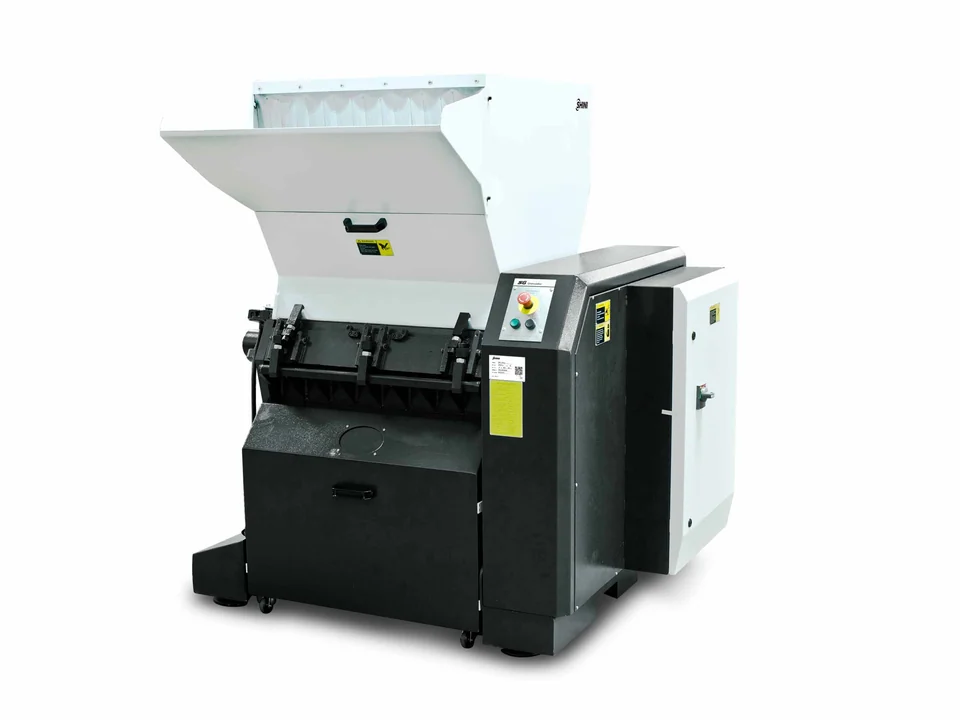
Shown as a configuration reference. Availability and the equipment offered for your project are confirmed separately.
Match cutting geometry, screen and feed
Provide the largest piece dimensions, wall thickness and material toughness for the proposed cutting-chamber review. Ask which rotor and blade arrangement suits that feed and how screen openings affect particle size and throughput. Smaller screens can change residence time, fines and heating, so require a representative trial. Define manual, conveyor or automated feed and include control of oversized pieces. Request accessible blade adjustment and replacement arrangements. A larger motor is not proof of useful output if the chamber repeatedly bridges or the resulting regrind contains too many fines for the intended material-handling equipment.
Coordinate collection, dust control and cleanout
Show scrap presentation, discharge, collection and any pneumatic conveying to a storage bin or process hopper. Define level alarms and stopping behavior so a full receiver does not create a blockage. Review dust extraction, noise and site controls with the responsible installation team. Cleaning and resin/color changeovers require access to the cutting chamber, screens and collection path under the manufacturer’s safe procedure. State electrical supply and reserve space for removing blades and screens. The surrounding handling system should preserve material identity; an efficient cutter cannot correct regrind mixed with another polymer during collection or storage.
Compare wear and usable material cost
Include the granulator, feeding, receiver, extraction, controls and any conveying equipment in the quotation. Ask for blade life assumptions tied to the actual scrap and contamination, not a universal operating-hours guarantee. Budget knife sharpening, replacement screens, bearings and local service. Assess cleaning time and cross-color losses at the actual production mix. Compare accepted regrind output with fines, noise and power measured during trials. Freight, installation and training should be included in the project total. The cheapest cutting machine can be expensive if its output needs further processing or its maintenance access interrupts surrounding production.
Trial representative scrap and retain the fractions
Acceptance should run the defined resin and scrap shapes and measure accepted regrind, oversize, fines and contamination using agreed sampling. Record sustained throughput, blockages, cleaning effort and material heating where it affects reuse. Include a feed interruption and the expected resin or color change under the approved service procedure. Verify receiving and level-control behavior, and inspect blade/screen identifiers against the offer. Retain input and output samples. Processing easy thin sprues proves only one feed condition; thick or tough rejected parts need their own evidence before a combined throughput commitment is accepted.
Specify application-specific OEM and ODM changes
Attach scrap photographs, dimensions, resin information and downstream regrind criteria to the inquiry. OEM requests may include branding, document languages and control labels. ODM work can involve special hoppers, rotor arrangements, automated scrap transfer or collection systems and should be reviewed through drawings and trials. Agree ownership of wear-part specifications and access to local blade service. Define material changes that require new tests. The manufacturer family shown illustrates granulation equipment; the actual offered cutter and collection arrangement must be assessed against your scrap and accepted regrind specification.
Manufacturer configuration references
Review the linked manufacturer information as configuration references. Request the current sheet, included scope and relevant evidence for the exact proposed equipment; these references do not establish an IndustryApex supply relationship.
What should you include in your RFQ?
- Resin grade and mixed-material risk
- Sprues rejected parts or hollow scrap
- Largest feed dimensions and thickness
- Regrind size and downstream use
- Cleanliness metals and other contamination
- Required sustained accepted throughput
- Rotor blades screen and feeding method
- Dust extraction collection and noise
- Cleaning and resin color change frequency
- Power floor access and safety interfaces
- Knife service screens and local spares
- OEM installation and acceptance plan
For OEM / ODM requests, include the branding, packaging, configuration or engineering changes you need, initial and annual quantities, target market, sample approval and acceptance requirements. Feasibility and commercial scope are confirmed for the specific project.
Need OEM / ODM customization?
Submit branding, packaging, configuration or engineering requirements for this equipment. Include the target market, initial and annual quantities, required changes and acceptance criteria.
Customization feasibility, permitted branding, development responsibilities, minimum quantity, cost and lead time are reviewed for the proposed supplier and configuration before a quotation is confirmed.
Frequently asked questions
How is a granulator different from a shredder?
A granulator cuts approved scrap into regrind, often after bulky material is reduced by a shredder. It is distinct from melt pelletizing. Specify the downstream particle and cleanliness requirements before deciding whether one or two reduction stages are needed.
Which scrap and screen data should be specified?
Provide resin, thickness, largest dimensions, toughness, contamination and required particle distribution. Review rotor, blades and screen with samples; smaller openings can change throughput, fines and heat, so motor size alone is insufficient evidence.
What feeding and dust interfaces need review?
Define manual or conveyor feed, collection, level control, dust extraction and any pneumatic transfer. Reserve safe blade/screen access and cleanout space, keeping resin identity through storage so the collection system does not mix otherwise usable regrind.
What affects the lifetime cost of granulation?
Consider blades, sharpening, screens, energy, cleaning and downtime alongside the machine and handling equipment. Compare accepted regrind, fines and resin/color losses from trials and identify local wear-part service and the full installed collection/extraction scope.
How do I test useful regrind output?
Run representative scrap shapes and measure accepted particle fractions, fines, oversize and contamination. Record sustained output, interruptions and heating where relevant, then test collection and cleanout. Retain resin and blade/screen identities with input and output samples.
Can the granulator be adapted to my production scrap?
Yes. Special hoppers, rotors, automated feeding, collection and OEM presentation can be requested. Confirm feasibility with scrap samples and downstream regrind criteria, and agree wear-part access and which later resin or scrap changes require retesting.
Reference information
- SHINI: SG-23E/30E/36E standard granulator family
- SHINI: Granulating and recycling parts
Reference data and images explain equipment configurations. IndustryApex engineers confirm the offered model, specification and commercial scope in your project quotation.