
Choose a granule packaging machine using actual product size, flow, density variation, breakage limits and pack weights. Compare the proposed dosing and bagging system on a full acceptance run. A generic multihead or volumetric label cannot establish performance for rice, beans, pellets or blends.
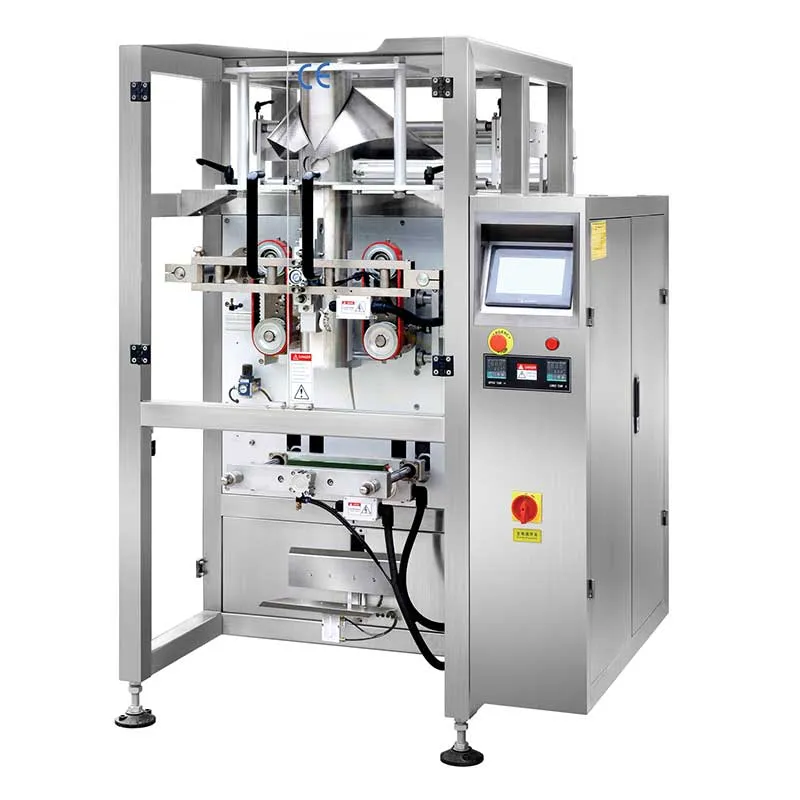
Shown as a configuration reference. Availability and the equipment offered for your project are confirmed separately.
Start with the production requirement
Rice, beans, seeds and pellets should be specified as different products, with representative batches and their handling constraints. Describe coatings, dust, abrasion, moisture and whether product breakage or blend separation matters. Include minimum and maximum pack weights and package dimensions. Compare the feeder, doser, transfer and bagger as one proposed system rather than selecting a weighing head in isolation.
Download equipment RFQ checklist ↗ · Discuss this application on WhatsApp ↗
Shown as a configuration reference. Availability and the equipment offered for your project are confirmed separately.
Compare the application details
| Decision | Specify | Evidence to request |
|---|---|---|
| Product | Piece size, density, flow, blend and coatings | Samples covering the actual production range |
| Handling | Breakage limits, drop height and transfer behavior | Run with the proposed feeder and discharge |
| Dosing | Weight range, individual limits and average giveaway | Weight distribution under defined conditions |
| Bagging | Format, film, bag opening and sealing | Accepted package samples and seal tests |
| Integration | Infeed, bagger, rejection and downstream timing | Complete accepted-pack output and interruption record |
What the published references establish
Ishida describes combination weighing as selecting combinations from separately weighed hoppers. All-Fill’s granular-product discussion shows that flow shut-off and tooling can affect handling. Those principles do not establish the correct machine, breakage rate or complete-line speed for your product.
Use a representative acceptance trial
Agree a full run using your product, package and normal replenishment. Measure weight distribution, giveaway, breakage, spills, seal contamination and accepted output with rejects included. Check starts, stops, starvation and rejection confirmation. If the product is a blend, define component-ratio checks separately from total package weight. Confirm cleaning and changeover with the actual sizes the line must handle.
Prepare a focused quotation request
- Actual product and representative samples: rice, beans, seeds, pellets or blend
- Piece-size range, bulk-density variation, free-flow behavior, dust and moisture
- Allowed breakage, coatings, abrasiveness and whether component ratios must be maintained
- Pack-weight range, individual weight limits, average giveaway and destination labeling requirements
- Proposed weighing or volumetric dosing principle and evidence from actual product trials
- Feed and discharge arrangement, drop height, bridging control and bag opening
- Film, pouch format, bag dimensions and acceptable seal quality
- Accepted complete packs per minute with rejects, starvation and downstream delays recorded
- Cleaning, contact materials, consumables and changeover between product sizes
- Trial protocol covering weight distribution, breakage, spill, seal contamination and rejection confirmation
For OEM / ODM requests, add the branding, packaging, configuration or engineering changes you need, initial and annual quantities, target market and sample approval criteria. Scope, feasibility and commercial terms are confirmed for the specific project.
Download equipment RFQ checklist ↗ · Discuss this application on WhatsApp ↗
Related buying decisions
- Choose the finished pouch or rollstock format ↗
- Measure accepted packs during the FAT ↗
- Specify powder handling and auger dosing ↗
Explore the Packaging machine buying guide and RFQ checklist ↗
Frequently asked questions
Should rice or beans always use a multihead weigher?
Select the dosing principle from the required weight limits, density/flow behavior, breakage constraints and trial results. Compare the complete proposed system. A product name alone does not establish the best architecture.
Can volumetric dosing meet my weight requirement?
It may be an option, but the delivered weight can change with product density and feeding conditions. Test the required range with representative batches and compare individual weight limits and average giveaway.
Does weighing a blend prove its component ratio?
Not by itself. Total package weight and component ratio are different acceptance questions. Define blend behavior, separation risks and any component-ratio sampling or dosing requirements for the project.
How do I compare granule packaging throughput?
Count accepted complete packs across a representative run. Include feed interruptions, spills, rejects, film changes and downstream delays. Check weight, breakage and seals alongside output so speed is compared at an agreed quality level.
Reference information
- Ishida — Multihead Weighers, combination weighing principle
- All-Fill UK — Auger Filling Technology, granular product handling
Reference data and images explain equipment configurations. IndustryApex engineers confirm the offered model, specification and commercial scope in your project quotation.