
Choose a packaging machine by testing the real product, bag material and fill-weight range at the required good-pack output. Compare feeding, dosing, sealing, coding, cleaning and changeovers as one line. Nominal cycle speed alone does not establish saleable production.
Should you choose VFFS or premade-pouch packaging?
Start with the finished package and the product being filled. Vertical form-fill-seal (VFFS) equipment forms, fills and seals bags from rollstock. Premade-pouch equipment fills bags supplied in their finished form. JDA Progress’s bagger overview illustrates these different architectures and filling arrangements.
Choose around the pack shape, presentation, material supply, fill method and production schedule. For powders and granules, product flow and dosing are as important as the bagger. Include the formats you need now, how often they change and which future formats have to be demonstrated.
| Buying question | VFFS candidate | Premade-pouch candidate |
|---|---|---|
| How is the bag supplied? | Rollstock formed on the machine | Already formed pouch supplied to the machine |
| Which format must be proven? | Specified formed-bag design and film | Specified pouch shape, opening and closure |
| What needs comparison? | Film use, forming, filling, sealing and changeovers | Pouch handling, opening, filling, sealing and changeovers |
| What decides output? | The complete tested product-and-material process | The complete tested product-and-pouch process |
Read the VFFS vs premade-pouch comparison before discussing a specific model. The architecture comparison does not establish compatibility or throughput for your material.
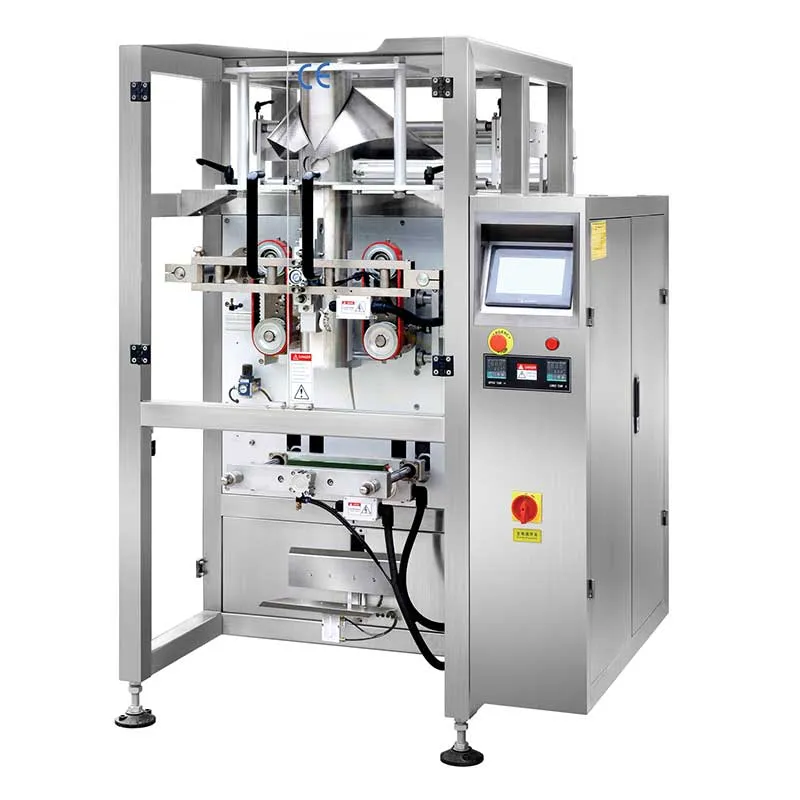
Shown as a configuration reference. Availability and the equipment offered for your project are confirmed separately.
Which product and bag details determine the configuration?
| Input | Information for the supplier | What to verify |
|---|---|---|
| Product behavior | Actual sample, bulk density, particle range, flow and dust | Feeding and dosing under representative conditions |
| Fill weight | Minimum, typical and maximum pack weights | Adjustment range, repeatability and measurement method |
| Package | Bag design, dimensions, material structure and samples | Forming or opening, handling and sealing |
| Production | Required accepted packs per minute and schedule | Sustained line performance and reject handling |
| Changeovers | Products, formats and change frequency | Procedure, tools, parts and actual downtime |
| Installation | Power, air supply, space, upstream/downstream interfaces and destination | Complete layout, utilities and commissioning scope |
Syntegon’s material-testing information describes checking processability, sealing, speed and quality near production conditions. Apply that principle to your actual samples. A material description or a successful test on another machine is not evidence that the offered line will produce your required package.
How do you specify dosing and the full packaging line?
Ask suppliers to explain the proposed feeding and dosing arrangement for your product. Weighing equipment may be considered for suitable discrete products; an auger or another dosing method may be proposed for suitable powders. Selection needs sample evidence for the product’s actual behavior and your weight range.
Define the full scope: feed system, dosing, bagger, sealing, coding, conveyors, inspection, reject handling, controls and any required auxiliaries. List which interfaces belong to the supplier and which depend on your existing plant. Request a layout and the connected utility requirements.
Include cleaning access, material-contact parts, product recovery, changeover procedures and documentation relevant to your product and destination. Ask the manufacturer and your installation team to review the specific application requirements.
What is good-pack output, and why does it matter?
Good-pack output is accepted packs divided by the defined test duration. A pack must meet your agreed filling, sealing, coding and appearance criteria. Keep rejected packages, short interruptions and replenishment events in the test record so that suppliers are compared on the same basis.
A 10-minute test produces 600 packs, of which 18 fail the agreed checks. Accepted output is (600 − 18) ÷ 10 = 58.2 packs/minute. Record what happened during the full test period. This example explains the measurement; it is not performance data for any offered machine.
Agree whether output is measured at the bagger discharge or the final line acceptance point. Specify test duration, sampling, product and package conditions, startup treatment and which interruptions are counted. Also record changeover and cleaning time when those affect daily usable production.
What should packaging machine FAT and SAT demonstrate?
PMMI OpX’s acceptance-test introduction distinguishes factory, virtual and site acceptance work and the need for clear expectations. Build a written test plan with your supplier; do not treat a short demonstration video as a completed acceptance process.
- Freeze the product, fill weights, package materials and machine configuration.
- Define weighing, seal, coding and appearance checks, with agreed limits and sample sizes.
- Measure sustained accepted-pack output and record all rejects and interruptions.
- Demonstrate required format changes, cleaning access and key line interfaces.
- Retain results, samples, exceptions and corrective actions; define any retest.
- Agree site utilities, commissioning, training and final site-acceptance responsibilities.
The packaging acceptance checklist expands the questions to settle before the order. This guide does not prescribe a universal weight tolerance, seal criterion or production speed.
What should you send with a packaging machine RFQ?
Send real product and package details, the fill-weight range and required accepted-pack output. Add the changeover schedule, cleaning needs, utilities, destination and desired line scope. Ask for test evidence, acceptance responsibilities and an itemized commercial proposal.
Use the equipment project budget calculator to include feeding, dosing, bagging, inspection, tooling, installation, training and local project costs.
IndustryApex supplies industrial equipment with professional engineering support. Product compatibility, output, supply scope, pricing and support are confirmed for each project. Sources checked: 13 October 2026.
Explore your application and buying questions
For an automatic filling and sealing machine project, define the product, finished bag, dose and accepted output. The application and comparison guides below help turn a China-sourcing inquiry into a testable line specification.
Need OEM / ODM customization?
Submit branding, packaging, configuration or engineering requirements for this equipment. Include the target market, initial and annual quantities, required changes and acceptance criteria.
Customization feasibility, permitted branding, development responsibilities, minimum quantity, cost and lead time are reviewed for the proposed supplier and configuration before a quotation is confirmed.
Frequently asked questions
What is the difference between VFFS and a premade-pouch machine?
A vertical form-fill-seal machine forms bags from a roll of packaging material, fills them and seals them. A premade-pouch machine handles bags that have already been formed. Compare the actual pack format, material, filling method, changeovers and tested output before choosing.
Can one packaging line fill both powders and granules?
A suitable line may be configurable, but feeding, dosing, dust handling and cleaning must be evaluated for each product. Test your important products and fill weights on the proposed equipment. A broad product list is not proof that one unchanged setup handles every material.
How many bags per minute can a packaging machine produce?
Ask for the number of accepted packs per minute with your product, fill weight and packaging material over an agreed test period. Record rejects, interruptions and replenishment. The machine’s nominal cycle rate may differ from the usable output of the complete line.
What information do suppliers need for a packaging quotation?
Provide product samples and characteristics, fill-weight range, bag format and dimensions, material samples, target accepted-pack output, weight and seal criteria, changeover frequency, cleaning needs, utilities and destination. Identify all upstream and downstream equipment included in the project.
How do I test fill accuracy and sealing quality?
Agree the sample size, weighing method, allowable variation, seal-inspection method and test conditions before the order. Use the actual product and package materials, and record individual results, rejected packs and interruptions. Acceptance limits depend on the specific product, package and requirements.
What should a packaging machine FAT and SAT cover?
Factory acceptance should demonstrate the offered configuration with the agreed product and package, including output, filling, sealing, coding and changeovers. Site acceptance should check performance with the installed utilities and line interfaces. Define criteria, responsibilities, exceptions and retesting before shipment.
Reference information
- JDA Progress — VFFS and premade-pouch baggers
- Syntegon — Packaging material testing and processability
- PMMI OpX — Factory, virtual and site acceptance tests
Reference data and images explain equipment configurations. IndustryApex engineers confirm the offered model, specification and commercial scope in your project quotation.