
Choose a wet shotcrete machine from tunnel or workface geometry, the approved concrete mixture and the spraying process. Match pumping, nozzle manipulation, compressed air and accelerator dosing as one system, with qualified ground-support design and operator training. Spray representative trial panels or the project's approved test area using the intended mixture and services. Assess the required thickness, rebound and concrete properties by the agreed method. Record nozzle, flow, dosing and operator conditions; machine acceptance does not replace qualified structural or ground-support approval. Submit the intended configuration and any OEM/ODM changes for project-specific feasibility review.
Choose a wet shotcrete machine from tunnel or workface geometry, the approved concrete mixture and the spraying process. Match pumping, nozzle manipulation, compressed air and accelerator dosing as one system, with qualified ground-support design and operator training.
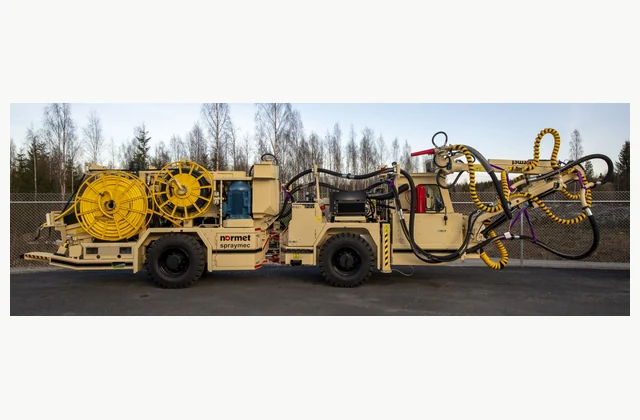
Shown as a configuration reference. Availability and the equipment offered for your project are confirmed separately.
Confirm wet-mix process compatibility
Provide the approved concrete mixture, aggregate, workability, fibers and accelerator system. Wet shotcrete conveys premixed concrete and should not be confused with a dry-mix rotor duty. Verify compatibility with the exact pump, line and dosing arrangement instead of assuming every sprayer handles all mixes.
Map the workface and carrier envelope
Supply tunnel profile, access, gradients and the required nozzle positions. Review boom articulation and reach through the actual workface, including overhead clearance. Maximum reach alone does not establish coverage where obstructions, carrier placement or limited setup space constrain nozzle orientation.
Coordinate pump nozzle and air duty
Define useful spray-rate range, line route and the available compressed-air conditions. Pump output is not identical to material placed on the surface. Compare the complete conveying and spraying arrangement so the nozzle receives suitable flow and air throughout the intended application.
Control accelerator dosing and records
Specify dosing range, compatibility, calibration and any synchronization with concrete flow. The ground-support team must approve the process chemistry and resulting performance. A displayed dosing percentage is not sufficient evidence without the agreed calibration and a way to record the actual application conditions.
Review underground services and operation
Confirm electric, diesel or other drive arrangement and the destination-specific operating requirements. Include ventilation, cable handling and operator visibility with the site specialists. The carrier and boom need safe movement and emergency procedures that fit the actual underground layout rather than a generic open-yard demonstration.
Plan wear inspection and cleanout
Concrete and accelerator circuits need their respective cleaning and isolation procedures. Identify pipe, nozzle, pump and dosing wear parts and access for replacement. Include washout collection and timing so hardened material does not turn routine service into uncontrolled clearing near pressurized or moving components.
Compare a complete wet shotcrete machine scope
| Decision | Information to compare |
|---|---|
| Confirm wet-mix process compatibility | Wet mixture, aggregate, fibers, accelerator and pump/line compatibility |
| Map the workface and carrier envelope | Tunnel/workface geometry, access, gradient, carrier position and nozzle envelope |
| Coordinate pump nozzle and air duty | Spray-rate range, delivery line, nozzle and compressed-air supply |
| Control accelerator dosing and records | Accelerator compatibility, dosing synchronization, calibration and process records |
| Review underground services and operation | Drive variant, utilities, ventilation, visibility and emergency procedures |
| Plan wear inspection and cleanout | Concrete/dosing cleanout, washout, pressure isolation and identified wear parts |
Plan installation and access
Qualified tunnelling, electrical and concrete-process personnel should confirm access, setup, services and exclusion zones. Calibrate the supplied dosing and control systems using the approved procedure. Coordinate water, air, power and concrete supply, retaining safe operator positions and emergency access around the carrier.
Agree acceptance evidence before ordering
Spray representative trial panels or the project's approved test area using the intended mixture and services. Assess the required thickness, rebound and concrete properties by the agreed method. Record nozzle, flow, dosing and operator conditions; machine acceptance does not replace qualified structural or ground-support approval.
Define OEM/ODM engineering boundaries
OEM interfaces, approved carrier arrangements and process monitoring can be reviewed. ODM boom, pressure circuits or dosing changes require engineering and shotcrete trials. Reference photographs do not establish stock, authorized manufacturer supply or guaranteed ground-support performance for another system.
What should your wet shotcrete machine RFQ include?
- Wet mixture, aggregate, fibers, accelerator and pump/line compatibility
- Tunnel/workface geometry, access, gradient, carrier position and nozzle envelope
- Spray-rate range, delivery line, nozzle and compressed-air supply
- Accelerator compatibility, dosing synchronization, calibration and process records
- Drive variant, utilities, ventilation, visibility and emergency procedures
- Concrete/dosing cleanout, washout, pressure isolation and identified wear parts
- Destination, working environment, access and delivery constraints
- Installation responsibility, utilities and connection drawings
- Acceptance samples, documented test method, operator training and maintenance scope
- OEM/ODM changes requested: identification, tooling, interfaces or new design; engineering feasibility to be confirmed
Need OEM / ODM customization?
Submit branding, packaging, configuration or engineering requirements for this equipment. Include the target market, initial and annual quantities, required changes and acceptance criteria.
Customization feasibility, permitted branding, development responsibilities, minimum quantity, cost and lead time are reviewed for the proposed supplier and configuration before a quotation is confirmed.
Frequently asked questions
How do I confirm wet-mix process compatibility?
Provide the approved concrete mixture, aggregate, workability, fibers and accelerator system. Wet shotcrete conveys premixed concrete and should not be confused with a dry-mix rotor duty. Verify compatibility with the exact pump, line and dosing arrangement instead of assuming every sprayer handles all mixes.
How do I map the workface and carrier envelope?
Supply tunnel profile, access, gradients and the required nozzle positions. Review boom articulation and reach through the actual workface, including overhead clearance. Maximum reach alone does not establish coverage where obstructions, carrier placement or limited setup space constrain nozzle orientation.
How do I coordinate pump nozzle and air duty?
Define useful spray-rate range, line route and the available compressed-air conditions. Pump output is not identical to material placed on the surface. Compare the complete conveying and spraying arrangement so the nozzle receives suitable flow and air throughout the intended application.
How do I control accelerator dosing and records?
Specify dosing range, compatibility, calibration and any synchronization with concrete flow. The ground-support team must approve the process chemistry and resulting performance. A displayed dosing percentage is not sufficient evidence without the agreed calibration and a way to record the actual application conditions.
How do I review underground services and operation?
Confirm electric, diesel or other drive arrangement and the destination-specific operating requirements. Include ventilation, cable handling and operator visibility with the site specialists. The carrier and boom need safe movement and emergency procedures that fit the actual underground layout rather than a generic open-yard demonstration.
How do I plan wear inspection and cleanout?
Concrete and accelerator circuits need their respective cleaning and isolation procedures. Identify pipe, nozzle, pump and dosing wear parts and access for replacement. Include washout collection and timing so hardened material does not turn routine service into uncontrolled clearing near pressurized or moving components.
Reference information
- Normet Spraymec MF 050 official product reference
- Normet wet shotcrete machine official family or technical reference
Reference data and images explain equipment configurations. IndustryApex engineers confirm the offered model, specification and commercial scope in your project quotation.