
Select a textile card for the incoming fiber and required sliver, with opening, carding and waste handling coordinated with the spinning route. Compare output quality, clothing maintenance and material flow alongside usable throughput before defining the machine and selected options. Prioritize feed, output, carding arrangement. Use the checkpoints to build a consistent equipment scope and confirm the intended trial or installation evidence. The official image is a product reference; it does not establish availability or an authorized supplier relationship. Submit OEM/ODM changes for application-specific feasibility review.
Select a textile card for the incoming fiber and required sliver, with opening, carding and waste handling coordinated with the spinning route. Compare output quality, clothing maintenance and material flow alongside usable throughput before defining the machine and selected options.
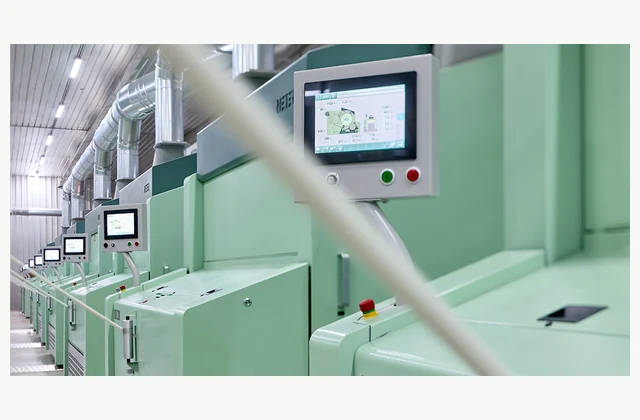
Shown as a configuration reference. Availability and the equipment offered for your project are confirmed separately.
Define the carding task and material
A carding machine forms sliver from prepared fiber while performing its designed opening and separation work. Specify fiber type, length characteristics, blends and recycled content together with the upstream preparation. The intended spinning route and yarn objective determine what the output must support. A card suitable for one material mix should not be assumed suitable for another solely because the feed looks similar. Describe variability and contamination rather than supply only a fiber trade name.
Connect carding quality to the yarn route
Output sliver properties, residual unwanted material and fiber condition need to be assessed in the intended process. Ask which quality measurements will be used and how the proposed arrangement supports the next stage. Maximum output is not an independent quality guarantee. A trial should identify incoming material and operating configuration so changes in quality can be interpreted. Do not compare one supplier’s high-throughput demonstration with another supplier’s different material and acceptance conditions.
Specify clothing and working arrangements
The carding elements and clothing should suit the fibers and required work. Discuss adjustment, cleaning and the maintenance practices needed to sustain the intended geometry and condition. The Rieter C 81 reference illustrates a carding-machine family with selected technologies and options; not every monitoring or adjustment feature should be assumed standard. Itemize the proposed equipment and ask how wearing elements are identified, serviced and replaced for the actual material.
| Selection issue | Information to specify |
|---|---|
| Feed | Fiber properties, blends, recycled content and upstream preparation. |
| Output | Required sliver and downstream spinning quality objective. |
| Carding arrangement | Clothing, selected monitoring and adjustment options. |
| Material flow | Feed interface, can format and delivery route. |
| Services | Extraction, waste handling and maintenance access. |
| Trial | Representative feed, sliver evidence and usable production. |
Coordinate feed, delivery and can handling
The card must receive a stable prepared-fiber supply and deliver sliver in the required format. Provide blowroom interfaces, output sliver needs, can dimensions and transport routes. Identify any integrated drafting module or separate downstream machine and allocate responsibility for the connection. A central-machine footprint can hide feed and handling requirements. Check operator access and the paths used for full and empty cans so material flow does not undermine otherwise suitable process capability.
Address waste, extraction and services
Waste collection and extraction form part of the installed arrangement, not an incidental accessory. Ask for the utility and material-removal schedule for the exact configuration. Clarify fans, ducts, filters and external plant responsibilities where applicable. Evaluate what the removed material contains as part of a representative trial rather than using waste quantity alone as a success measure. Retain safe cleaning and maintenance access according to the machine instructions and the mill’s operating procedures.
Accept usable production and maintenance readiness
Use the intended fibers and agreed quality methods. Assess sliver, stable operation, waste and downstream behavior together with can handling and cleaning tasks. Record any selected monitoring systems and their configuration. Obtain clothing and service-part identification, maintenance instructions and training appropriate to the delivered machine. A successful software display or rapid feed rate does not show whether the output supports the required yarn or can be sustained with available mill maintenance.
Define OEM/ODM by material and interfaces
Feed or can interfaces, identification and line-control integration can be submitted for review. Altering carding elements, drives, sensing or adjustment functions requires process engineering and material trials. Provide the fiber range and downstream requirements with the brief. A customized design needs its own output evidence and service documentation, and should not inherit a reference manufacturer’s quality or productivity claims merely because its exterior or product description resembles that machine.
What should your textile carding machine RFQ include?
- Feed: Fiber properties, blends, recycled content and upstream preparation.
- Output: Required sliver and downstream spinning quality objective.
- Carding arrangement: Clothing, selected monitoring and adjustment options.
- Material flow: Feed interface, can format and delivery route.
- Services: Extraction, waste handling and maintenance access.
- Trial: Representative feed, sliver evidence and usable production.
- Destination, site conditions and delivery access
- Installation boundary, utilities and connection drawings
- Acceptance procedure, documentation and training scope
- OEM/ODM changes: interface, material, branding or new design; written engineering feasibility required
Need OEM / ODM customization?
Submit branding, packaging, configuration or engineering requirements for this equipment. Include the target market, initial and annual quantities, required changes and acceptance criteria.
Customization feasibility, permitted branding, development responsibilities, minimum quantity, cost and lead time are reviewed for the proposed supplier and configuration before a quotation is confirmed.
Frequently asked questions
What fiber information is needed to select a textile card?
Provide fiber properties, blend, recycled content and incoming preparation conditions, including relevant contamination or variation. Identify the downstream spinning route and quality objective. These determine the carding task more usefully than a fiber name and nominal output target without a defined sliver requirement.
Does higher carding output mean the better machine?
Not by itself. Compare sliver quality, useful fiber condition, waste and stable operation on representative material. A high-rate demonstration using another feed or acceptance method may not support the buyer’s yarn objective. Usable throughput must be evaluated together with the required process result.
Are all monitoring and gap-control features standard?
Inclusion depends on the exact model and option arrangement. Request an itemized configuration and confirm what is measured, adjusted or recorded. A product-family reference showing a selected technology does not establish that every quoted card includes it or provides identical functions.
Why do card clothing and maintenance matter?
Working-element condition affects the process and must be sustained through appropriate inspection, cleaning and replacement. Specify the intended fibers and obtain clothing and service-part identification. A maintenance plan helps distinguish a demonstrated result from output that the mill can realistically maintain over continued operation.
Which line interfaces should be included in the quotation?
Define prepared-fiber feed, extraction, waste handling, sliver delivery, can format and any drafting module or downstream connection. Allocate design and installation responsibilities. A card-only price can omit equipment essential to useful operation, so compare a coordinated scope rather than the main machine alone.
Can a card be customized for specialty fibers?
Interface and integration work may be reviewed, while carding, drive or sensing changes require process engineering and trials with the relevant fibers. State output requirements and acceptance methods in the OEM/ODM brief. The modified design needs its own evidence and maintainable parts documentation.
Reference information
- Card C 81 – The Carding Machine with the Largest Active Carding Area
- Blowroom & Carding Machines – Sliver Quality for Spinning | Rieter
Reference data and images explain equipment configurations. IndustryApex engineers confirm the offered model, specification and commercial scope in your project quotation.